


Should Every Jimny Owner Install the Same Accessories?
No — the right set of accessories depends almost entirely on how the vehicle is actually used, not on what a fully built-out Jimny looks like online. Treating accessory selection as a checklist to complete, rather than a set of decisions tied to your own usage, is where most over-modification starts.
A more useful approach is to think of every purchase as answering one question: what specific problem does this solve for how I actually drive? If the honest answer is none, it just looks good, that's a fine reason to buy something — as long as it's understood as a styling choice rather than a functional upgrade.
Which Jimny Accessories Make Sense for City Driving?
For city-focused driving, convenience-oriented interior accessories tend to deliver the most consistent value, since they're used on nearly every trip. A dashboard tray, cup holder, and car mobile holder each solve a small, repeated inconvenience — storage, navigation, general cabin organisation — that shows up constantly in stop-start traffic and short trips.
An armrest fits here too, though its value scales with trip length rather than frequency alone; it matters more the longer you're actually seated.
What Changes When the Jimny Is Used for Highway Touring?
On longer highway drives, the priority shifts from cabin convenience to storage capacity and visibility. The Jimny's boot space is limited enough that touring trips with any real luggage tend to expose it quickly — this is the specific problem a roof rack addresses. Auxiliary lighting also becomes more relevant here, extending visible range on unlit stretches, though it's worth treating this as a visibility improvement rather than an automatic safety guarantee.
Agar highway trips occasional hain, roof rack ki urgency kam hai. Regular touring ke liye, iska value zyada directly justify hota hai.
Which Accessories Become More Useful for Off-Road Driving?
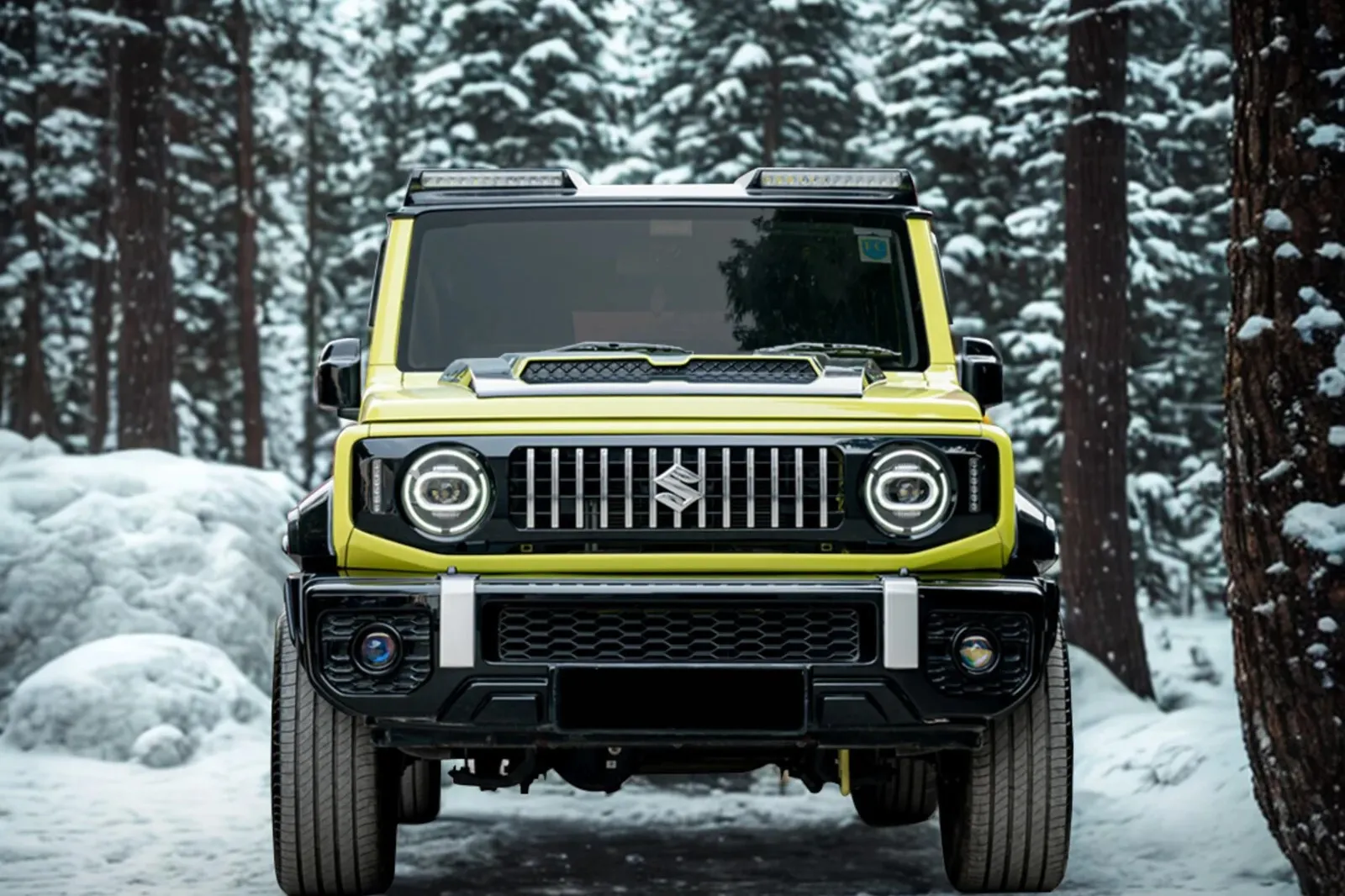
For genuine off-road use, protection and utility accessories matter more than anything styling-related. A metal front bumper, particularly with a winch mounting plate, is more relevant here than for city driving, since it addresses recovery situations and front-end protection specifically. Combined with a roof rack and ladder, it also supports carrying recovery gear or equipment that doesn't fit inside the cabin.
Worth being direct about this: none of these accessories make the vehicle mechanically more capable off-road. They support the experience — protection, storage, visibility — without changing what the Jimny can do.
How Important Is Vehicle Compatibility?
Compatibility is one of the most overlooked factors in accessory buying, and skipping it is the most common source of installation problems. The current-generation Jimny (JB74) has specific mounting points, but tolerances and trim differences mean a product marketed generically for Jimny won't always fit every variant identically.
Simple bolt-on or clip interior accessories are generally lower-risk. Anything exterior and structural — grills, bumpers, roof racks — deserves a closer fitment check before ordering, ideally confirmed directly against your specific variant.
Are Cosmetic Modifications Worth Prioritising?
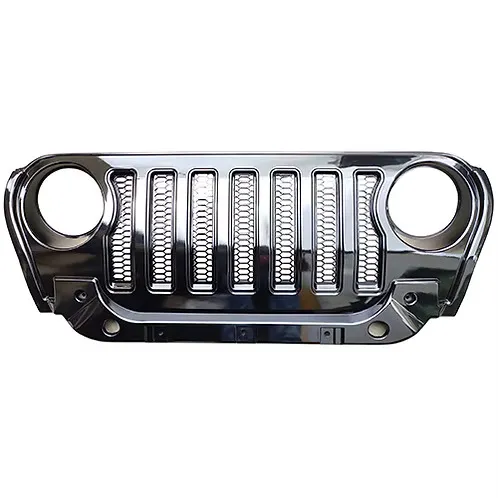
Cosmetic modifications are worth prioritising when appearance is genuinely the goal — they're a legitimate category, not a lesser one. A front grill replacement is the clearest example: it changes the visual identity of the front end noticeably without touching performance or capability. The only real mistake is expecting a functional benefit from a purely visual purchase.
If you're browsing different Maruti Suzuki Jimny Accessories to compare styling versus functional categories, sorting by what problem each one actually solves tends to produce a clearer shortlist than sorting by popularity.
How Can Owners Avoid Unnecessary Jimny Modifications?
A simple framework helps here:
- Daily Driver → Convenience first. Prioritise interior accessories that solve recurring daily problems.
- Highway Traveller → Storage + comfort + visibility. Roof storage and lighting matter more once trip frequency increases.
- Off-Road User → Protection + utility. Bumpers, roof storage, and lighting support genuine trail use.
- Style-Focused Owner → Exterior appearance. Grills and cosmetic upgrades chosen on preference, not function.
Most owners lean toward one category more than the others, and building around that dominant pattern avoids buying accessories that end up unused.
What Should You Check Before Installation?
Beyond fitment, check whether installation involves drilling, cutting or wiring, since that affects both difficulty and long-term reliability. Lighting accessories in particular carry more installation risk than other categories, because they typically involve wiring rather than simple mechanical mounting. Rushed or low-quality wiring work is a common source of problems later, and this matters more given monsoon exposure in much of India.
FAQs
Q : Is it wasteful to buy accessories purely for looks?
A : No, as long as the purchase is made with that understanding. Cosmetic accessories are a legitimate category — the issue is only expecting them to change performance.
Q : How do I know if my Jimny actually needs a roof rack?
A : If you regularly carry more luggage or equipment than the boot handles, it's justified. If touring trips are rare, it can reasonably wait.
Q : Does installation complexity vary a lot between accessory types?
A : Yes — interior bolt-on items are generally straightforward, while exterior accessories involving drilling or wiring require more careful handling.
Q : Can I mix functional and cosmetic accessories on the same build?
A : Absolutely — most practical builds combine both. The key is knowing which category each purchase falls into and why.
Q : What's the biggest modification mistake owners make?
A : Buying accessories to match someone else's build rather than their own driving pattern, which often leads to unused, poorly-matched purchases.
Closing
A Jimny build built around actual usage — rather than a generic accessory checklist — tends to be both cheaper and more genuinely useful over time than trying to replicate a fully modified vehicle from day one.


























Sign in to leave a comment.