
Introduction
Enterprises face huge piles of information from various places - people, departments, even countries. Traditional data systems can’t handle how fast that grows. Performance drops, costs rise, and data becomes difficult to manage across departments. Handling everything properly starts feeling out of reach. With Snowflake, organizations handle large volumes of data in the cloud, free from managing hardware details. Data gets stored, worked with, and explored - all while keeping oversight, safety, and speed intact throughout operations.
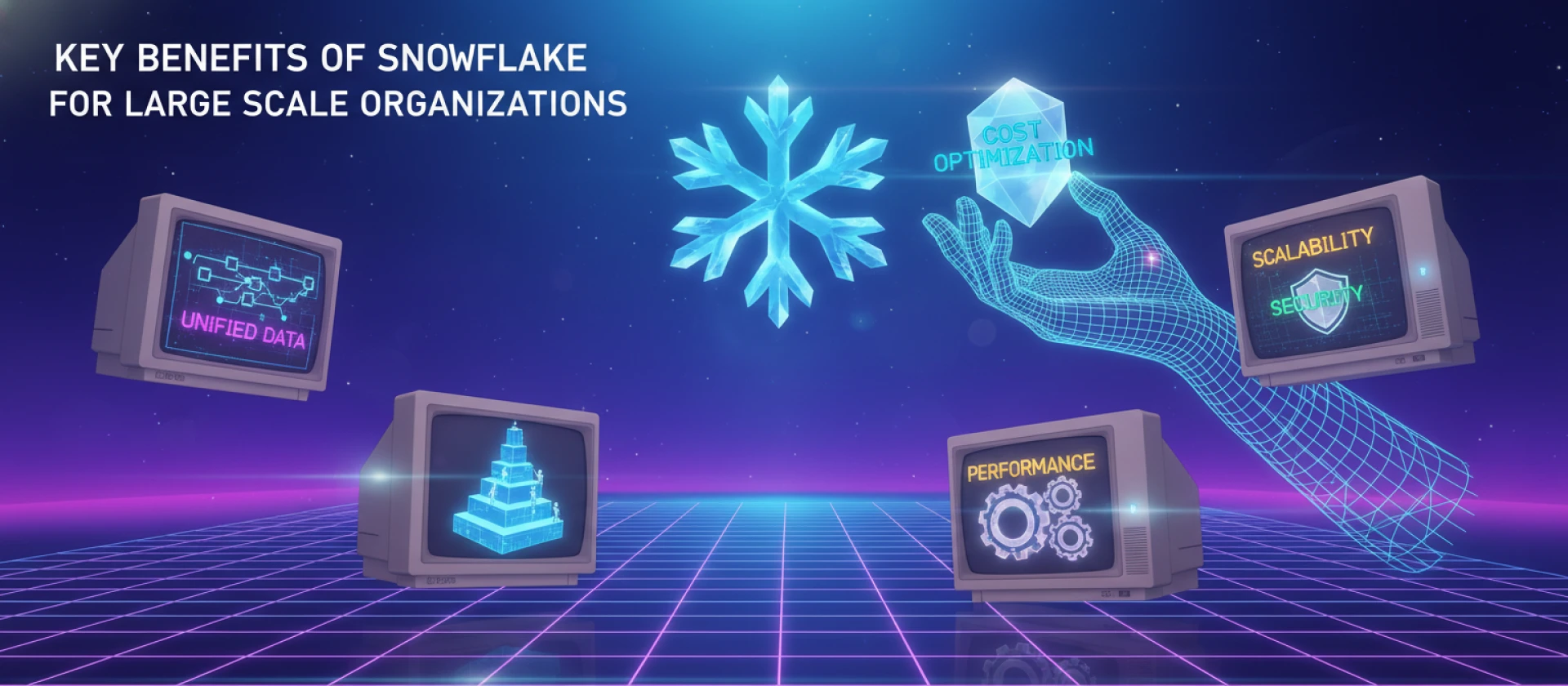
Key Benefits of Snowflake for Enterprise Organizations
The following benefits explain how Snowflake supports enterprise-scale data needs. Each point highlights the value Snowflake delivers across performance, governance, and operations.
Scales Easily With Enterprise Data Growth
When companies expand, more data builds up - across departments, apps, and areas. With Snowflake, each group can grow storage or processing power separately, so rising data challenges don’t slow down current tasks. Upfront guesses at capacity or system adjustments aren’t required anymore. When work rises, from fresh assignments or holiday rushes, companies adapt without losing steady results.
Consistent Performance for Multiple Teams
When big groups need access at once, systems like Snowflake handle it. Snowflake is designed to support concurrent workloads such as analytics, reporting, and data science without performance bottlenecks. Analytics, reports, or data exploration happen together, yet stay fast. Each team runs in its own space, so big requests from one team don’t slow down everyone else. With this setup, everyone gets a consistent experience - no matter how busy the system is.
Centralized Data Platform Across Departments
Data is often stored in separate places inside many systems, creating gaps and hidden piles and data silos. Snowflake pulls pieces from multiple locations into a single main location. People see the same things when needed, yet only get what they’re allowed to view. Working together like this boosts teamwork, cuts unnecessary effort, also supports uniform reporting and insights.
Strong Security and Compliance Controls
Keeping company data safe matters most. With Snowflake you will find features already set up for protection - like encryption of data whether at rest or moving between systems - and controls around who gets in based on roles. Because of these tools, organizations can stick to rules about who sees what and follow strict outside standards. With auditing and monitoring support, enterprises can maintain compliance without adding extra operational complexity.
Simplified Data Governance at Scale
When hundreds or even thousands of users need to reach company data, keeping things under control gets tricky. In a large enterprise, Snowflake makes it easier to stick to shared rules no matter where teams are. From one place, leaders can set up job-specific access rights so nobody stumbles into areas they shouldn’t see. Security becomes simpler when controls flow through the entire system rather than patching each department separately. With tracking and audits in place, it becomes clearer who is viewing data. This kind of oversight fits both company rules and outside regulations, yet still allows workgroups to operate smoothly.
Faster Analytics and Business Reporting
Enterprise environments often involve many users running queries at the same time. Built for heavy use, Snowflake manages high concurrency well - no slowdowns here. At the same time, reports, dashboards, or spontaneous explorations stay smooth, especially when demand spikes.
Therefore, when making decisions, the people involved, such as analysts or managers, can be assured that data will be available when it is supposed to, without any gaps or discrepancies.
With these advantages combined, it is clear that Snowflake meets the requirements for large and complex enterprise data systems. For companies looking to implement or optimize Snowflake, many decide to hire Snowflake developers who can integrate these features with actual business and enterprise objectives.
Supporting Capabilities for Smooth Enterprise Adoption
Snowflake has several supporting capabilities that make enterprise adoption easier and more feasible. These capabilities allow companies to integrate Snowflake with their existing data systems without having to make significant changes to the current tools and processes. This enables companies to work faster while still being in control and in sync with the entire enterprise.
The most important supporting capabilities include:
- Integration with existing enterprise BI tools, ETL processes, and analytics systems
- Data sharing across departments, regions, and third-party partners in a secure manner without having to duplicate data
- Handling structured and semi-structured data from various enterprise sources
- Cloud-native architecture that is region-agnostic and cloud-agnostic
- Native governance capabilities that can assist with managing access, usage, and compliance at scale
These capabilities, combined, enable enterprises to adopt Snowflake seamlessly. Enterprises can then collaborate better, share data safely, and work across regions while maintaining governance and performance in line with enterprise requirements.
Conclusion
For an enterprise, Snowflake is more than a data warehouse solution. It is a scalable, secure, and flexible data platform solution that enables growth, collaboration, and faster insights. With guidance from a Snowflake consulting firm, Enterprises can simplify infrastructure complexity, deliver better performance across teams, and establish a solid foundation for enterprise data operations.





























Sign in to leave a comment.