
In recent years, employee learning has undergone significant change. Fast-moving firms can no longer benefit from traditional training programs that rely on lengthy courses and set schedules. Teams require learning that is adaptable, pertinent, and closely linked to actual job results. Leaders, however, seek evidence that investments in training do, in fact, increase performance.
An AI learning experience platform can help in this situation. These platforms employ artificial intelligence to analyse capabilities, tailor training, and make more informed employment decisions rather than viewing education as a one-time event. For businesses and CEOs, this means learning that is not only engaging but also measurable and strategic.
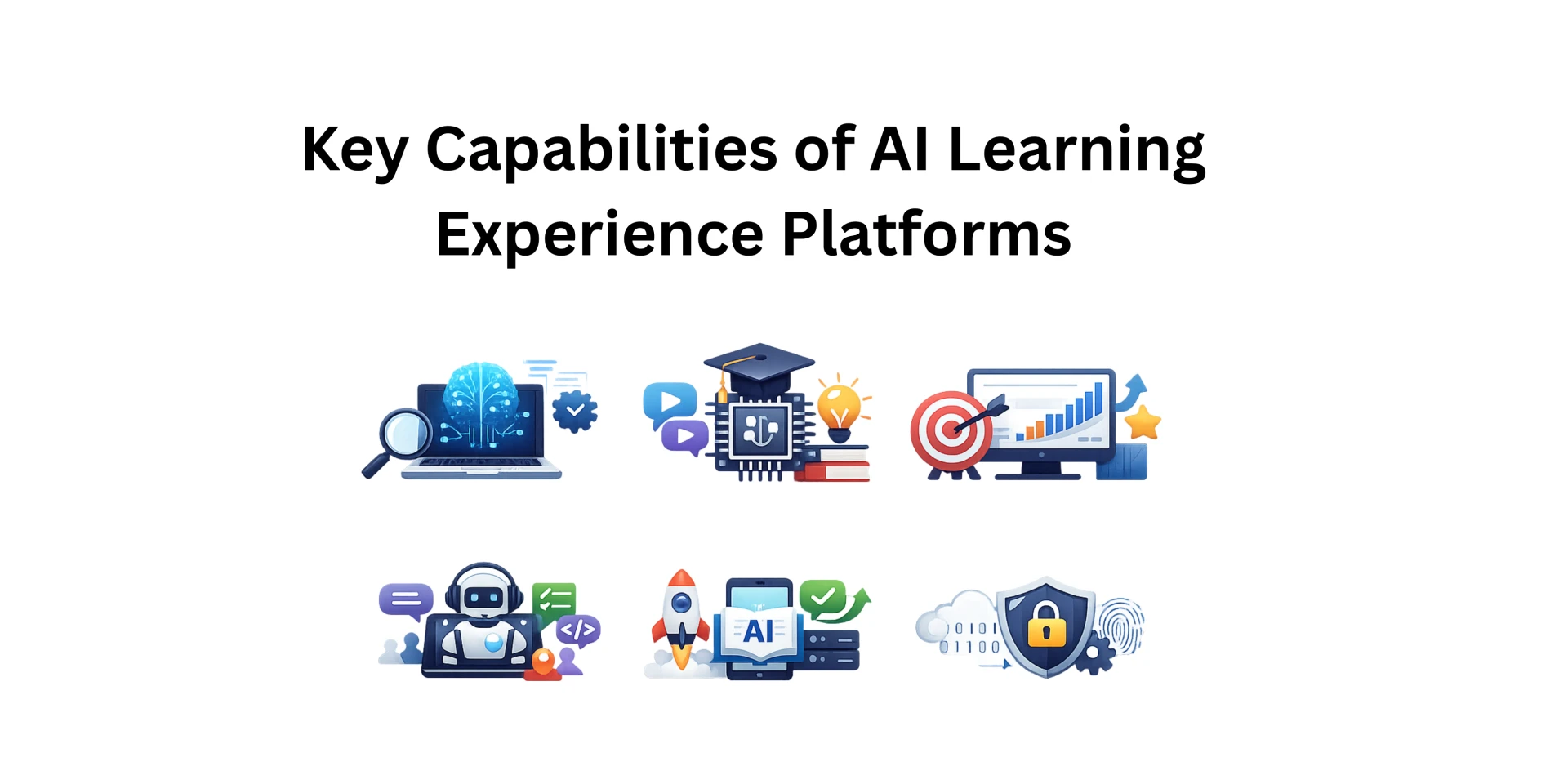
Let's examine the main features that add value to these platforms.
List of Key Elements of AI Learning Experience Platforms
Customised Education for Each Employee
Personalisation is one of an AI learning experience platform's greatest advantages. Each worker has unique objectives, knowledge gaps, and skill sets. Everybody's demands cannot be satisfied by a one-size-fits-all course.
AI analyses performance data, job roles, employee behaviour, and prior training to provide tailored content recommendations. Employees are given recommendations that align with their work rather than having to sift through dozens of courses. This saves time and maintains the practicality and focus of learning.
People are more inclined to finish and use what they have learned in the workplace when it feels relevant.
Skill Mapping and Gap Analysis
Companies frequently find it difficult to respond to the straightforward query, "What skills do we actually have and what skills are missing?" A platform for AI learning experiences maps abilities throughout the company. Based on projects and corporate objectives, it determines strengths, shortcomings, and future requirements. Leaders are able to immediately identify which teams need to be upskilled and where gaps exist.
With this power, learning is no longer merely an HR task but also a strategic instrument. It assists businesses in getting ready for change before issues occur.
Clever Content Suggestions
Large volumes of educational information, including webinars, articles, videos, and courses, are produced in modern workplaces. Helping staff members locate the appropriate information at the appropriate moment is a challenge.
AI addresses this by automatically selecting content. The platform examines what workers look for, what comparable users have done, and what abilities they require. The best resources are then suggested.
This creates a smoother learning experience and reduces information overload. Workers spend more time studying and less time browsing.
Real-Time Reporting and Insights
Data is important to CEOs and business executives. They must ascertain whether educational initiatives are producing outcomes. Conventional reports frequently just display course completion rates, which do not accurately represent actual impact.
Deeper insights are offered by an AI learning experience platform. It links learning activities to productivity results, skill development, and performance measures. Leaders can more precisely gauge return on investment and monitor progress in real time.
Decision-making is quicker and more assured when reports are clear.
Support of Ongoing Education
Education shouldn't take place just once or twice a year. It needs to be a regular task. By providing brief lessons, reminders, and updates as needed, AI platforms promote ongoing progress.
Workers can pick up new skills gradually without interfering with their routines. Stronger abilities and increased involvement are developed over time by this habit. A staff that continues to grow rather than stagnate is advantageous to businesses.
Conclusion
A digital training tool is only one aspect of an AI learning experience platform. This system links learning to business objectives. These features range from talent mapping and personalised paths to astute suggestions and useful insights, enabling businesses to expand more quickly and intelligently.
Investing in AI-powered learning is more than just education for CEOs and modern enterprises. It is about creating a workforce that is competent and prepared for the future, which promotes long-term success.

























Sign in to leave a comment.