

When preparing a property for construction, landscaping, agriculture, a driveway, or other improvements, you may hear the terms land leveling and land grading used interchangeably. Although both involve moving and reshaping soil, they are not exactly the same.
The main difference is the purpose of the finished land. Land leveling generally focuses on creating a flat or more uniform surface, while land grading shapes the land to achieve specific elevations, slopes, drainage patterns, or construction requirements.
Understanding the difference can help property owners determine what type of earthwork may be needed before starting a project.
What Is Land Leveling?
Land leveling is the process of removing high spots and filling low areas to create a more uniform surface. The goal is generally to make an area flatter, smoother, or easier to use.
For example, a property owner may need land leveling to prepare an area for:
- A yard or lawn
- A garden
- A patio or outdoor area
- A shed or other small structure
- Agricultural use
- A driveway or access area
- General property improvements
Levelling does not necessarily mean making every part of a property perfectly flat. Depending on the property and its intended use, a gentle slope may still be necessary for water movement.
For agricultural properties, land levelling can also be used to create a planned surface that supports irrigation and surface drainage.
What Is Land Grading?
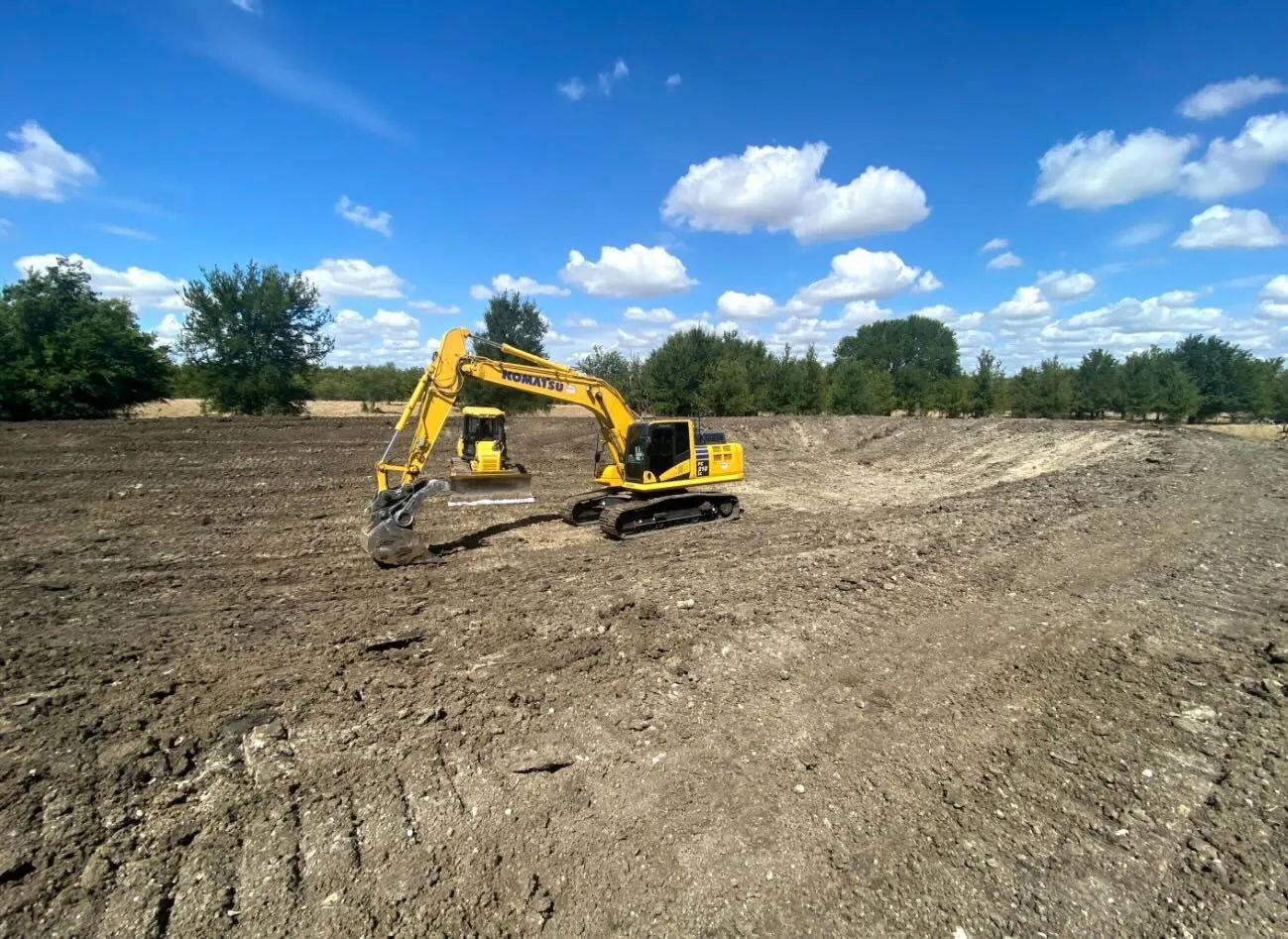
Land grading is the process of shaping the ground to achieve a planned elevation, slope, or surface profile. Unlike basic leveling, grading is often performed with drainage, construction, access, and overall site functionality in mind.
Proper grading can help:
- Direct water away from structures
- Reduce standing water
- Create suitable building surfaces
- Improve driveway access
- Address uneven terrain
- Prepare land for construction
- Support drainage improvements
- Establish the desired elevations across a site
A graded property does not necessarily look completely flat. In fact, a controlled slope is often an important part of proper grading because water needs a path to move away from buildings and other areas.
Texas Grading describes grading as a way to improve drainage, create stable building surfaces, reduce erosion and soil movement, and prepare sites for construction and landscaping.
Land Leveling vs. Land Grading: What Is the Difference?
The easiest way to understand the difference is to look at the desired result.
| Land Leveling | Land Grading |
|---|---|
| Focuses on creating a more uniform surface | Focuses on achieving planned slopes and elevations |
| Removes high areas and fills low areas | Shapes the ground for drainage, access, and construction |
| Often used for specific usable areas | Often considers a larger site or development plan |
| May create a flat or gently sloped surface | Can intentionally create different slopes |
| Useful for lawns, yards, agriculture, and similar projects | Useful for construction, drainage, driveways, and site preparation |
In simple terms, leveling is primarily about making the ground more even, while grading is about shaping the ground for a specific purpose.
The two processes can also be part of the same project. A grading project may include leveling certain sections while creating slopes in other areas.
Why Is Land Grading Important for Drainage?
One of the most important differences between levelling and grading is the role of drainage.
Water naturally follows the shape of the ground. If a property has low areas, poor slopes, or uneven terrain, rainwater can collect where it is not wanted. This can result in standing water, erosion, muddy areas, or drainage problems around structures and driveways.
Grading can shape the surface so water moves toward an appropriate drainage area instead of collecting around a foundation or other important part of the property.
For example, a building site may need a relatively level area for construction while still requiring a slope that directs water away from the structure.
This is why simply making a property flat is not always the best solution. The finished surface needs to match how the property will be used and how water needs to move across it.
When Do You Need Land Levelling?
Land levelling may be appropriate when the primary problem is uneven ground and the goal is to create a smoother, more usable surface.
Common situations include:
Preparing a Yard
Large bumps, depressions, and uneven areas can make a yard difficult to use or maintain. Leveling can create a more consistent surface for landscaping or other outdoor improvements.
Improving Agricultural Land
Agricultural properties may benefit from leveling when a more uniform field surface is needed for particular farming or irrigation practices.
Creating a Usable Area
A property may have a sloped or uneven section that needs to be reshaped before installing a patio, outdoor structure, or other improvement.
Correcting Minor Uneven Areas
Some projects only require localized correction rather than complete site grading. In these situations, leveling may address the problem without reshaping the entire property.
When Do You Need Land Grading?
Land grading is generally considered when the project requires more than simply making the ground flat.
Grading may be needed for:
- New home construction
- Building pads
- Barndominiums
- Commercial development
- Driveways and private roads
- Drainage improvements
- Ranch improvements
- Pond and water-related projects
- Site preparation
For example, a construction project may require the ground to reach a particular elevation while also providing appropriate drainage away from the future structure.
Texas Grading's site-preparation services include house pads, barndominium pads, grading, leveling, and drainage preparation, showing how these activities can work together as part of a larger project.
Can Land Leveling and Land Grading Be Used Together?
Yes. Land leveling and land grading can be combined on the same property.
A project may require certain areas to be leveled while other sections need to be graded to create the appropriate slope.
For example, a new homesite may need:
- Existing uneven ground reshaped.
- High areas cut down.
- Low areas filled.
- A building pad established.
- The pad and surrounding land brought to the required elevations.
- Drainage slopes created around the structure.
- Access areas such as driveways prepared.
This combination creates a property that is not simply flat but is shaped around the needs of the project.
What About Land Grading in Bertram, Texas?
Property owners planning improvements in Bertram, Texas may encounter uneven terrain, drainage concerns, access requirements, or development plans that require careful site preparation.
For projects in the area, Bertram Texas Land Grading can be considered when preparing residential, agricultural, ranch, or development properties.
Grading in this type of project may involve creating usable surfaces, improving drainage, preparing homesites, supporting driveway construction, or getting land ready for future development. Texas Grading also lists homesite development, private roads, ranch property preparation, commercial projects, pond support, and agricultural use among common grading applications in Bertram.
How Do You Know Whether Your Property Needs Leveling or Grading?
Start by identifying the actual problem rather than focusing only on whether the land looks uneven.
Ask:
- Do I mainly need a flatter, more uniform surface?
- Does water collect in certain areas?
- Am I preparing the property for construction?
- Does the project require specific elevations?
- Do I need a driveway or private road?
- Is drainage part of the problem?
- Am I preparing a homesite, ranch, agricultural area, or commercial property?
If the main goal is simply to correct uneven ground, leveling may be part of the solution.
If the project involves drainage, construction elevations, access, building pads, or broader site preparation, grading may be more appropriate.
A site evaluation can help determine how much soil needs to be moved and what finished elevations or slopes are required.
Conclusion: Choosing the Right Approach for Your Property
Land levelling and land grading are closely related, but they serve different purposes. Land levelling focuses on creating a more uniform surface, while Texas land grading focuses on shaping the land for specific elevations, slopes, drainage, access, or construction needs.
In many projects, both processes may be used together. The right approach depends on the property's existing conditions and what you plan to do with the land.
Whether you are preparing a home site, improving a ranch property, building a driveway, addressing drainage, or getting land ready for development, understanding the difference between levelling and grading is an important first step toward planning the right site work.



















Sign in to leave a comment.