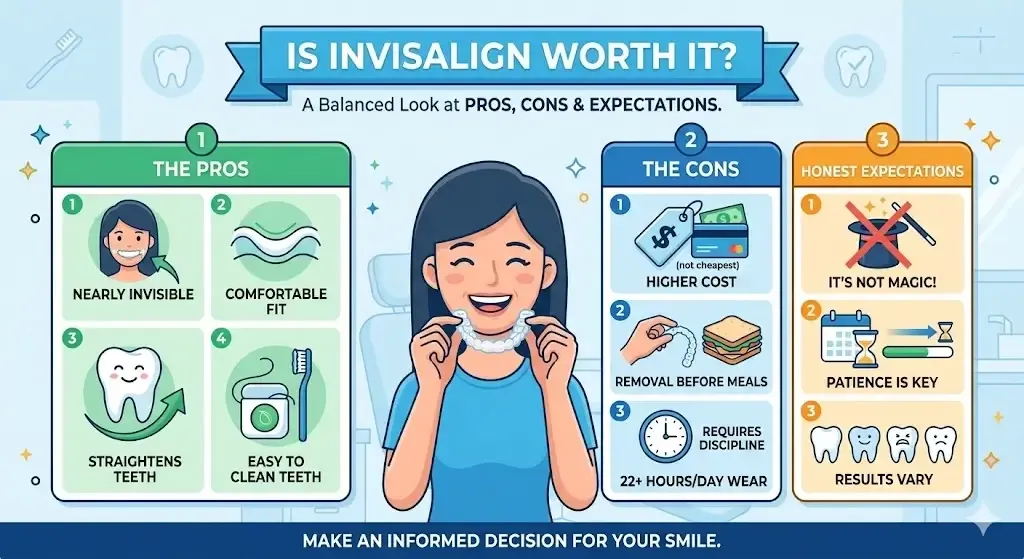

Finishing your aligners is a great moment, but it is not quite the end of the journey. Teeth have a natural tendency to drift back toward their old positions, so the result you worked for needs protecting. This is where retainers come in. Understanding them now, rather than after your teeth have started to move, is the difference between a smile that lasts and months of progress quietly unravelling.
Why teeth try to move back
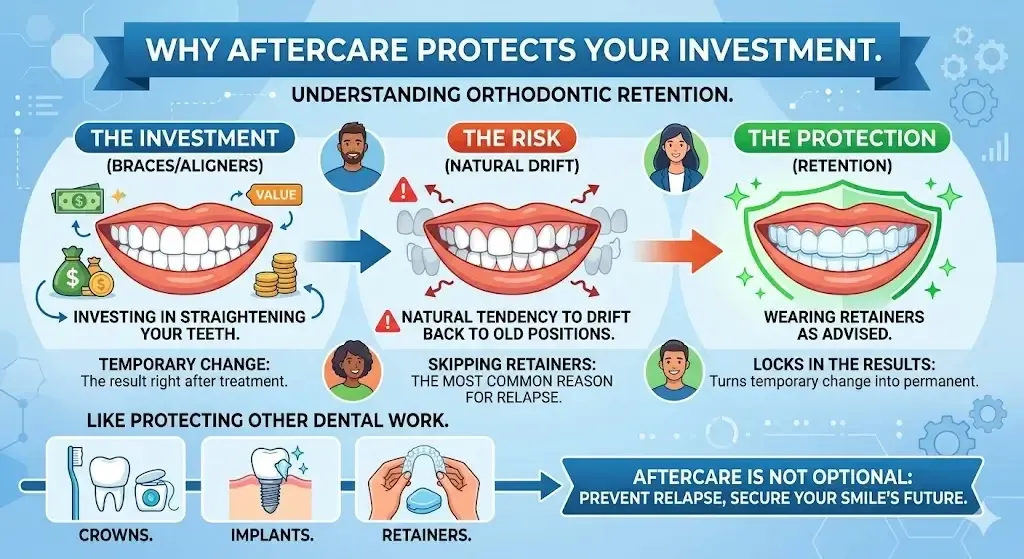
The bone and fibres around your teeth need time to settle into their new positions after treatment. In the first months especially, teeth are inclined to shift back, a process known as relapse. This is normal biology rather than a sign that anything went wrong, and it is exactly why retention is built into every orthodontic plan, not bolted on as an afterthought.
The types of retainer
There are two main kinds, and your dentist recommends the type that suits your case. Removable retainers are clear trays, much like your aligners, usually worn at night once treatment settles. Fixed retainers are thin wires bonded discreetly behind the front teeth, so they hold position around the clock without you having to remember anything. Some people use a combination of both for extra security.
How long you need to wear them
Retention is a long-term commitment rather than a short phase. In the first year, removable retainers are often worn most of the time before easing to nights only. After that, most people keep wearing a retainer at night long-term to hold their results. Fixed retainers can stay in place for years, checked at routine dental visits. The simple rule is that retainers protect your investment for as long as you wear them.
Choosing between a removable and fixed retainer
Both types work, and the right one depends on your case and how you live. Removable retainers are easy to clean and let you brush and floss normally, but they only do their job if you actually wear them, so they suit people who are reliable with routines. Fixed retainers take the memory out of it entirely because they stay bonded behind the teeth around the clock, which makes them popular for the lower front teeth that are most prone to drifting. The trade-off is cleaning carefully around the wire and having it checked at routine visits. Many people end up with both, a fixed wire on the front teeth and a removable retainer worn at night over the top, for extra security.
Caring for your retainer
- Wear it exactly as advised, especially during the first year when teeth are most likely to move.
- Keep removable retainers clean, and store them in their case, never loose in a bag or pocket.
- Avoid hot water when cleaning, as it can warp the plastic.
- See your dentist if a retainer feels tight, cracks, or stops fitting properly.
What happens if you stop
If you stop wearing a retainer, teeth can gradually drift, sometimes enough to undo the result over a few years. The good news is that a well-cared-for retainer makes keeping your smile straightforward. Treat it as part of your normal routine, like brushing, and the result you achieved becomes the result you keep.
Building retention into your routine
The simplest way to keep your results is to stop thinking of a retainer as something temporary. Treat it like brushing: a small, automatic part of your day. Keep it next to your toothbrush so it is easy to remember at night, replace it if it warps or cracks rather than struggling on with a poor fit, and mention it at your routine check-ups so any issue is caught early. Looked after this way, a retainer quietly protects years of straight teeth for very little daily effort.
Good aftercare is part of the same plan as the treatment itself, so the practice that provided your clear aligners in St Albans can set you up with the right retainer and check it stays in good shape over time.
Frequently Asked Questions
What is a retainer?
A retainer is an appliance that holds your teeth in their new position after orthodontic treatment. It can be a removable clear tray or a fixed wire bonded behind the front teeth, and it prevents the teeth from drifting back.
How long do I need to wear a retainer after Invisalign?
Most people wear a retainer full-time at first, then ease to nights only, and continue wearing one at night long-term to keep their results stable. Your dentist gives you a schedule based on your case.
What is relapse?
Relapse is the natural tendency of teeth to drift back toward their original positions after treatment. Wearing a retainer as advised is the way to prevent it.
Can my teeth move even years later?
Yes. Teeth can shift throughout life, which is why long-term night-time retainer wear is recommended even well after treatment ends.
How do I look after a fixed retainer?
Clean carefully around the wire when brushing and flossing, and have it checked at routine dental visits. Tell your dentist if it feels loose or if a section comes away.
About St Peter’s Lodge Dental Practice
St Peter’s Lodge Dental Practice is a private dental clinic in St Albans, Hertfordshire, supporting patients with Invisalign aftercare and retainers to keep results lasting. Led by Principal Dentists Dr Kirit Siani and Dr Nishma Kerai, the practice has cared for the people of St Albans for more than 35 years, combining gentle, patient-focused treatment with the latest techniques. Patients benefit from extended opening hours, Saturday appointments and on-site parking, making treatment easy to fit around work and family life.
St Peter’s Lodge Dental Practice
Address: 48 Adelaide Street, St Albans, Hertfordshire AL3 5BG
Phone: 01727 853160



























Sign in to leave a comment.