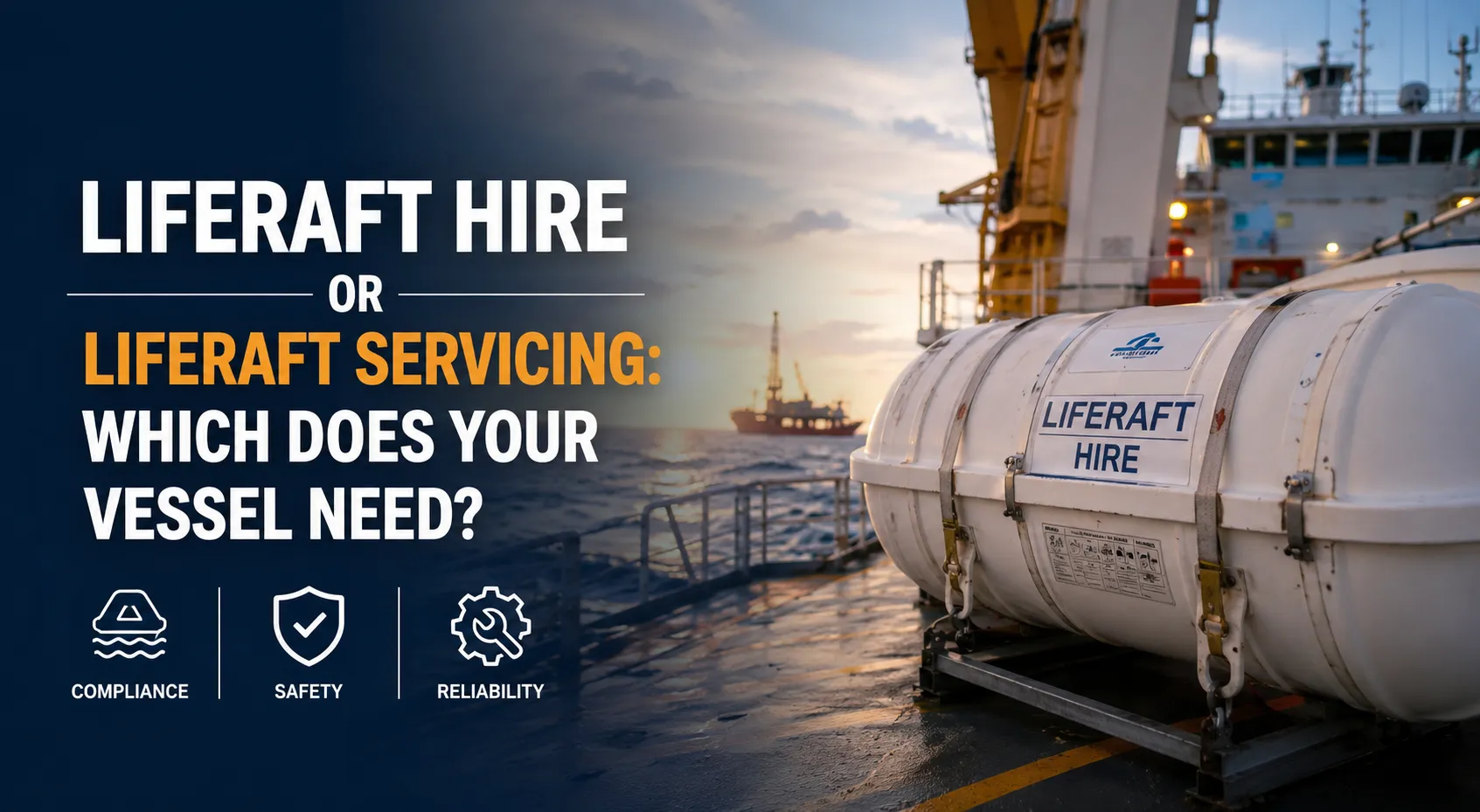

For commercial shipping companies, fishing fleet operators, yacht and boat owners, offshore oil and gas contractors, fleet managers, marine safety officers, and procurement teams, liferaft planning is not something to leave until the last minute. In the UK, the right choice often comes down to a mix of vessel type, operating area, compliance obligations, service timing, and how much operational downtime you can accept. That is why the decision between Liferaft hire or liferaft servicing which matters so much for safety, continuity, and peace of mind.
UK guidance from the MCA makes clear that inflatable life-saving appliances need to be maintained through approved channels, and servicing must follow the relevant standard and approval route.
At Adec Marine, the practical answer is rarely the same for every vessel. Some operators need the flexibility of Liferaft hire during refits, seasonal work, or service downtime.
Others need dependable Liferaft servicing to keep owned equipment certified and ready to go.
In many cases, the smartest plan is to use both at different points in the year.
What is the difference between liferaft hire and liferaft servicing?
Liferaft hire is a short-term or temporary solution. A vessel uses a fully prepared raft for a set period, often while its own equipment is out for maintenance or when an operator needs extra cover without committing to a purchase.
Liferaft servicing is the maintenance process that keeps a raft compliant, inspected, repacked, and ready for deployment. In UK maritime guidance, approved service stations are part of that compliance chain, and the station must be authorised for the specific product type it services.
That difference sounds simple, but operationally it is significant. If you own the raft, Liferaft servicing is essential because inflatable life-saving appliances must be maintained at the right interval.
If you cannot afford to have a vessel out of service while that work takes place, Liferaft hire gives you a practical bridge.
For many commercial operators, the best solution is not choosing one over the other, but planning both into the maintenance cycle.
Why the right choice depends on your vessel type
Not every vessel follows the same operating pattern or the same safety standard. Commercial shipping, fishing, offshore support, and leisure cruising all carry different risk profiles and different equipment expectations.
MCA guidance for UK commercial vessels covers the acceptable standards of non-SOLAS inflatable life-saving appliances and sets out how servicing should be handled for those systems.
Meanwhile, RYA guidance shows that for UK cruising and small commercial use, the liferaft standard can vary depending on the vessel and operating area.
That is why a fishing vessel, a charter yacht, and an offshore contractor may all use the same search terms, but need very different solutions.
In each case, Liferaft hire and Liferaft servicing serve different functions. One protects operational continuity. The other protects compliance and readiness.
When liferaft servicing is the better option
For most owners and operators, Liferaft servicing is the core requirement. SOLAS and other approved liferafts are generally serviced annually, and the servicing should be carried out at an approved station or by a manufacturer-approved service centre.
UK guidance also notes that hydrostatic release units should be serviced annually, and that the approval route matters as much as the service itself.
Liferaft servicing is usually the better choice when:
- You already own the liferaft and want to keep it certified
- You need to maintain service records for compliance or insurance
- You operate a vessel that must remain audit-ready
- You want the same raft specification every season
- You are planning ahead and do not want last-minute disruption
A proper service is more than a quick inspection. It typically includes unpacking, inflation, component checks, inspection of the raft structure and emergency pack, repacking, and certification.
The goal is to make sure the raft is not only compliant on paper, but genuinely ready to save lives if needed. That is the purpose of Liferaft servicing.
When liferaft hire makes more sense
Liferaft hire becomes the better option when flexibility matters more than ownership. This is especially helpful when a raft is away for servicing, when a vessel is between inspections, during refit periods, or when a seasonal business needs temporary safety cover.
UK hire providers commonly offer rafts for short-term use, with hire periods that can be tailored to the job.
Liferaft hire makes sense when:
- Your own raft is booked in for Liferaft servicing
- You need short-term compliance cover
- You are running a seasonal or charter-based operation
- You cannot afford a gap in vessel availability
- You want a simple temporary solution without buying extra equipment
For many operators, Liferaft hire is not a replacement for ownership. It is a continuity tool.
It keeps the vessel active while maintenance is being completed, which is especially useful when schedules are tight and downtime is expensive.
Liferaft hire and liferaft servicing for commercial shipping companies
Commercial shipping companies tend to prioritise three things: compliance, reliability, and predictable turnaround.
For them, Liferaft servicing is a fixed part of the maintenance calendar, because equipment must remain in date and service records must be available.
MCA guidance is clear that approved service stations are central to keeping inflatable life-saving appliances compliant.
At the same time, Liferaft hire can help keep vessels moving while servicing is under way.
Rather than waiting for the raft to return, a company can use a hire unit to maintain cover and avoid operational disruption. That is a major advantage for fleet managers who are juggling departures, port calls, inspections, and crew schedules.
A simple commercial shipping workflow often looks like this:
- Check the service date well in advance
- Book Liferaft servicing with an approved station
- Arrange Liferaft hire if the vessel needs temporary replacement cover
- Keep the service certificate with the ship’s records
Build the next renewal date into the compliance system
Liferaft hire and liferaft servicing for fishing fleet operators
Fishing fleets often operate on tight margins and weather-sensitive schedules, so every day out of service matters. That is one reason Liferaft hire is valuable in this sector. It gives the operator a way to keep the boat working while the original raft is being handled off-site.
At the same time, Liferaft servicing remains unavoidable because the raft must stay compliant and ready.
Annual servicing is the norm across many commercial applications, and the work should be done through an approved route. For a fishing business, planning ahead matters because a missed service can quickly become a missed trip.
A practical fishing fleet checklist includes:
- Confirm the next service date early
- Schedule Liferaft servicing before expiry
- Arrange Liferaft hire if the vessel must keep operating
- Keep records in one place for inspection or audit purposes
- Use a provider that understands commercial marine timelines
Liferaft hire and liferaft servicing for yacht and boat owners
For yacht and boat owners, the decision often comes down to comfort, suitability, and the kind of sailing being done.
RYA guidance notes that ISO 9650 Category A is likely to be the most common choice for cruising around the UK, while Category B and SOLAS options may be more relevant in other operating environments.
That makes it important to choose the correct raft standard first, then think about service timing.
Liferaft servicing is the right route when the raft is already owned and simply needs to remain valid and seaworthy. Liferaft hire can help when a charter season is about to start, when a raft is not in date, or when a boat is being prepared for a trip and needs temporary cover. Both options are useful, but they solve different problems.
For leisure and charter users, ask these questions:
- Does the raft standard suit the planned cruising area?
- Is the next Liferaft servicing due soon?
- Would Liferaft hire reduce downtime before the season?
- Is the raft appropriate for the number of people on board?
- Are the certificates current and easy to show if needed?
Liferaft hire and liferaft servicing for offshore oil, gas and marine contractors
Offshore contractors face some of the strictest expectations because equipment reliability is directly tied to crew safety and project continuity.
MCA guidance for non-SOLAS inflatable life-saving appliances sets out acceptable standards and servicing requirements for certain UK registered commercial vessels, which makes approved maintenance especially important in this sector.
For offshore teams, Liferaft servicing is often built into the project cycle, while Liferaft hire can cover the gap when one raft is out for inspection. This is useful on workboats, support craft, and other vessels that cannot simply sit idle while equipment is being maintained.
In offshore operations, the rule is straightforward: plan Liferaft servicing early, and keep Liferaft hire available as a contingency when the schedule becomes unpredictable.
How often does a liferaft need servicing in the UK?
In many cases, the answer is annually. UK guidance states that such liferafts are to be serviced annually at a service station approved by the manufacturer, and that hydrostatic release units should also be serviced annually.
Some raft categories and storage types can have different intervals, but annual servicing is the baseline most operators should expect to manage.
That is why Liferaft servicing should be scheduled well before the due date. Leaving it until the last moment can create compliance issues, insurance headaches, and avoidable downtime.
For teams that manage multiple vessels, a shared service calendar is one of the simplest ways to stay ahead.
What happens during liferaft servicing?
A standard Liferaft servicing visit usually includes a full unpacking and inspection cycle. While the exact steps vary by raft type and manufacturer, the process commonly includes:
- Unpacking the raft
- Inflation and pressure checks
- Inspection of seams, valves, and fabric
- Verification of the emergency pack and accessories
- Inspection of the cylinder and release components
- Repacking and resealing the raft
- Issuing service documentation
This is why Liferaft servicing matters so much. It turns a stored emergency device back into a certified piece of safety equipment that is ready for real-world use.
Common mistakes vessel operators make
Even experienced operators make the same avoidable errors:
- Leaving Liferaft servicing too late
- Assuming every raft follows the same schedule
- Using a station that is not approved for the exact raft type
- Forgetting to arrange temporary cover while the raft is away
- Losing service records or keeping them out of reach during inspection
The good news is that these problems are easy to reduce with better planning. A clear Liferaft hire arrangement can keep a vessel active during service, while a disciplined Liferaft servicing schedule keeps the equipment compliant and available.
Why approved service stations matter
Approved service stations are not a detail to skim over. UK maritime guidance makes clear that inflatable life-saving appliances should be serviced at approved stations, and that the station must be authorised for the relevant make or type.
For commercial operators, that approval is part of the compliance record, not an optional extra.
That is true whether you are arranging Liferaft servicing or considering Liferaft hire. The quality of the provider matters just as much as the product itself.
How Adec Marine can help
For UK marine operators looking for a practical, no-nonsense solution, Adec Marine can be positioned as a partner for both Liferaft hire and Liferaft servicing. That is important because many businesses do not need only one service. They need a plan that keeps the vessel compliant, reduces disruption, and fits the operating schedule.
Whether the job is a short-term replacement, a seasonal hire, or routine maintenance on an owned raft, Adec Marine can support the process with the right marine safety approach.
For many operators, the most efficient setup is a combination of Liferaft hire for continuity and Liferaft servicing for certification and readiness.
Final takeaway: Liferaft Hire or Liferaft Servicing by ADEC Marine UK
If you already own a raft and need to keep it compliant, Liferaft servicing is usually the priority.
If you need temporary cover, flexibility, or a replacement while the original raft is being maintained, Liferaft hire is often the better fit.
For many commercial shipping companies, fishing fleets, offshore contractors, yacht owners, and charter operators, the smartest strategy uses both.
The safest approach is simple. Keep Liferaft servicing on schedule, use approved stations, keep the records tidy, and treat Liferaft hire as a practical tool for operational continuity.
Done properly, both services support the same goal, which is keeping people safe and vessels ready for sea.

























Sign in to leave a comment.