
Limb lengthening surgery is an advanced orthopedic procedure designed to increase the length of a leg or arm bone. It is commonly performed to correct limb length differences, treat certain bone deformities, improve mobility, or increase height in selected cases. With modern orthopedic techniques and improved rehabilitation methods, limb lengthening surgery has become safer and more precise than ever before.
People considering limb lengthening surgery often have many questions about the procedure, recovery time, pain, results, and long-term outcomes. Understanding how the surgery works and who may benefit from it can help patients make informed decisions about treatment.
If you are searching for limb lengthening surgery in Chennai, it is important to consult experienced orthopedic specialists who can carefully evaluate your condition and guide you through every stage of treatment and recovery.
What Is Limb Lengthening Surgery?
Limb lengthening surgery is a procedure that gradually increases the length of a bone. The surgery works on the body’s natural ability to form new bone tissue.
During the procedure, the surgeon carefully cuts the bone and uses a specialized device to slowly separate the two ends of the bone over time. As the gap increases gradually, new bone grows in between. Muscles, nerves, blood vessels, and soft tissues also adapt slowly during the process.
The procedure may be performed on:
- Femur (thigh bone)
- Tibia (shin bone)
- Humerus (upper arm bone)
The goal may be functional correction, deformity correction, or cosmetic height increase depending on the patient’s condition.
Why Is Limb Lengthening Surgery Done?
There are several medical and functional reasons why limb lengthening surgery may be recommended.
Limb Length Discrepancy
Some people are born with one leg shorter than the other, while others develop shortening after fractures, infections, or growth plate injuries.
Significant limb length differences can lead to:
- Walking difficulties
- Hip and back pain
- Abnormal posture
- Joint strain
Limb lengthening surgery helps restore balance and improve mobility.
Congenital Conditions
Certain birth conditions may affect normal bone growth and development. Limb lengthening may help improve limb function and alignment.
Bone Deformities
The surgery may also be used to correct deformities caused by:
- Trauma
- Bone diseases
- Previous surgeries
- Growth abnormalities
Cosmetic Height Increase
In selected individuals, limb lengthening may be performed for height enhancement after careful physical and psychological evaluation.
How Does Limb Lengthening Surgery Work?
The treatment usually happens in stages.
Surgical Procedure
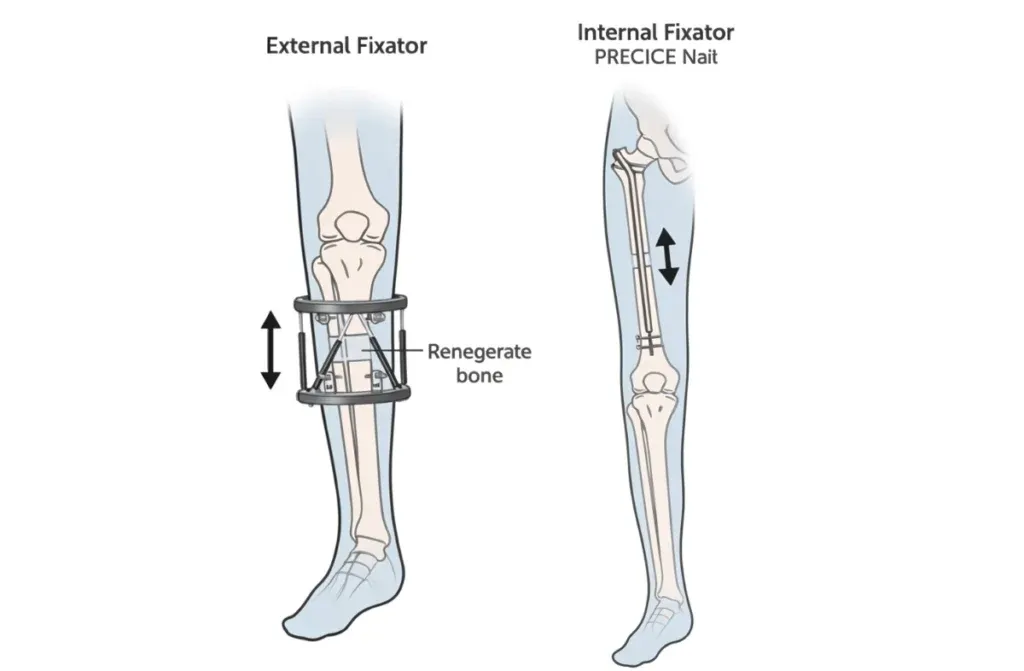
During surgery, the orthopedic surgeon cuts the bone in a controlled manner. A specialized device is then attached either:
- Outside the leg (external fixator), or
- Inside the bone (internal lengthening nail)
The choice depends on the patient’s condition and surgical plan.
Distraction Phase
After a short healing period, the bone is gradually lengthened. The device slowly separates the bone segments by small amounts each day.
This process allows new bone to form naturally in the gap.
Consolidation Phase
Once the desired length is achieved, the new bone needs time to harden and strengthen. This stage is called consolidation.
Recovery continues with physiotherapy and regular monitoring.
Who Is a Good Candidate for Limb Lengthening Surgery?
Not everyone is suitable for limb lengthening surgery. Doctors evaluate several factors before recommending the procedure.
Good candidates generally include:
- Individuals with limb length differences
- Patients with bone deformities
- Adults in good overall health
- Patients willing to commit to rehabilitation
- Individuals with realistic expectations
A detailed medical assessment is necessary before surgery.
Benefits of Limb Lengthening Surgery
When performed appropriately, limb lengthening surgery can provide several benefits.
Improved Walking Ability
Correcting leg length differences may improve balance, posture, and walking comfort.
Better Joint Alignment
Balanced limb length can reduce stress on the hips, knees, and spine.
Correction of Deformities
The procedure may help restore proper limb alignment and function.
Increased Confidence
For some patients, improved height or correction of visible deformities may positively affect confidence and quality of life.
Recovery After Limb Lengthening Surgery
Recovery is gradual and requires patience and commitment.
Physiotherapy
Physical therapy is one of the most important parts of recovery. Exercises help:
- Maintain joint movement
- Improve muscle strength
- Prevent stiffness
- Support walking function
Regular Follow-Up
Patients require regular X-rays and medical reviews to monitor bone healing and lengthening progress.
Weight Bearing
Some patients may begin partial walking with support during recovery, depending on the type of device used and bone healing.
Recovery Time
The recovery timeline varies depending on:
- Amount of lengthening
- Bone involved
- Age
- Overall health
- Healing response
Complete recovery may take several months.
Is Limb Lengthening Surgery Painful?
Some discomfort is expected during recovery, especially during the lengthening phase. However, pain management techniques, medications, and physiotherapy help control symptoms.
Most patients report that discomfort improves gradually as healing progresses.
Risks and Complications
Like any major orthopedic procedure, limb lengthening surgery carries certain risks.
Possible complications may include:
- Infection
- Joint stiffness
- Delayed bone healing
- Nerve irritation
- Muscle tightness
- Device-related problems
Careful monitoring and proper rehabilitation help reduce these risks.
Modern Advances in Limb Lengthening Surgery
Orthopedic technology has improved significantly over the years.
Today, many centers use advanced techniques such as:
- Motorized internal lengthening nails
- Minimally invasive surgical methods
- Computer-assisted planning
- Improved rehabilitation protocols
These advancements may help improve comfort, precision, and recovery outcomes in suitable patients.
Why Choose Chennai for Limb Lengthening Surgery?
Chennai is recognized for advanced orthopedic care and specialized surgical expertise. Many hospitals in the city offer:
- Experienced orthopedic surgeons
- Modern surgical technology
- Advanced rehabilitation support
- Multidisciplinary care teams
- Comprehensive follow-up care
Patients from different parts of India and abroad often visit Chennai for complex orthopedic procedures and reconstructive surgeries.
Questions to Ask Before Surgery
Before undergoing limb lengthening surgery, patients should discuss:
- Expected results
- Recovery timeline
- Rehabilitation requirements
- Risks and complications
- Cost of treatment
- Physical activity restrictions
- Long-term outcomes
Clear communication with the orthopedic surgeon helps patients prepare realistically for the journey ahead.
When Should You Consult an Orthopedic Specialist?
You should consider orthopedic evaluation if you have:
- One leg shorter than the other
- Difficulty walking
- Persistent hip or back pain due to imbalance
- Bone deformities
- Functional limitations
- Concerns about limb alignment
Early consultation helps determine whether surgery or non-surgical management is appropriate.
Final Thoughts
Limb lengthening surgery in Chennai offers advanced treatment options for individuals with limb length differences, deformities, or selected height-related concerns. The procedure requires careful planning, experienced surgical care, and dedicated rehabilitation, but it can significantly improve mobility, alignment, and overall quality of life in suitable patients.
Because every patient’s condition is unique, proper medical evaluation is essential before deciding on surgery. Consulting an experienced orthopedic specialist can help you understand the procedure, expected outcomes, and recovery process so you can make an informed decision about your treatment journey


























Sign in to leave a comment.