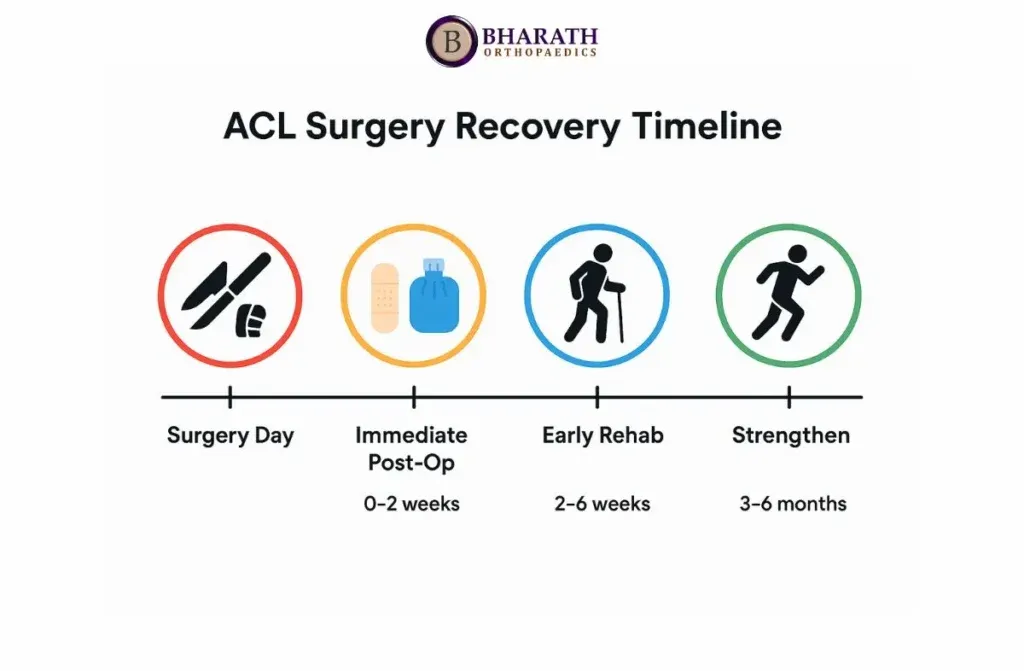

ACL reconstruction surgery is one of the most common procedures performed for knee ligament injuries, especially in athletes and active individuals. The anterior cruciate ligament (ACL) plays an important role in stabilising the knee during running, jumping, pivoting, and sudden direction changes. When the ligament tears, patients often experience instability, swelling, pain, and difficulty returning to sports or normal activities.
Understanding the recovery timeline for ACL surgery helps patients prepare physically and mentally for rehabilitation. Recovery is a gradual process that requires patience, structured physiotherapy, and regular follow-up with your orthopaedic surgeon.
How Long Does ACL Recovery Take?
Most patients recover enough for normal daily activities within 3–4 months after surgery. However, returning to sports usually takes between 9–12 months depending on:
- Age
- Fitness level
- Graft type
- Severity of injury
- Presence of meniscus damage
- Commitment to physiotherapy
Every recovery is different, and the timeline may vary slightly from person to person.
Before Surgery: Preparing for Recovery
Many patients benefit from “prehabilitation” before surgery. This involves physiotherapy exercises designed to:
- Reduce swelling
- Improve knee motion
- Strengthen the quadriceps and hamstrings
- Improve balance
Entering surgery with a stronger and less stiff knee often leads to smoother recovery afterwards.
Week 1–2: Immediate Recovery Phase
The first two weeks focus on protecting the new graft, controlling swelling, and restoring basic knee movement.
What to Expect
- Pain and swelling are common
- Walking usually requires crutches
- A knee brace may be prescribed
- Ice and elevation are important
- Physiotherapy begins early
Most ACL surgeries are performed as day-care procedures, meaning patients usually go home the same day.
Goals During This Phase
- Reduce swelling
- Achieve full knee extension
- Begin gentle bending exercises
- Activate the quadriceps muscles
- Walk safely with support
Important Tips
- Keep the leg elevated whenever possible
- Apply ice packs regularly
- Take medications exactly as prescribed
- Avoid placing pillows directly under the knee for long periods
Patients should also monitor for warning signs such as fever, excessive redness, or wound discharge.
Weeks 2–6: Early Rehabilitation
This phase focuses on improving mobility and gradually increasing weight-bearing.
Physical Therapy Focus
- Range-of-motion exercises
- Straight-leg raises
- Stationary cycling
- Gait training
- Gentle strengthening exercises
Patients usually begin walking with less support during this period.
What Improves During This Phase?
- Swelling starts reducing significantly
- Knee bending improves
- Walking becomes easier
- Muscle activation improves
Most patients with desk jobs may return to work within 2–4 weeks, depending on pain and mobility.
Common Challenges
Many patients feel frustrated during this stage because progress can seem slow. Mild stiffness and weakness are still normal.
It is important not to rush recovery because the graft undergoes a healing process called ligamentisation, during which it temporarily becomes weaker before strengthening again.
Weeks 6–12: Strengthening Phase
This is one of the most important phases of ACL recovery.
Rehabilitation Goals
- Restore full range of motion
- Improve muscle strength
- Improve balance and coordination
- Normalise walking pattern
Exercises May Include
- Leg presses
- Step-ups
- Mini squats
- Hamstring strengthening
- Balance exercises
By the end of 3 months, many patients can:
- Walk comfortably
- Climb stairs more easily
- Perform low-impact exercises
- Return to light daily activities without difficulty
However, running and sports are usually still restricted.
Months 3–6: Advanced Rehabilitation
The focus now shifts toward rebuilding athletic movement and improving functional stability.
What Happens During This Phase?
- Muscle strengthening becomes more intense
- Core and hip stability exercises increase
- Light jogging may begin
- Sport-specific drills may be introduced
Physiotherapists carefully monitor:
- Knee stability
- Strength symmetry
- Movement control
- Landing mechanics
Why This Phase Matters
Returning to sports too early significantly increases the risk of reinjury. Even if the knee feels normal, the graft may still be healing internally.
Patients often feel more confident during this stage, but overconfidence can lead to setbacks.
Months 6–9: Return-to-Activity Phase
At this stage, rehabilitation becomes more activity-specific.
Activities Often Introduced
- Running drills
- Agility exercises
- Controlled jumping
- Direction-change exercises
- Low-level sports practice
Functional Testing
Before returning to sport, many surgeons and physiotherapists perform:
- Hop tests
- Strength testing
- Balance assessment
- Movement analysis
The goal is to ensure the operated leg is nearly as strong and stable as the unaffected side.
Psychological Recovery
Fear of reinjury is very common after ACL surgery. Some patients physically recover well but still hesitate during sports movements.
Sports rehabilitation should address both physical and mental confidence.
Months 9–12: Return to Sports
Many patients return to competitive sports between 9–12 months after surgery.
Clearance Usually Depends On:
- Full knee motion
- Minimal swelling
- Good strength recovery
- Successful functional tests
- Confidence during activity
High-demand sports such as:
- Football
- Basketball
- Volleyball
- Kabaddi
- Rugby
usually require a longer recovery timeline because they involve cutting and pivoting movements.
Recovery After ACL and Meniscus Surgery
If a meniscus repair is performed along with ACL reconstruction, recovery may be slower.
Patients may have:
- Longer restrictions on weight-bearing
- Slower progression in exercises
- Delayed return to running and sports
In some cases, return to full sport may take 12 months or longer.
Factors That Affect ACL Recovery
Several factors influence how quickly patients recover.
Age
Younger individuals often regain strength faster, although recovery varies greatly.
Fitness Level
Stronger muscles before surgery usually improve rehabilitation outcomes.
Consistency with Physiotherapy
Skipping exercises or stopping rehab early can delay recovery significantly.
Graft Type
Different grafts may affect pain levels and muscle recovery patterns.
Smoking and General Health
Smoking may slow tissue healing and increase complications.
Tips for a Smoother Recovery
Follow Your Physiotherapy Plan
Physiotherapy is just as important as the surgery itself.
Do Not Rush Running or Sports
Feeling pain-free does not always mean the graft is fully healed.
Focus on Strength and Balance
Good muscle control protects the knee during movement.
Maintain a Healthy Weight
Extra body weight increases stress on the knee joint.
Stay Patient
ACL recovery is a marathon, not a sprint.
When to Contact Your Surgeon
Seek medical advice immediately if you experience:
- Severe swelling
- Fever
- Increasing redness
- Calf pain
- Sudden instability
- A popping sensation
- Difficulty bearing weight
Early treatment of complications is important.
Long-Term Outlook After ACL Surgery
Most patients recover well after ACL reconstruction and successfully return to work, exercise, and sports. Long-term success depends heavily on rehabilitation quality and avoiding premature return to high-impact activity.
Even after recovery, continuing:
- Strength training
- Balance exercises
- Proper warm-up routines
can help reduce the risk of future knee injuries.
Final Thoughts
Recovery after ACL surgery takes time, consistency, and commitment. While many patients feel significantly better within a few months, full recovery and safe return to sports often require 9–12 months of structured rehabilitation.
Understanding the recovery timeline helps set realistic expectations and reduces frustration during the healing process. Working closely with your orthopaedic surgeon and physiotherapist is the best way to achieve a strong, stable, and confident return to activity.




















Sign in to leave a comment.