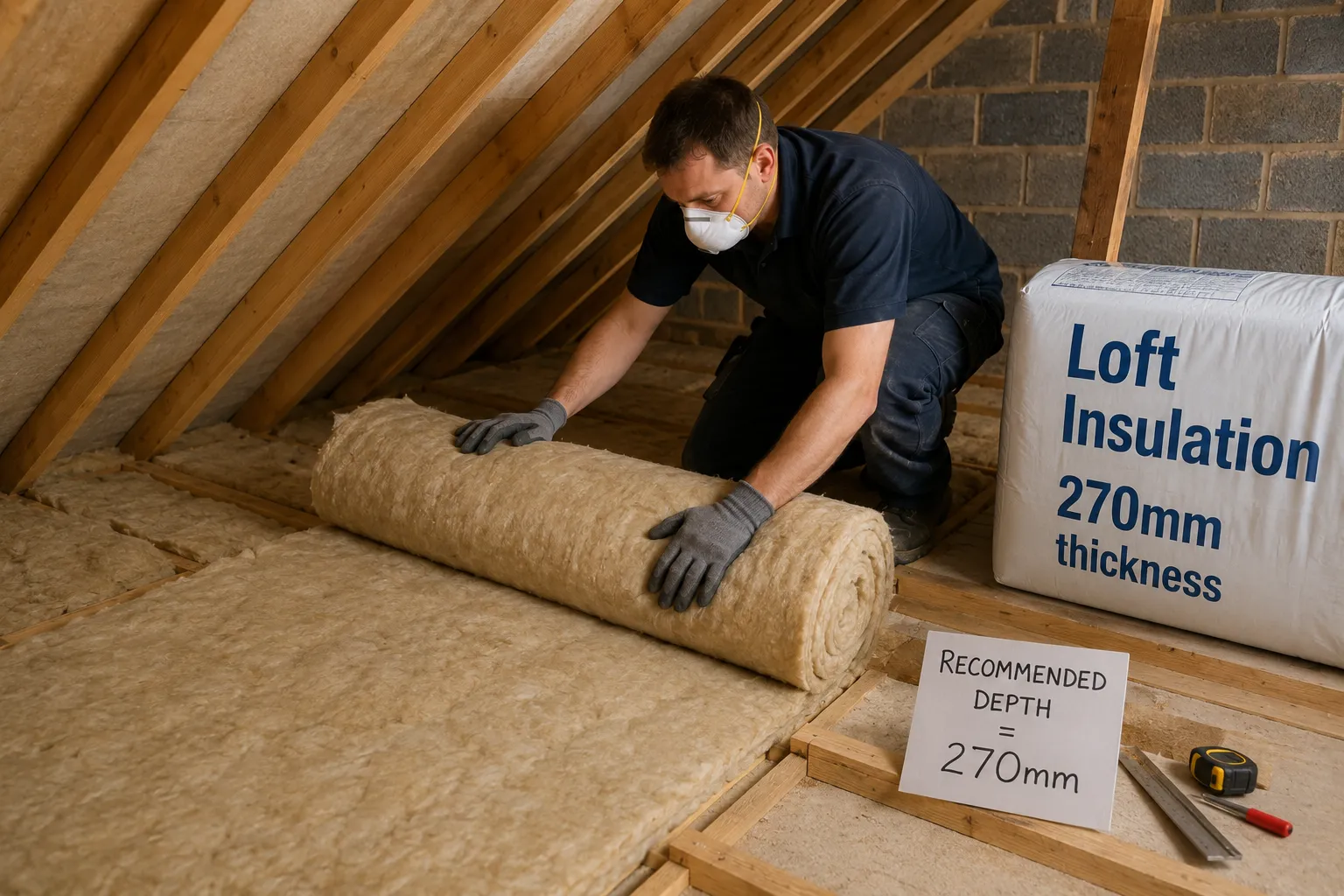

When it comes to making your home more energy efficient, few improvements deliver long-term value like Loft Roof Insulation. Yet, many homeowners focus solely on whether they have insulation, rather than whether they have enough of it. The depth of your loft insulation plays a crucial role in determining how much heat your home retains and how much money you can save on heating costs over time.
If your insulation is too thin or has deteriorated over the years, your home could be losing a significant amount of heat through the roof. This not only makes your living space less comfortable but also increases the workload on your heating system.
In this guide, we'll explain why insulation depth matters, discuss the recommended loft insulation depth UK 270mm, explore the savings you can expect, and provide practical tips for getting the most from your loft insulation investment.
Why Loft Insulation Depth Matters More Than You Think
Many people assume that simply having insulation in the loft is enough. However, insulation only performs effectively when it is installed to the correct depth.
Heat naturally rises. Without sufficient insulation, warm air escapes through the roof, forcing your heating system to replace that lost heat continuously. Increasing insulation depth slows this heat transfer, helping your home remain warm for longer.
Benefits of adequate insulation depth include:
- Reduced heat loss
- Lower heating costs
- Improved indoor comfort
- Better energy efficiency
- Reduced environmental impact
Even homes that already have insulation may benefit from topping it up if it no longer meets current recommendations.
What Is the Recommended Loft Insulation Depth?
Building standards and energy efficiency recommendations have evolved over the years.
Today, the recommended loft insulation depth UK 270mm is widely recognised as providing excellent thermal performance for most homes.
This depth allows insulation materials to trap sufficient air, creating an effective barrier against heat loss while maintaining good ventilation within the loft.
Older homes often contain insulation measuring only 50mm to 100mm, which falls well below current recommendations.
If your insulation was installed many years ago, checking its depth could reveal an easy opportunity to improve your home's efficiency.
How Loft Roof Insulation Works
Understanding how insulation works helps explain why depth is so important.
Insulation contains millions of tiny air pockets that slow the movement of heat.
Instead of allowing warmth to escape quickly through the roof, these trapped air pockets reduce heat transfer and keep warm air inside your home.
During summer, the same insulation also slows heat entering through the roof, helping maintain a more comfortable indoor temperature.
This year-round performance makes Loft Roof Insulation one of the most valuable energy-saving improvements available.
Signs Your Loft Insulation May Be Too Thin
Many homeowners don't realise their insulation no longer provides adequate protection.
Common warning signs include:
- High heating bills
- Cold upstairs bedrooms
- Uneven temperatures throughout the house
- Constant thermostat adjustments
- Drafts despite closed windows
- Cold ceilings
- Ice melting quickly on the roof after snowfall
- Older insulation that appears compressed
If several of these signs apply to your home, it may be time to inspect your loft.
How Much Heat Can Escape Through an Under-Insulated Loft?
The roof is one of the largest sources of heat loss in many homes.
Without adequate insulation, valuable heat continuously escapes, making your boiler or heating system work much harder than necessary.
This leads to:
- Higher fuel consumption
- Increased heating costs
- Reduced indoor comfort
- Greater carbon emissions
Adding insulation to the correct depth significantly reduces these losses.
The Financial Benefits of Proper Loft Insulation Depth
One of the biggest reasons homeowners invest in insulation is the potential for long-term savings.
Because your heating system doesn't need to replace lost heat as frequently, energy consumption decreases naturally.
Potential financial benefits include:
- Lower monthly utility bills
- Reduced heating demand
- Less wear on your boiler
- Long-term return on investment
- Improved property efficiency
Although exact savings depend on property size and heating habits, properly installed insulation continues delivering value year after year.
Comfort Improvements You'll Notice Every Day
Saving money is important, but comfort is often the first benefit homeowners notice.
With adequate insulation depth, your home typically experiences:
- Warmer rooms during winter
- Cooler loft spaces in summer
- Fewer cold spots
- More stable indoor temperatures
- Reduced drafts
These improvements make daily living noticeably more enjoyable.
Common Loft Insulation Materials
Several insulation products can achieve the recommended depth.
Mineral Wool
One of the most widely used options.
Advantages include:
- Affordable
- Fire resistant
- Excellent thermal performance
- Good sound reduction
Fibreglass Rolls
A popular choice for many homes due to easy installation.
Benefits include:
- Lightweight
- Cost-effective
- Readily available
Rigid Insulation Boards
Ideal where loft space is limited.
These provide:
- High insulation performance
- Excellent durability
- Moisture resistance
Natural Insulation
Environmentally conscious homeowners may prefer:
- Sheep wool
- Hemp
- Recycled cellulose
- Wood fibre
These sustainable materials also provide excellent thermal efficiency.
Should You Replace or Top Up Existing Insulation?
Not every loft requires complete replacement.
If your current insulation remains dry and in good condition, adding additional layers may be enough to achieve the recommended depth.
However, replacement may be necessary if the insulation is:
- Damp
- Compressed
- Damaged
- Contaminated
- Poorly installed
A proper inspection helps determine the best approach.
Mistakes to Avoid When Increasing Loft Insulation Depth
Adding insulation isn't simply about filling every available space.
Avoid these common mistakes:
Blocking Ventilation
Airflow is essential for preventing condensation.
Never cover ventilation openings.
Compressing Insulation
Flattened insulation loses many of its insulating properties.
Allow materials to remain at their intended thickness.
Leaving Gaps
Even small uncovered areas create thermal bridges where heat escapes.
Ensure complete coverage across the loft floor.
Ignoring Loft Hatches
An uninsulated loft hatch can undermine the effectiveness of the rest of the insulation.
Seal and insulate the hatch wherever possible.
Additional Benefits Beyond Lower Heating Costs
Proper Loft Roof Insulation offers much more than energy savings.
Other benefits include:
Reduced Condensation
Stable temperatures help minimise moisture build-up.
Longer Heating System Life
Heating systems experience less strain when homes retain heat more effectively.
Improved Indoor Air Quality
Reduced dampness lowers the likelihood of mould development.
Better Sound Insulation
Many insulation materials also reduce external noise.
Increased Property Appeal
Energy-efficient homes are increasingly attractive to potential buyers.
Is More Insulation Always Better?
Many homeowners wonder whether adding extra insulation beyond current recommendations provides additional savings.
In most situations, installing insulation to the recommended loft insulation depth UK 270mm delivers excellent thermal performance.
Adding significantly more insulation generally produces diminishing returns.
Proper installation quality is often more important than simply adding greater thickness.
Easy Ways to Maximise Your Loft Insulation
Insulation works even better when combined with other energy-saving habits.
Consider:
- Sealing draughts around doors and windows
- Servicing your heating system regularly
- Using programmable heating controls
- Closing loft hatches securely
- Insulating exposed pipes
- Maintaining good loft ventilation
Together, these measures improve overall home efficiency.
Is Loft Insulation Worth the Investment?
For most homeowners, the answer is yes.
Unlike decorative improvements, insulation continues delivering benefits every day.
Its long-term value comes from:
- Lower heating costs
- Improved comfort
- Better energy efficiency
- Reduced environmental impact
- Increased home value
- Longer heating system lifespan
Few home improvements continue generating savings year after year in the same way.
Frequently Asked Questions
How do I measure my current loft insulation?
Use a tape measure from the loft floor to the top of the insulation layer. Compare the measurement with current recommendations.
Can old insulation still be effective?
Yes, provided it remains dry, undamaged, and thick enough to meet current standards.
Does insulation work during summer?
Absolutely. It slows heat entering through the roof, helping maintain cooler indoor temperatures.
Can I install additional insulation myself?
Some homeowners choose to top up insulation themselves, but professional installation helps ensure correct coverage, ventilation, and long-term performance.
Conclusion
Choosing the correct Loft Roof Insulation depth is one of the smartest investments you can make in your home's comfort and energy efficiency. Meeting the recommended loft insulation depth UK 270mm helps reduce heat loss, lowers heating costs, creates a more comfortable indoor environment, and supports a more sustainable lifestyle. Even if your loft already has insulation, checking whether it meets modern recommendations can uncover opportunities for significant long-term savings.
Pairing effective insulation with other practical energy-saving solutions, such as Low Flow Showerheads, can further reduce household energy and water consumption without affecting everyday comfort. Small improvements throughout the home often work together to deliver noticeable savings over time.
By exploring reliable energy-efficient products from Low Energy Supermarket, homeowners can make informed decisions that improve home performance while creating a warmer, more cost-effective place to live.





























Sign in to leave a comment.