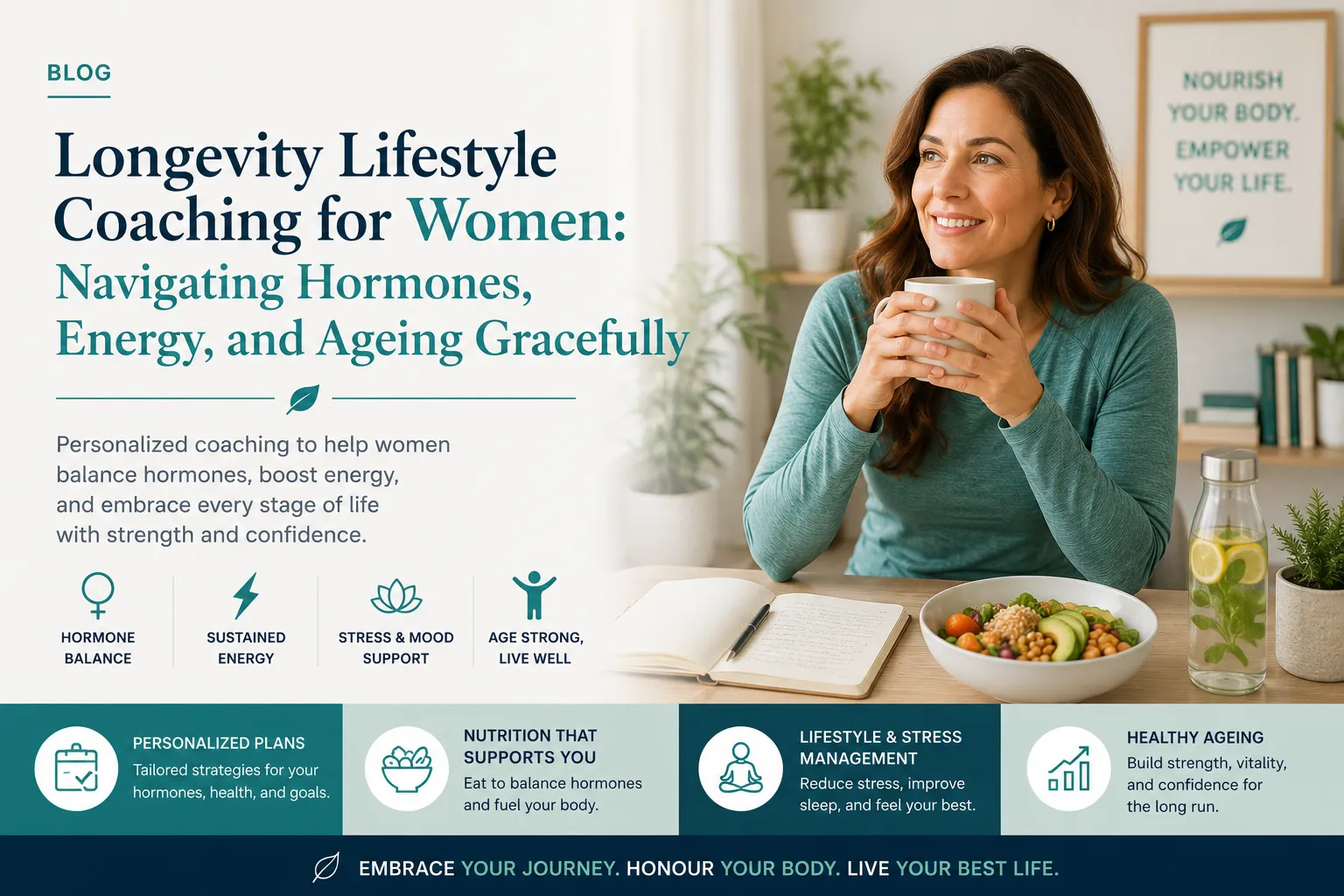

Nobody tells you that your 40s might feel like your body rewrote the rulebook overnight.
Sleep that used to come easily now vanishes at 3am. Energy that carried you through full days starts fading by noon. And the habits that kept you healthy at 30 suddenly stop working not because you're doing anything wrong, but because everything about your biology is shifting.
This is where longevity lifestyle coaching steps in. Not as a quick fix, and not as another wellness trend to chase. But as a grounded, science-backed approach to helping women understand what's happening inside their bodies and build a life that supports them through every hormonal stage.
At Physical Wellbeing, we work with women who are done guessing and ready to understand. Here's what longevity coaching actually looks like, why it matters specifically for women, and how the right support changes everything.
What Is Longevity Lifestyle Coaching?
Longevity lifestyle coaching is a personalised health practice focused on extending not just lifespan, but healthspan — the years you spend feeling genuinely well, energetic, and capable.
For women, this means addressing the interconnected systems that govern how we age: hormones, nutrition, sleep, stress physiology, movement, and emotional wellbeing. A longevity coach helps you identify the specific patterns and imbalances that are draining your energy and accelerating wear then builds a sustainable plan to reverse or slow those effects.
This is not generic fitness advice. It goes deeper than calorie counts and step goals. A skilled longevity coach reads the full picture your hormonal shifts, your lifestyle load, your emotional landscape and works with all of it
Why Women's Ageing Is Different (And Often Misunderstood)
Women's health has historically been under-researched and over-simplified. For decades, health studies were conducted predominantly on male subjects, and the results were applied to women as if our bodies work identically. They don't.
Women experience three distinct hormonal life phases that dramatically reshape health: the reproductive years, perimenopause, and post-menopause. Each phase changes how you metabolise food, how you respond to stress, how you build and lose muscle, and how your brain functions. Ignoring these phases means building a health strategy that's permanently playing catch-up.
Did You Know? Perimenopause can begin up to 10 years before the last menstrual period often starting in a woman's late 30s. Many women experience symptoms like fatigue, brain fog, and mood changes for years without recognising the hormonal root cause.
Longevity coaching for women accounts for these shifts explicitly. Rather than treating hormonal fluctuation as an inconvenience to manage, it treats hormones as information signals about what your body needs more or less of right now.
The Hormone-Energy Connection Most Women Miss
Hormones are chemical messengers. When they're balanced, you feel like yourself clear-headed, physically capable, emotionally resilient. When they're off, even slightly, the ripple effects are significant.
Oestrogen influences bone density, cardiovascular health, skin elasticity, and mood regulation. Progesterone affects sleep quality, anxiety levels, and thyroid function. Cortisol the stress hormone disrupts nearly every other hormonal system when it stays elevated too long. Insulin sensitivity changes with age, affecting energy levels, weight distribution, and inflammation.
A longevity coach connects these dots. Rather than treating insomnia separately from anxiety, separately from weight changes, separately from fatigue, longevity coaching looks at the hormonal thread running through all of them.
"Based on working with women at various life stages over many years, I've consistently seen that the women who make the most lasting improvements are the ones who stop fighting their bodies and start understanding them. When you know what your hormones are asking for, the path forward becomes much clearer."
This is the philosophy behind Physical Wellbeing's approach understanding first, action second.
Nutrition as Medicine: The Role of a Nutrition Life Coach
Food is one of the most powerful tools you have for influencing hormonal health, inflammation, and longevity. Yet most nutritional advice women receive is designed for weight loss, not for hormonal balance or long-term cellular health.
A nutrition life coach takes a different lens. Rather than restricting food groups or counting macros in isolation, they examine how your dietary patterns affect hormone production, gut microbiome health, nutrient absorption, and energy regulation and tailor recommendations accordingly.
For women navigating hormonal changes, specific nutritional strategies make a measurable difference. Phytoestrogen-rich foods like flaxseeds, tempeh, and legumes can support oestrogen balance during perimenopause. Adequate protein intake often underestimated in women's diets protects muscle mass and supports metabolic function as oestrogen declines. Anti-inflammatory foods reduce the chronic low-grade inflammation that accelerates ageing at a cellular level.
Common Mistake: Many women drastically cut calories in response to midlife weight gain, which actually increases cortisol, slows metabolism further, and accelerates muscle loss. A nutrition life coach will redirect this towards nutrient density and hormonal support rather than restriction.
Timing matters too. Eating patterns that support circadian rhythm front-loading calories earlier in the day and allowing longer overnight fasting windows have been shown to improve insulin sensitivity and support sleep quality, both of which are key longevity markers.
Emotional Wellbeing Is Not Optional It's Biological
There's a persistent idea that emotional health is separate from physical health. That stress is a mindset problem, that anxiety is something to push through, that emotional struggles are somehow less "real" than physical symptoms.
The science says otherwise.
Chronic psychological stress raises cortisol, which suppresses immune function, disrupts sleep, depletes progesterone, impairs gut health, and accelerates cellular ageing through a process called telomere shortening. Emotional and physical health are the same system.
This is why working with an emotional wellbeing coach is not an add-on to a longevity plan it is the longevity plan.
An emotional wellbeing coach helps women identify stress patterns that have become so habitual they feel invisible. Perfectionism that drives overwork. People-pleasing that erodes personal boundaries and sleep. Anxiety responses that keep the nervous system locked in a low-grade threat state for years. These patterns wear the body down as surely as poor nutrition or inactivity.
Pro Tip: The nervous system cannot distinguish between physical and emotional threat. Practices that downregulate the stress response including breathwork, boundaries, and consistent sleep are as biochemically powerful as any supplement or dietary change.
At Physical Wellbeing, emotional wellbeing coaching is integrated into every longevity programme because we understand that lasting physical health is built on a stable emotional foundation.
Movement That Works With Your Hormones, Not Against Them
Exercise advice for women has often been one-note: do more, push harder, train like an athlete. This approach misses the hormonal complexity that shapes how women respond to physical stress.
High-intensity training raises cortisol. In younger women with robust hormonal reserves, this is manageable and even beneficial. In women with elevated baseline cortisol due to life stress, perimenopause, or poor sleep adding more high-intensity work can worsen fatigue, disrupt sleep further, and increase inflammation.
Longevity-focused movement for women prioritises strength training to preserve muscle mass and bone density, low-intensity steady-state movement to support cardiovascular health without cortisol spikes, and recovery practices including yoga, walking, and mobility work that reduce systemic stress.
The goal is not maximum output. It's sustainable function over decades.
Sleep: The Longevity Factor That Gets Underestimated
Sleep is when the body repairs. Cellular damage is addressed, hormones reset, memories consolidate, and immune surveillance runs. Chronic poor sleep accelerates ageing more than almost any other single lifestyle factor.
Women are disproportionately affected by sleep disruption during hormonal transitions. Night sweats, anxiety, and progesterone decline all interfere with sleep architecture specifically the deep, restorative stages.
A longevity coach addresses sleep not through generic advice, but by identifying the root disruptions. Is it cortisol spiking too late in the day? Blood sugar instability causing 3am waking? Oestrogen decline reducing sleep depth? Each pattern has a targeted solution, and addressing it properly transforms not just sleep quality but daytime energy, mood, and cognitive function.
What Ageing Gracefully Actually Means
Ageing gracefully is not about looking younger than your age or pretending the years aren't passing. It means arriving at each decade feeling capable, curious, and well in your body.
It means your 50s feeling vital rather than depleted. Your 60s feeling active and engaged. Your 70s feeling far less compromised than cultural expectations suggest they should.
Longevity coaching makes this possible not through anti-ageing gimmicks, but through a genuine understanding of the systems that govern how women age and a personalised strategy to support them.
Physical Wellbeing exists for exactly this. Our team brings together longevity coaching, nutrition life coaching, and emotional wellbeing coaching because we know these elements cannot be separated. Women deserve health support that treats them as whole people — not collections of symptoms to manage.
Frequently Asked Questions
What is longevity lifestyle coaching for women? Longevity lifestyle coaching for women is a personalised health approach focused on extending healthspan the years you feel well and energetic by addressing hormonal balance, nutrition, sleep, movement, and emotional wellbeing together.
How does a nutrition life coach support hormonal health? A nutrition life coach designs eating strategies that support hormone production, reduce inflammation, protect muscle mass, and stabilise blood sugar all of which are essential during perimenopause and post-menopause.
What does an emotional wellbeing coach do in a longevity programme?
An emotional wellbeing coach helps identify chronic stress patterns that are physically harmful such as elevated cortisol, nervous system dysregulation, and sleep disruption and builds sustainable practices to address them at the root.
When should women start longevity coaching?
There is no single right time, but many women benefit from starting in their late 30s to early 40s often during early perimenopause to get ahead of hormonal shifts rather than reacting to them after they've worsened.
Can longevity coaching help with fatigue and brain fog?
Yes. Persistent fatigue and brain fog in women are often driven by hormonal imbalance, nutritional deficiencies, disrupted sleep, or chronic stress all of which are directly addressed through longevity coaching.
Is longevity coaching different from seeing a personal trainer?
A personal trainer focuses on fitness and movement. A longevity coach addresses the full ecosystem of health hormones, nutrition, sleep, emotional wellbeing, and lifestyle with movement as one component among many.
How long before I see results from longevity coaching?
Most women notice meaningful shifts in energy and sleep within 4–8 weeks of implementing targeted changes. Deeper hormonal and metabolic improvements typically become clear over 3–6 months of consistent work.
























Sign in to leave a comment.