
Back pain is one of the most common reasons people seek medical care, but not all back pain is the same. Two conditions that are frequently confused are lower back pain and sciatica. While both can cause discomfort and affect daily activities, they have different causes, symptoms, and treatment approaches. Understanding these differences can help individuals recognize their symptoms more accurately and make informed decisions about seeking care.
What Is Lower Back Pain?
Lower back pain refers to discomfort that originates in the lumbar region of the spine. It can range from mild soreness to severe pain that limits movement and daily activities. Lower back pain is often associated with muscle strains, ligament injuries, poor posture, degenerative disc changes, arthritis, or overuse.
The pain is typically localized to the lower back area, although it may occasionally spread to nearby regions such as the hips or buttocks. In many cases, lower back pain develops gradually due to repetitive stress or prolonged periods of sitting, standing, or lifting.
Healthcare providers at a Pain Management Center in Newport Beach often evaluate factors such as posture, activity level, medical history, and symptom patterns when assessing persistent lower back discomfort.
What Is Sciatica?
Sciatica is a specific condition caused by irritation, inflammation, or compression of the sciatic nerve. The sciatic nerve is the largest nerve in the body and extends from the lower spine through the hips, buttocks, and down each leg.
Unlike general lower back pain, sciatica involves nerve-related symptoms that follow the path of the sciatic nerve. Common causes include herniated discs, spinal stenosis, bone spurs, or other conditions that place pressure on nerve roots in the lower spine.
Sciatica is not a diagnosis itself but rather a symptom of an underlying issue affecting the sciatic nerve.
Key Differences in Pain Location
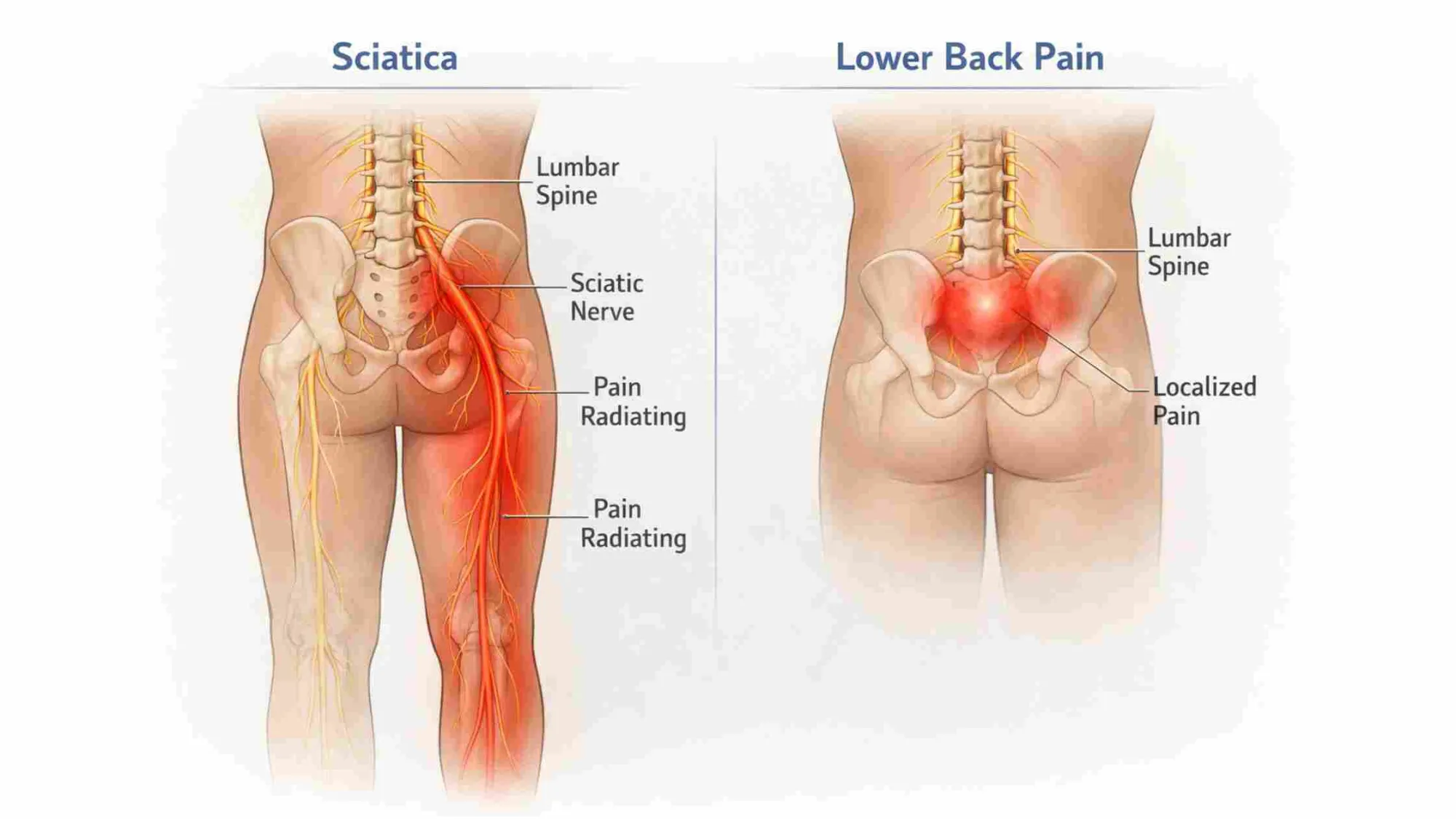
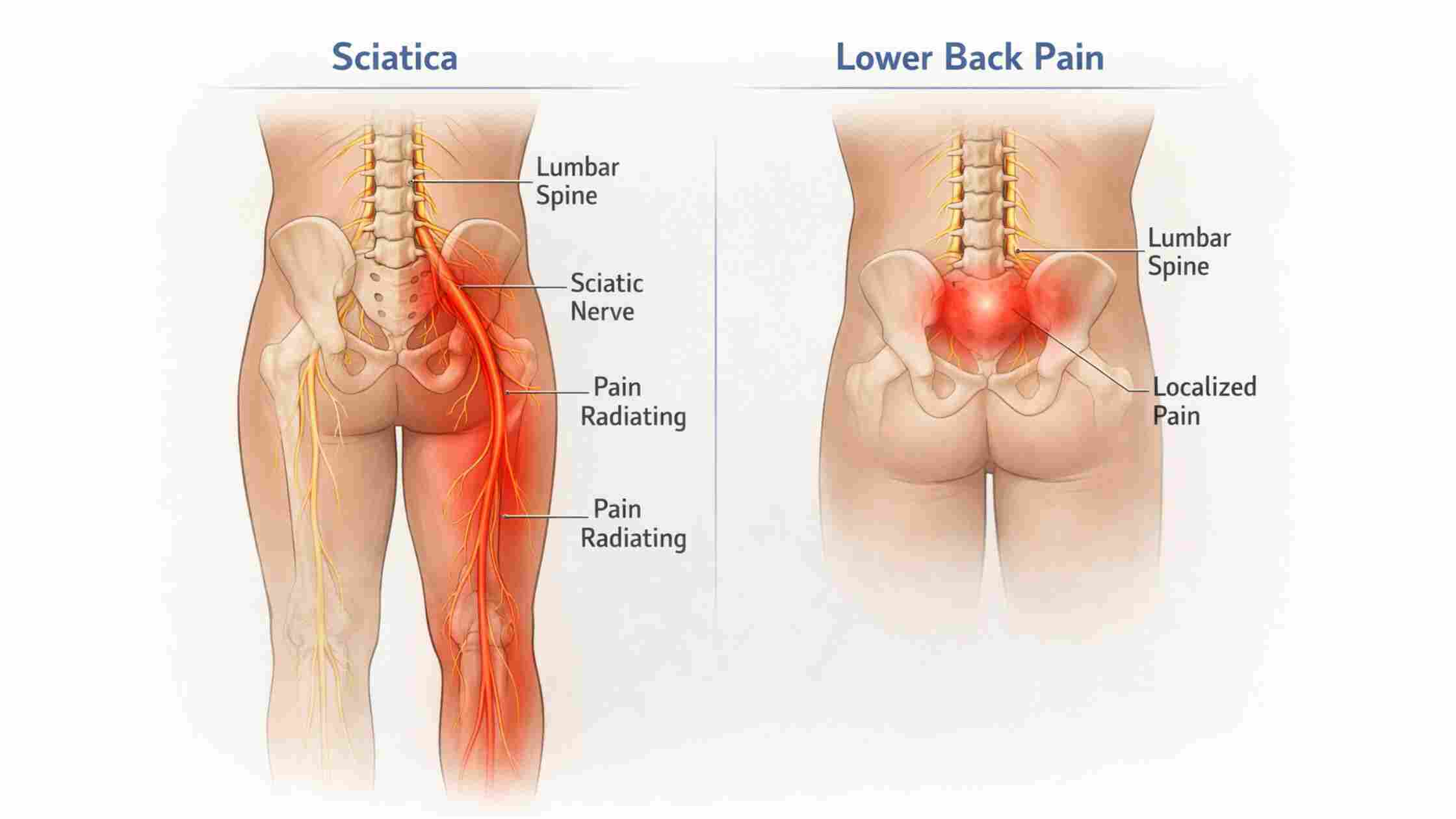
One of the easiest ways to distinguish between lower back pain and sciatica is by identifying where the pain occurs.
Lower back pain is usually concentrated in the lumbar region. The discomfort may feel dull, aching, stiff, or sharp depending on the cause. Movement, lifting, or prolonged sitting may worsen symptoms.
Sciatica typically begins in the lower back or buttock and radiates down one leg. The pain often travels below the knee and may even reach the foot or toes. This radiating pattern is one of the most recognizable characteristics of sciatica.
Differences in Symptoms
Although both conditions can cause discomfort, the symptoms are often distinct.
Lower back pain commonly includes:
- Localized pain in the lumbar area
- Muscle tightness or stiffness
- Reduced flexibility
- Difficulty bending or twisting
- Pain that improves with rest
Sciatica frequently includes:
- Pain that radiates down one leg
- Tingling or burning sensations
- Numbness in parts of the leg or foot
- Muscle weakness
- Increased pain when coughing, sneezing, or sitting for long periods
The presence of numbness, tingling, or weakness usually suggests nerve involvement rather than simple muscular back pain.
Common Causes of Lower Back Pain
Lower back pain can result from numerous factors. Muscle strains are among the most common causes and often occur after lifting heavy objects or performing sudden movements.
Other contributing factors include poor posture, sedentary lifestyles, obesity, spinal arthritis, degenerative disc disease, and repetitive physical stress. In some cases, psychological stress may also contribute to muscle tension and discomfort.
Because many different conditions can cause lower back pain, a thorough evaluation is important when symptoms persist or worsen.
Common Causes of Sciatica
Sciatica most often develops when a spinal structure compresses a nerve root. A herniated disc is one of the leading causes. As disc material presses against nearby nerves, pain may travel along the sciatic nerve pathway.
Additional causes include spinal stenosis, degenerative spinal changes, traumatic injuries, and pelvic conditions affecting nearby nerves. Some individuals may also experience symptoms involving the hips or sacroiliac joints. In such situations, specialized assessments, including Hip & SI Joint Pain Treatment in Newport Beach, may help identify contributing sources of pain.
When to Seek Medical Evaluation
Many cases of lower back pain improve with conservative measures such as rest, stretching, and activity modification. However, certain symptoms warrant medical attention.
Individuals should consider professional evaluation if pain lasts more than a few weeks, significantly limits daily activities, or continues to worsen despite self-care efforts.
Urgent assessment may be necessary if symptoms include severe weakness, loss of bladder or bowel control, numbness in the groin area, or rapidly progressing neurological symptoms.
Treatment Approaches
Treatment depends on the underlying cause of symptoms. Lower back pain may respond well to physical therapy, exercise programs, ergonomic adjustments, and lifestyle modifications.
Sciatica treatment focuses on relieving nerve compression while addressing the source of irritation. Depending on the cause, management strategies may include physical therapy, medications, targeted injections, or other interventions recommended by healthcare professionals.
Early diagnosis often improves outcomes by allowing treatment to begin before symptoms become more severe.
Conclusion
Although lower back pain and sciatica can share some similarities, they are distinct conditions with different symptom patterns. Lower back pain usually remains localized to the lumbar region, while sciatica involves nerve-related pain that radiates down the leg. Recognizing these differences can help individuals better understand their symptoms and seek appropriate evaluation when needed. Accurate diagnosis is an important first step toward effective symptom management and long-term spinal health.





























Sign in to leave a comment.