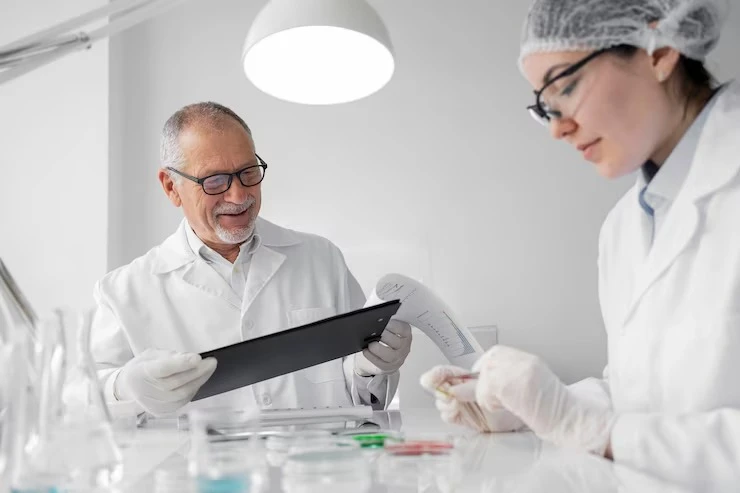

As a researcher who has spent countless hours optimizing protein purification protocols, I know the value of time-saving, reliable, and high-performance methods. In the world of modern biochemistry, efficiency doesn’t just make our work faster—it directly impacts data accuracy and research progress. Among the many purification tools I’ve used, Magnetic Beads Protein Purification has proven to be a true game-changer for rapid, clean, and consistent results.
In this post, I’ll share my first-hand experience using magnetic bead-based purification systems—how they work, why they’re so effective, and what best practices can help maximize their performance in any laboratory setting.
Understanding Magnetic Beads Protein Purification
When I first encountered magnetic bead technology, I was intrigued by its potential to simplify complex purification processes. The idea is simple but powerful: magnetic beads are coated with specific ligands, such as Protein A, Protein G, Ni-NTA, or streptavidin, which bind selectively to target proteins or antibodies. Once the protein binds to the beads, a magnetic field is applied to separate the bound complexes from the rest of the sample.
Unlike traditional column chromatography—which requires multiple manual steps, buffer exchanges, and long run times—magnetic beads allow for rapid and scalable purification. This technology eliminates centrifugation and filtration steps, which often cause sample loss or protein degradation. Instead, everything happens in a single tube, saving valuable time and maintaining protein integrity.
When I started using magnetic beads for antibody isolation and recombinant protein purification, I noticed a dramatic improvement in both yield and reproducibility. The process was smoother, less error-prone, and perfectly suited for multitasking experiments where time was limited.
Why Magnetic Beads Are Transforming Protein Purification
In traditional purification systems, achieving high yield and purity often requires complex setups and constant monitoring. With Magnetic Beads Protein Purification, those challenges are significantly reduced.
Here’s what makes this technology so transformative:
- Speed and Efficiency: Purification that used to take hours can now be completed in minutes.
- Scalability: From microliter-scale analytical assays to preparative milliliter volumes, the same principle applies.
- Gentle Handling: Magnetic separation avoids harsh mechanical forces, preserving delicate proteins.
- Automation Ready: The method integrates easily with robotic systems, enabling high-throughput processing.
I’ve used these systems in both academic and industrial settings, and what stands out most is their consistency. Even with varying sample sources—like cell lysates, serum, or culture media—the results remain reproducible. For any lab aiming to increase throughput without compromising quality, this method is invaluable.
If you’re interested in learning more about how this approach can be tailored to your workflow, click for more detailed insights into practical applications and methods.
The Science Behind Magnetic Bead Purification
The technology behind magnetic bead purification is rooted in affinity interactions. Each bead is functionalized with a specific ligand that targets a unique protein feature. For example:
- Ni-NTA Beads: Bind to His-tagged recombinant proteins.
- Protein A/G Beads: Capture antibodies through Fc region affinity.
- Streptavidin Beads: Used for biotin-labeled proteins and DNA.
- Glutathione Beads: Designed for GST-tagged protein purification.
The magnetic core allows the beads to be quickly collected using a magnet, separating them from unbound material. This rapid binding and washing mechanism shortens purification time while increasing control over the process.
What makes this technique especially appealing to me is the precision it offers. The beads’ surface chemistry can be fine-tuned for different proteins, giving scientists the flexibility to purify even low-abundance targets effectively.
Step-by-Step Workflow I Follow
Over time, I’ve developed a streamlined workflow that makes the most out of magnetic bead technology. It’s simple, reliable, and easy to adapt:
- Equilibration: I start by equilibrating the beads with an appropriate buffer that matches my target protein’s binding conditions.
- Binding: The sample is added to the equilibrated beads and mixed gently to promote interaction. This step takes just a few minutes.
- Magnetic Separation: A magnetic rack quickly pulls the beads (now bound with target protein) to the side of the tube, allowing me to remove unbound contaminants.
- Washing: Several washes with buffer ensure that only the desired protein remains attached.
- Elution: Using an elution buffer—often with adjusted pH or imidazole concentration—I release the purified protein from the beads.
From start to finish, this process can be completed in under 30 minutes. For high-throughput applications, this efficiency is invaluable. I can run multiple samples simultaneously without compromising data quality or sample integrity.
Practical Advantages in Everyday Research
When I began integrating Magnetic Beads Protein Purification into my routine lab work, I immediately noticed several practical benefits:
- Higher Protein Recovery: The magnetic method minimizes losses during transfer and washing steps.
- Less Equipment Required: I don’t need complex chromatography systems—just a magnetic stand and buffers.
- Reusability: Many magnetic bead types can be regenerated and reused multiple times.
- Scalable and Flexible: Perfect for both pilot studies and large-scale preparations.
Another advantage is compatibility. The purified proteins are usually ready for downstream applications such as SDS-PAGE, Western blotting, ELISA, or structural analysis. This saves even more time compared to traditional purification workflows that often require extensive cleanup.
If you’re looking to optimize your own lab protocols, click for more tips on maximizing yield and purity using magnetic bead purification.
Real-World Applications I’ve Worked On
In my experience, magnetic bead purification has applications across diverse research areas. Some of the projects I’ve worked on include:
- Recombinant Protein Expression: Using Ni-NTA magnetic beads to purify His-tagged enzymes and signaling proteins.
- Antibody Purification: Leveraging Protein A and Protein G beads to isolate IgG from serum samples.
- Immunoprecipitation (IP): Capturing antigen–antibody complexes to study protein-protein interactions.
- Biomarker Discovery: Purifying low-abundance proteins from biological fluids for proteomic analysis.
The versatility of magnetic beads allows me to switch between these applications without having to overhaul my entire workflow. It’s one of the few purification systems that offer such broad utility with minimal optimization.
Troubleshooting Tips from My Experience
Even with its simplicity, successful purification still requires attention to detail. Over the years, I’ve developed a few troubleshooting strategies:
- Check Buffer Compatibility: Always ensure the buffer system matches the bead’s chemistry and protein’s stability.
- Avoid Overloading: Adding too much sample can saturate the beads and reduce binding efficiency.
- Control pH and Salt Levels: These factors significantly influence binding and elution performance.
- Use Gentle Mixing: Vigorous agitation can cause bead aggregation and lower recovery.
- Store Beads Properly: Always follow manufacturer storage instructions to preserve binding activity.
By following these steps, I’ve consistently achieved high-purity results without the need for repeated purification cycles.
Comparison with Traditional Chromatography
Before adopting magnetic bead systems, I relied heavily on column chromatography for purification. While effective, it often involved multiple manual interventions and long equilibration times.
With Magnetic Beads Protein Purification, I no longer worry about column packing, pressure regulation, or long run cycles. The technology reduces both time and operational complexity.
Here’s a quick comparison from my personal experience:
Parameter
Magnetic Beads
Column Chromatography
Speed
20–30 minutes
2–4 hours
Sample Handling
Minimal
Multiple steps
Equipment
Magnetic rack
Chromatography system
Scalability
Easy
Limited by column size
Automation
High
Moderate
Reproducibility
Excellent
Depends on operator skill
The convenience of magnetic beads makes them particularly suitable for fast-paced labs where sample turnover is high.
Partnering with Reliable Providers
Quality reagents play a critical role in successful protein purification. Over time, I’ve learned that the supplier’s consistency can make or break experimental success. One provider that has stood out in terms of reliability and quality is Lytic Solutions, LLC. Their magnetic bead technologies and biochemical reagents are designed for both research and industrial-scale applications.
Their products have provided consistent binding efficiency, high protein recovery, and batch-to-batch reproducibility—qualities that every researcher values in long-term projects. Whether I’m working with His-tagged proteins or antibodies, I can count on their materials to deliver dependable performance every time.
Maintaining Long-Term Bead Performance
To keep my beads functioning optimally over multiple purification runs, I follow these best practices:
- Clean Beads After Use: Wash thoroughly to remove residual protein and elution buffer.
- Avoid Harsh Chemicals: Strong detergents or oxidizing agents can degrade the bead surface.
- Proper Storage: Maintain them in recommended storage buffer at appropriate temperature.
- Track Reuse Cycles: I label and record bead usage to avoid overusing batches beyond their efficiency lifespan.
Taking care of the beads ensures reliable performance and cost-effectiveness in the long term.
Looking Ahead: The Future of Rapid Purification
The next wave of protein purification will likely focus on integrated and automated magnetic systems. As labs continue to handle larger sample volumes and more complex targets, magnetic bead platforms will be critical for high-throughput and parallel processing.
Advances in nanotechnology and surface chemistry will further improve binding capacity, selectivity, and regeneration capabilities. I believe that soon, most small- to mid-scale purification workflows will rely entirely on magnetic bead-based systems.
These developments align perfectly with the growing demand for faster, cleaner, and more efficient purification techniques—something every modern lab can benefit from.
Final Thoughts
From my own experience, Magnetic Beads Protein Purification represents one of the most practical and efficient innovations in modern laboratory workflows. It combines speed, reliability, and versatility, allowing researchers like me to focus on analysis and discovery rather than lengthy preparation.
If you’re working in protein research, antibody production, or any field that requires quick purification turnaround, integrating this technology into your workflow can make a significant difference.
For expert assistance, product information, or technical support, don’t hesitate to contact us and explore how magnetic bead purification can elevate your laboratory productivity. With the right approach and trusted materials, achieving rapid, high-quality purification is not just possible—it’s the new standard in modern protein science.




























Sign in to leave a comment.