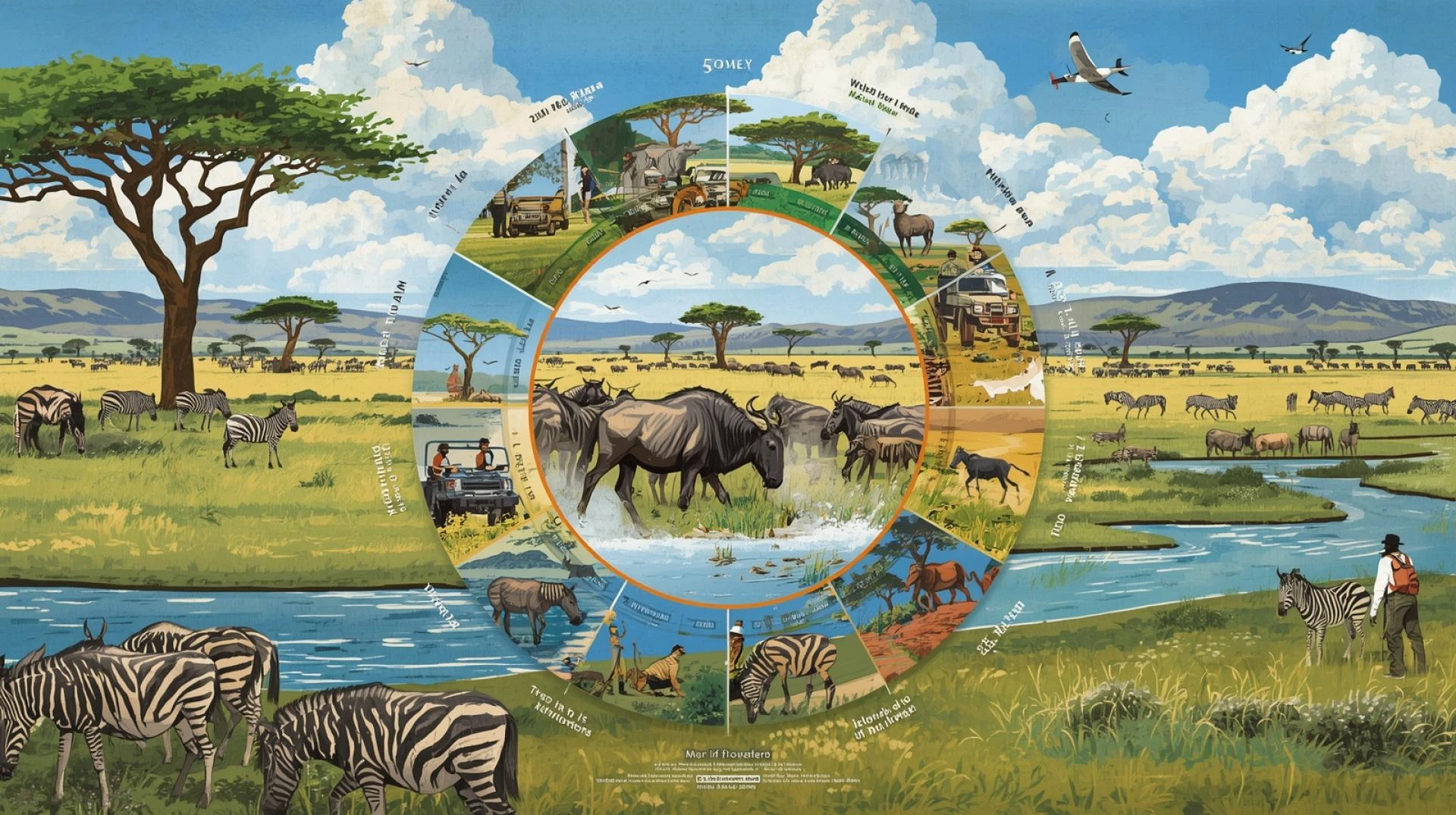

Nothing in the natural world quite compares to the moment a column of wildebeest reaches the edge of the Mara River and the herd plunges in. Water erupts, crocodiles surge, and the far bank fills with animals pulling themselves to safety. Travelers fly thousands of kilometers and wait days at the riverside just for this single event. But witnessing it requires precise planning, because crossings follow no fixed timetable and the window shifts with rainfall, herd movement, and seasonal conditions. This calendar-based guide gives you a clear month-by-month breakdown of what to expect over the next six months, along with practical tips that help you position yourself correctly and make every day in the field count.
How the Crossing Season Actually Works
The wildebeest do not follow a precise calendar. They respond to grass quality, rainfall patterns, and instinct developed over millions of years. The broad movement pattern carries roughly 1.5 million wildebeest and hundreds of thousands of zebras north from Tanzania's southern Serengeti plains in late spring, through the central Serengeti during June and July, and into the northern Serengeti and Kenya's Masai Mara between July and October. The Mara River sits at the northern edge of the Serengeti and forms the boundary between Tanzania and Kenya. Animals must cross it multiple times during this northern phase, heading into Kenya for fresh grazing and then returning south as the rains shift. Crossings can happen at any point in the day, at any of several established crossing points, and they can repeat within hours or go dormant for days. Understanding this unpredictability is the first step toward planning a trip that actually delivers the experience you want.
March: Southern Serengeti and Pre-Migration Buildup
In March, the great herds still occupy the southern Serengeti around the Ndutu plains, grazing on the short-grass corridors that follow the long rains. The calving season winds down and young wildebeest gain the strength they need for the months of movement ahead. No Mara River crossings take place this month — the herds sit thousands of kilometers from the river. However, March delivers exceptional predator sightings around calving grounds, massive concentrations of zebra, and the kind of wide-open savannah photography that the Serengeti's north cannot match. Travelers who visit in March position themselves for the full migration arc, beginning their journey at the calving grounds and planning a return visit or northern extension later in the year to catch the river action. This month rewards patience and offers extraordinary value since tourist numbers stay lower than peak season.
April and May: The Long Rains and Northward Push
April and May bring the long rains to Tanzania and the herds begin their slow push northward through the central Serengeti. The landscape turns an intense green, the light becomes dramatic for photography, and the roads grow muddy and challenging. Visitor numbers drop sharply during these months, which means travelers who do come enjoy near-private game drives and significantly reduced accommodation rates. The western corridor sees large herd concentrations in May and early June, and the Grumeti River — a smaller but still dramatic crossing point — starts to fill with waiting crocodiles. Travelers who target May and June for a western corridor safari catch the Grumeti crossings, which most tourists miss entirely in their rush to reach the Mara. These crossings carry every bit as much drama as the famous northern crossings, with the added advantage of much smaller crowds at the riverbank.
June: Northern Serengeti Arrival and First Mara Sightings
By late June, advance herds begin reaching the northern Serengeti near the Lamai and Kogatende areas. The first scouts approach the Mara River bank, and guides operating in this zone start reporting crossing attempts. The great migration mara river crossing season opens tentatively in June, with smaller crossings occurring sporadically as leading animals test the water and gauge crocodile activity. Travelers who arrive in late June position themselves ahead of the July and August peak crowds while still carrying a realistic chance of witnessing crossing activity. Accommodation in the northern Serengeti books out fastest for July and August, so June visitors often find better availability at premier camps. The dry season sets in fully during June, concentrating animals around water sources and delivering ideal conditions for big cat sightings on open short-grass plains.
July: Peak Crossing Month and Maximum Drama
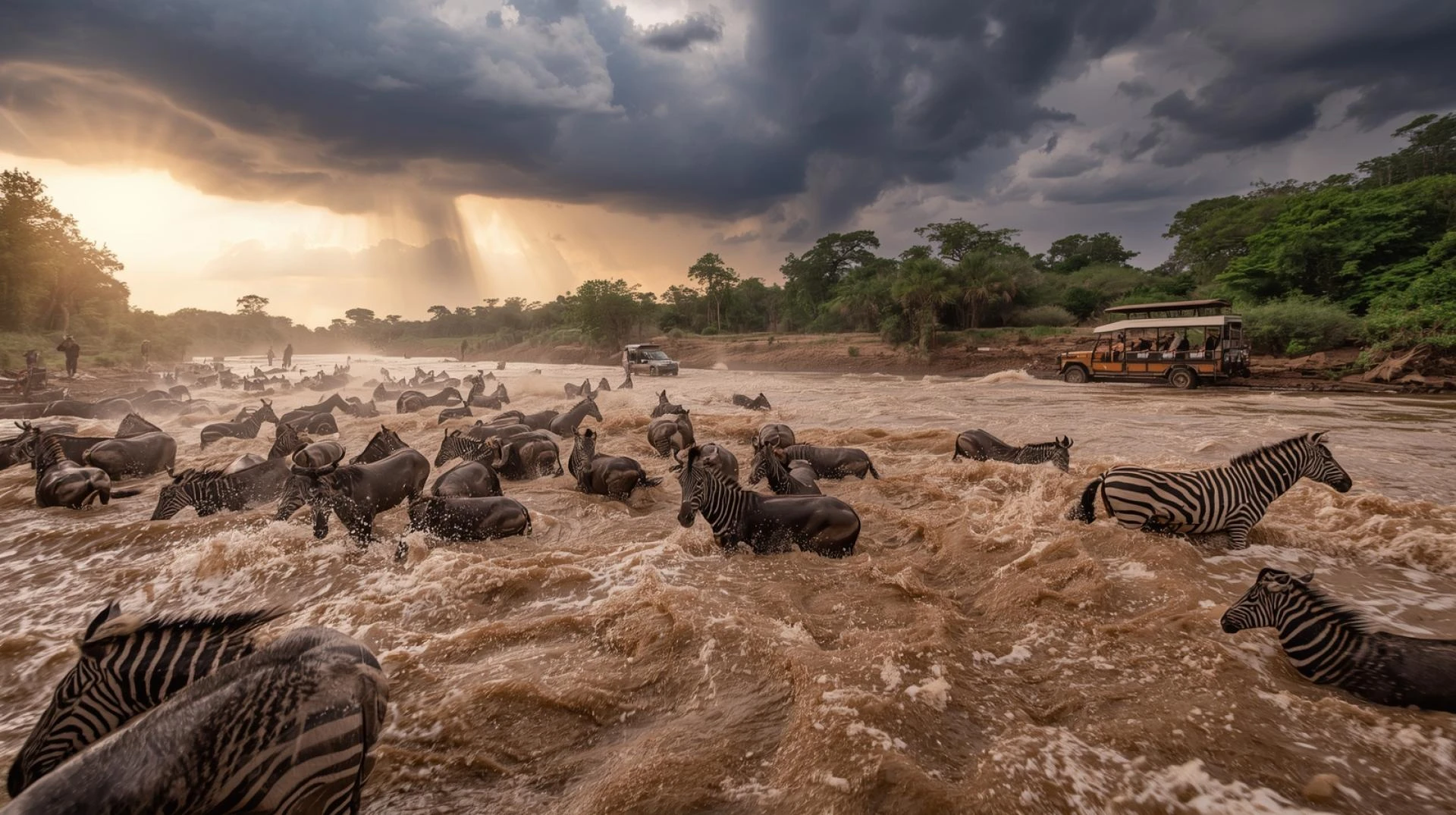
July marks the height of the great migration mara river crossing season and draws the largest concentration of safari travelers in the entire calendar year. The main herds push into the northern Serengeti in massive columns, and crossing attempts multiply across the known river points at Kogatende, Sand River, and Lamai. The great migration mara river crossing delivers its most spectacular chaos in July — thousands of animals plunging simultaneously into the river, Nile crocodiles lunging from the shallows, and survivors scrambling up muddy banks while the herd flows endlessly behind them. Your guide reads the herd behavior and positions the vehicle at the most active crossing point each morning, often arriving before sunrise to secure a front-row vantage before other vehicles fill the riverbank. The great migration mara river crossing can occur multiple times on a single day in July, with herds crossing north into Kenya, resting on the Kenyan side, then recrossing south within 48 hours as predator pressure and grass conditions shift. Patience defines success here — guides who have worked this river for a decade will tell you that the crossing always comes to those who wait at the bank rather than chase the herd across the plains. The great migration mara river crossing season peaks in July but extends well into August, giving travelers who book either month a strong probability of witnessing a major event. Booking a camp within a short drive of the Mara River rather than in the central Serengeti makes the single biggest difference to your chances.
August: Continued Crossings and Kenya-Side Action
August sustains the great migration mara river crossing energy at nearly the same intensity as July, with large herds now occupying both the northern Serengeti on the Tanzanian side and the Masai Mara on the Kenyan side. Travelers who cross into Kenya during August access the Masai Mara National Reserve from the north and witness crossings from the Kenyan bank, which offers different vantage points and a distinct landscape of rolling hills covered in red oat grass. The Masai Mara side also delivers excellent big cat sightings — the reserve holds one of Africa's densest lion populations, and cheetah sightings on open plains occur almost daily during peak season. August visitors face the heaviest vehicle traffic of the year at crossing points, which makes the choice of guide especially important. Experienced guides avoid overcrowded banks, know secondary crossing points that most tourists never visit, and maintain the discipline to wait quietly rather than rev engines and jostle for position.
Key Tips for Timing Your Visit Perfectly
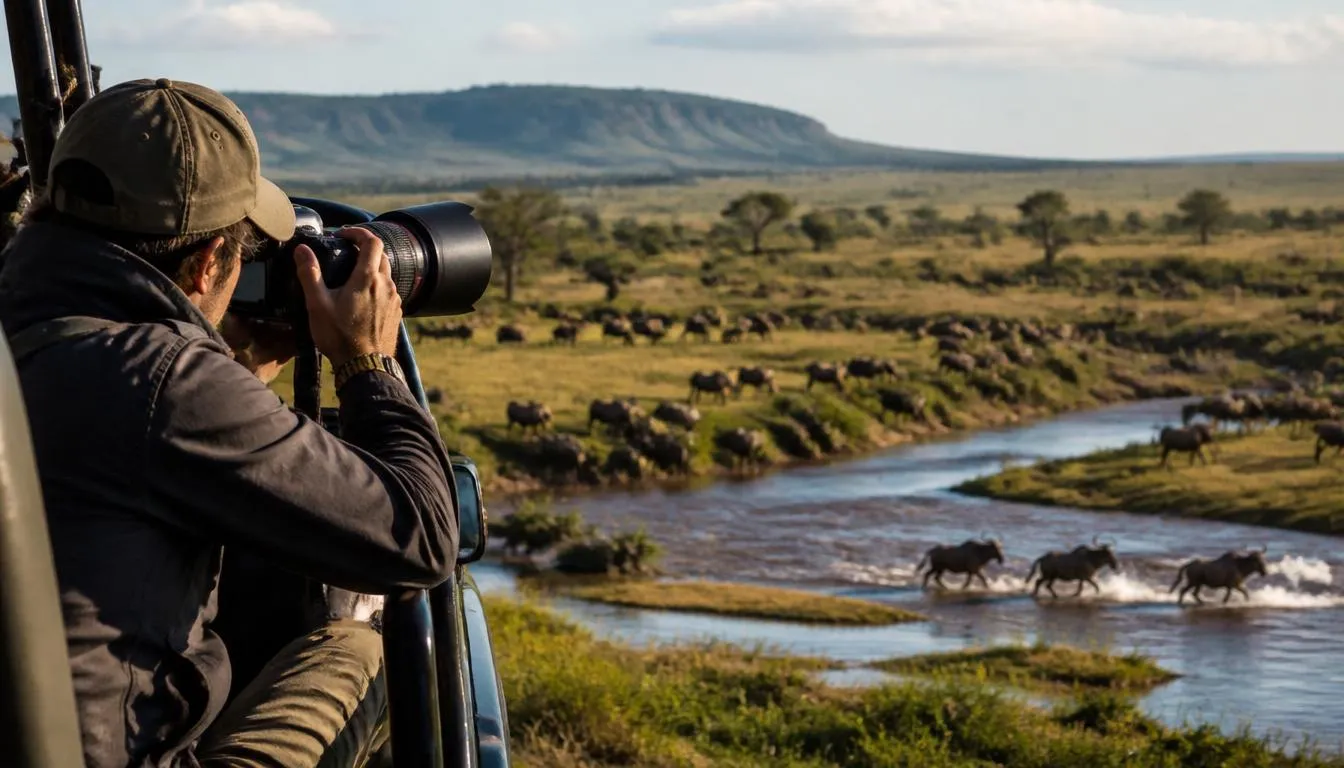
The single most important tip for anyone planning a great migration mara river crossing experience is to stay close to the river for a minimum of three consecutive days. Day-trippers from distant camps miss most crossings simply because of travel time. Book a camp within 20 minutes of the primary crossing zones and treat each full day as a potential crossing day. Rise before sunrise, drive to the river, and stay through the heat of the day rather than returning to camp at noon. Crossings happen most frequently in the cooler morning and late afternoon hours but can and do occur at any time. Carry your own food and water to the river so your guide never needs to leave a building herd to return for a camp lunch. Check in daily with your guide's network of scouts — experienced operators share herd location data across radio networks that cover the entire northern ecosystem and give you a meaningful edge in positioning.
Choosing the Right Camp for River Crossing Access
Camp location determines more about your crossing experience than almost any other variable. Camps in the Lamai Wedge, a triangle of land between the Mara River and the Sand River in northern Tanzania, place you within minutes of the most active crossing zones during July and August. Mobile camps that reposition seasonally follow the herds rather than waiting for them to come to a fixed lodge location. Look for camps that maintain a vehicle-to-guest ratio that allows early morning departures without congestion at the gate, that employ guides with a minimum of five seasons on the Mara, and that provide a spotter system so you receive herd alerts in real time. Avoid any camp that promises a guaranteed crossing — no honest operator makes that claim. The right camp gives you the best possible odds and the local expertise to make the most of every hour you spend at the water's edge.
Conclusion
The next six months offer a complete arc of the migration experience, from the calving drama of the southern Serengeti plains in March through the building tension of June arrivals and into the full spectacle of the great migration mara river crossing in July and August. Each month rewards travelers differently, and understanding the seasonal calendar lets you choose the experience that matches your interests, your budget, and your tolerance for crowds. Book early, stay close to the river during peak weeks, trust your guide's judgment at the water's edge, and approach each morning with the patience that this ancient and unstoppable natural event demands.

Sign in to leave a comment.