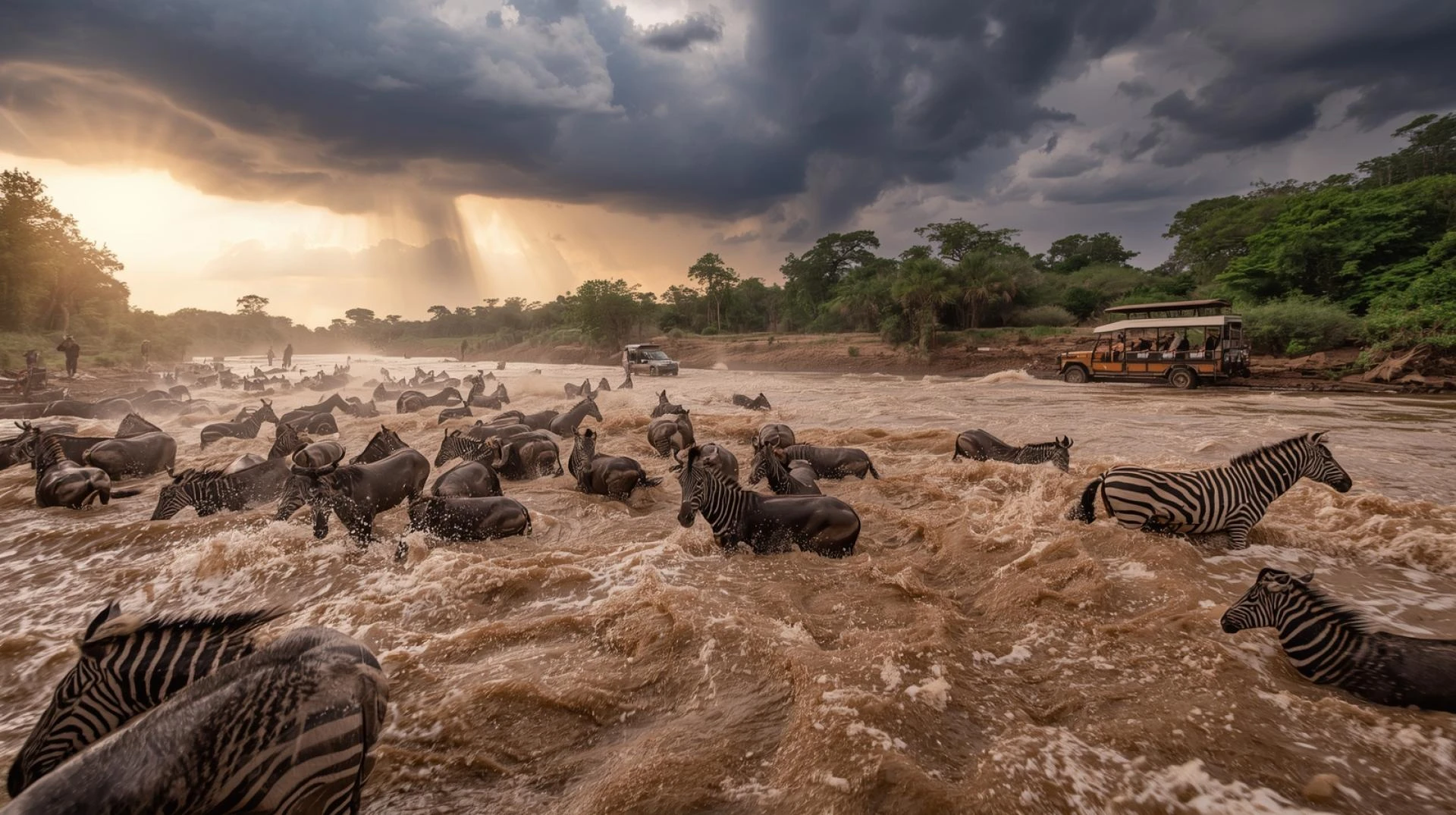

The famous crossing of the Mara river is widely recognized as one of the best-studied annual movements. Though it appears to be a natural phenomenon, the duration and frequency of the crossings are dependent on weather conditions. To understand the nature of the Great Migration Mara River Crossing with more clarity, start with a look at the forces of nature that shape the event. The weather guides the movement of animals, influences wild activities, and affects the rate of crossings.
The Function of Rainfall Patterns
The seasonally varying rainfalls encourage the growth of new grass. If rainfall is evenly distributed and is delivered as planned, the movement will follow an even and consistent rhythm.
How rainfall directly shapes movement patterns:
- Seasonal rainfall cycles.
- Fresh grass growth.
- Predictable movement rhythm.
- Delayed rain impact.
- Uneven grazing distribution.
- Shifting crossing timelines.
In addition, excessive or early rains could result in alternative pastures elsewhere, thus reducing the need to move. This is why it is possible to observe that cross-crossing activity changes when there are shifts in rainfall patterns.
Delayed Rains and More
Additionally, the uneven amount of precipitation across different regions creates areas of potential. Migration groups react to this variation, and sometimes stay longer than they anticipated prior to getting to the river.
Rainfall variability and its consequences:
- Delayed seasonal onset.
- Extended grazing periods.
- Reduced movement urgency.
- Alternative grazing zones.
- Subtle precipitation shifts.
- Variable crossing windows.
The River Water levels and flow speed
The increased depth as well as the greater currents make crossings complicated and, in the worst-case scenario, more dangerous. With these conditions, crowds could gather along the banks for long durations.
How water levels influence crossings:
- Rising river depth.
- Stronger water currents.
- Increased crossing difficulty.
- Extended bank gatherings.
- Waiting for stabilization periods.
- Rain-driven surges.
Lower water levels with a more gentle current may encourage more frequent crossings. This can lead to multiple crossings over the same time frame.
Monitor the Water Levels for More Insights
The fluctuating depth of water also impacts crossing points. The traditional exit and entry points might not be suitable when banks break down or are submerged.
Conditions for crossing frequency and timing:
- Lower water depth.
- Reduced current speed.
- Frequent crossing attempts.
- Condensed activity periods.
- Stable river conditions.
- Improved predictability levels.
The groups that are moving adapt by finding alternate points with less threatening conditions. The ability to adapt is a reflection of the constant interplay between landscape and climate.
Thermo-Temperature and Heat Stress
The longer duration of heat will increase the demand for access to water that is reliable as well as fresher pastures. In warmer months, the urgency to get moving can increase, speeding progress to the river.
How heat affects movement:
- Prolonged heat exposure.
- Increased water demand.
- Accelerated forward movement.
- Heightened crossing urgency.
- Resource-driven migration.
- Climate influenced pacing.
In contrast, mild temperatures with consistent opportunities for grazing will reduce pressure immediately to crossing. The movement becomes less erratic, and crossings could be spread out over a longer time.
Storm activity and Short-Term changes
In the downstream, it can become a downpour; consequently, the quantity of water entering can be increased in several hours. This is due to the fact that a seemingly impending event might fail to occur due to a sudden increase in power.
Short-term weather impact:
- Sudden upstream rainfall.
- Rapid water rise.
- Increased current strength.
- Delayed crossing attempts.
- Temporary river instability.
When the weather is clearer and the ground is stable, the crossings tend to be more secure. This short-term change can cause the possibility of a variety that makes every season unique.
Climate Trends and More
In addition to season changes, trends in climate over time also affect the crossing. Extensive droughts have the potential to reduce the total water availability and also distort traditional movement schedules.
Long-term patterns reshape migration behavior:
- Extended dry cycles.
- Reduced water availability.
- Altered movement timing.
- Compressed crossing windows.
- Increased river focus.
- Climate-driven intensity.
In contrast, seasons with higher than average rainfall may spread the grazing possibilities across a larger region. It could delay the concentration of grazing near the river, and may extend crossings for a longer time.
Forecasting with Awareness of the Weather
If you plan to experience the spectacular migrating mara river crossing, the weather should be a factor in the way you prepare. Reading up on recent reports of rainfall and river level reports, and forecasts for the season can aid in estimating the probability of river crossings.
Preparation steps to strengthen your planning process:
- Recent rainfall review.
- River level tracking.
- Seasonal forecast analysis.
- Activity likelihood assessment.
- Climate-informed planning.
- Improved timing strategy.
Professional trackers and platforms analyse these environmental indicators for more accurate forecasts. With reliable updates, you decrease uncertainty and boost the likelihood of seeing relevant activities.
Find the Most Reliable Information
Wildebeest Sightings will also give you regular updates and give you an informed, good guideline to ensure that your plans are in proportion with the circumstances at the time. Having access to timely information can make you think about your experience in a more sensible and realistic way.
Perks of reading Wildebeest Sightings:
- Detailed seasonal insights.
- Timely condition updates.
- Expert informed guidance.
- Aligned travel planning.
- Realistic expectation setting.
- Confident experience preparation.
Considering the crossing through the prism of environmental influence, one can notice that climate is not a background but one of the main drivers.
By making the effort to understand the interplay of these weather forces, you would be better and more knowledgeable about this important seasonal motion.
So, explore nature with the valuable information at the Wildebeest Sightings and enjoy your time!
Conclusion
The weather conditions play a major role in determining the significance of the Great Migration Mara River Crossing. The patterns of rainfall determine the distribution of grazing. Water levels impact the physical challenges of crossing the river, as does temperature, which affects the speed as well as timing. Finally, for detailed insights, forecasts, and expert tracking information, you can visit Wildebeest Sightings.


























Sign in to leave a comment.