

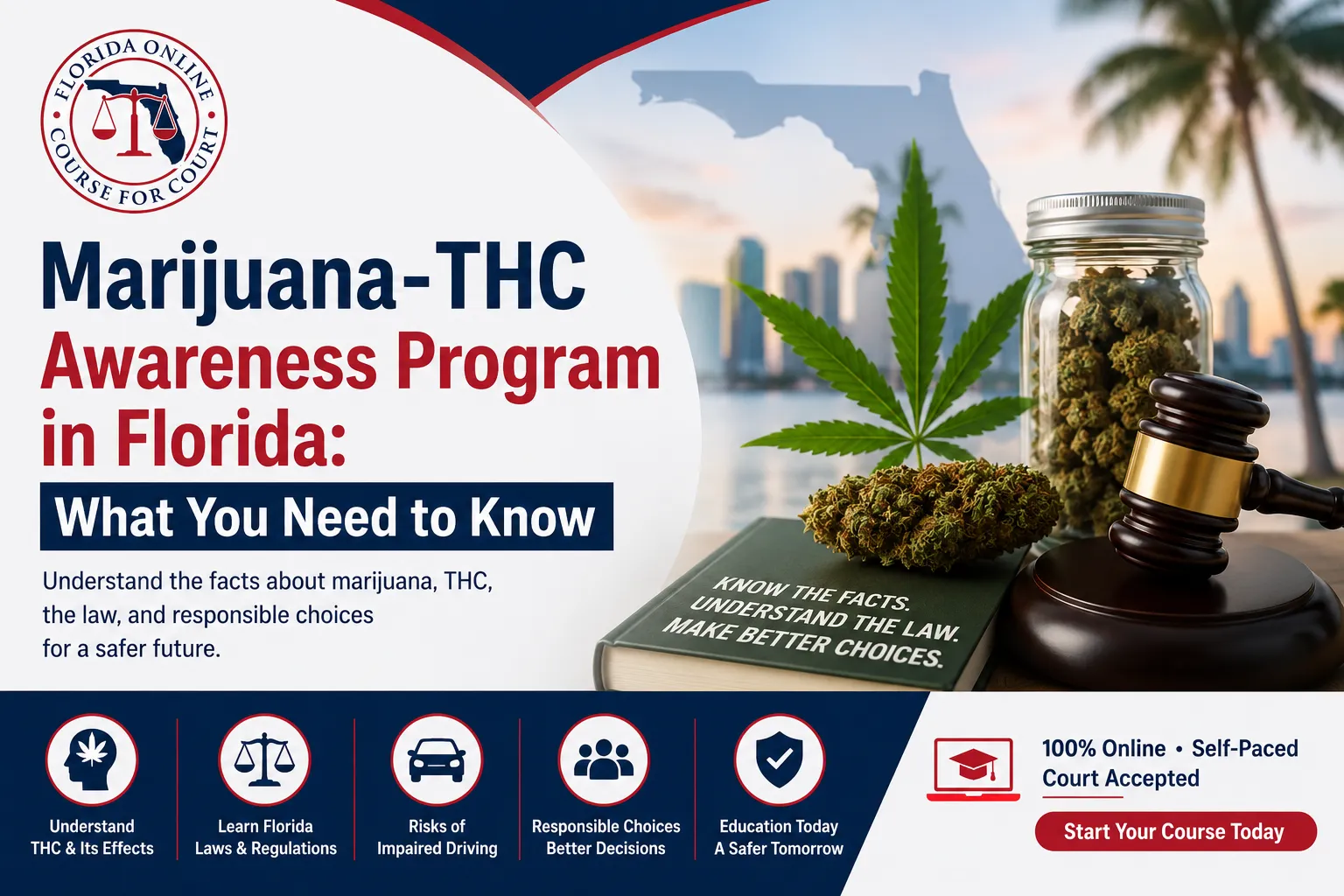
Marijuana and THC are topics that continue to receive significant attention in Florida because of their effects on health, behavior, driving, and the law. While Florida permits medical marijuana under specific state regulations, that does not mean every form of marijuana or THC use is legal or risk-free. Understanding what THC is, how it affects the brain and body, and the potential consequences of misuse can help people make more informed decisions.
A Marijuana-THC Awareness Program in Florida provides educational information about cannabis, THC, responsible decision-making, impairment, health effects, and potential legal consequences. For individuals completing an educational or court-related requirement, a marijuana awareness course can also provide an opportunity to better understand the choices that led to the requirement and how to make safer decisions in the future.
What Is THC?
THC, or tetrahydrocannabinol, is the primary psychoactive compound in cannabis. It is responsible for many of the mind-altering effects associated with marijuana.
When THC enters the body, it interacts with cannabinoid receptors in the brain and nervous system. This can influence perception, memory, coordination, reaction time, attention, and judgment.
The effects can vary significantly from person to person. Factors such as the amount consumed, product potency, method of consumption, previous experience, and individual characteristics can all influence how someone responds.
THC can be found in different cannabis products, including smoked or vaporized marijuana, edibles, oils, and other preparations. Because products can have different concentrations and effects, understanding what is being consumed is an important part of marijuana awareness education.
Is Marijuana Legal in Florida?
Florida law allows qualified patients to obtain and use medical marijuana under the state's regulated medical marijuana program. Florida Statute 381.986 establishes the state's framework for medical use of marijuana, including requirements involving qualified patients, physicians, caregivers, and licensed medical marijuana treatment centers.
However, medical marijuana authorization does not mean that marijuana can be used without restrictions. Florida law continues to regulate possession, dispensing, and medical use, and impairment can create separate legal and safety concerns.
For example, Florida's medical marijuana statute specifically states that medical use does not provide an exemption from prosecution for criminal offenses related to impairment or intoxication.
This distinction is important: medical authorization and impairment are not the same issue.
Because Florida marijuana laws can change, individuals dealing with a legal matter should review current law and seek qualified legal advice about their specific circumstances.
How Does THC Affect the Brain and Body?
One of the main goals of a Marijuana-THC Awareness Program in Florida is to help participants understand how THC can affect the body and behavior.
Short-term effects may include changes in:
- Attention and concentration
- Memory
- Reaction time
- Coordination
- Perception of time
- Decision-making
- Mood and emotional responses
Some people may experience relaxation or euphoria, while others may experience anxiety, confusion, paranoia, or discomfort.
The effects can also be stronger when THC is consumed in high concentrations or combined with alcohol or other substances. Understanding these risks can help individuals recognize why impaired decision-making can become a serious safety issue.
THC and Driving: Why Impairment Matters
Driving requires concentration, coordination, quick reactions, and sound judgment. Any substance that affects these abilities can create a safety concern.
THC may affect reaction time, attention, coordination, and perception. A person may feel capable of driving while still experiencing impairment.
This is why marijuana awareness education often places an emphasis on responsible decision-making and avoiding impaired driving.
It is also important to understand that having a medical marijuana authorization does not automatically protect someone from legal consequences associated with impairment. Florida's medical marijuana statute expressly preserves criminal consequences related to impairment or intoxication.
The safest approach is simple: if you are impaired, do not drive.
Why Is Marijuana-THC Awareness Education Important?
Education can help people move beyond assumptions and understand the actual effects and risks associated with marijuana and THC.
A Marijuana-THC Awareness Program in Florida may help participants learn about:
Understanding THC
Participants can learn what THC is, how it interacts with the brain, and why different cannabis products may produce different effects.
Recognizing Impairment
Understanding the signs of impairment can help people make safer choices, particularly when driving or performing activities that require concentration and coordination.
Understanding Personal Responsibility
Awareness education encourages participants to consider how substance-related decisions can affect themselves, their families, coworkers, and other members of the community.
Learning About Legal Consequences
Florida has specific laws governing controlled substances and medical marijuana. Understanding that legal medical use exists alongside restrictions can help participants avoid assuming that all marijuana-related conduct is permitted.
Making Better Decisions
The purpose of education is ultimately to encourage informed decision-making. Learning about the potential consequences of substance use can help individuals recognize risky situations before they result in another problem.
Who May Benefit From a Marijuana-THC Awareness Program?
A marijuana awareness course may be useful for anyone who wants to better understand cannabis and THC. It can be particularly relevant to individuals who have been instructed to complete marijuana or drug awareness education as part of a court, probation, diversion, or other requirement.
However, requirements vary. If a court or supervising authority has instructed you to complete a specific course, verify the required course length, provider, certificate, and completion conditions before enrolling.
A course that provides general marijuana education is not automatically appropriate for every legal requirement.
What Can You Learn in an Online Marijuana-THC Awareness Program?
An online program can provide a convenient way to study marijuana and THC-related topics without requiring traditional classroom attendance.
Depending on the course, educational material may address:
- THC and cannabis basics
- Short-term effects of marijuana
- Potential risks of marijuana misuse
- THC and impaired driving
- Decision-making and personal responsibility
- Marijuana and public safety
- Legal considerations
- Recognizing risky substance-use patterns
- Strategies for making safer choices
Online learning can also make it easier for participants to review educational material around their existing schedules.
Florida Marijuana Laws Can Be Complex
Florida's marijuana laws include specific provisions for medical use, while other marijuana-related conduct remains regulated under the state's controlled-substance laws.
For example, Florida Statute 893.13 addresses various unlawful activities involving controlled substances and establishes different offenses and penalties depending on the circumstances.
At the same time, Florida's medical marijuana law provides a regulated framework for qualified patients.
This is why marijuana education should avoid oversimplified statements such as "marijuana is legal in Florida." The more accurate explanation is that Florida permits regulated medical marijuana use under specific conditions, while other conduct remains subject to state law.
How a Marijuana-THC Awareness Course Can Help
Completing an awareness course is more than simply learning definitions. It can provide an opportunity to reflect on how substance-related choices can affect health, judgment, relationships, and legal circumstances.
For someone completing a required educational program, the course can also encourage personal accountability. Understanding the consequences of impaired decision-making may help participants make safer choices in the future.
If substance use has become difficult to control, an awareness course should not be considered a replacement for professional treatment. People experiencing substance use problems may benefit from speaking with a healthcare provider or qualified addiction professional.
Final Thoughts
Marijuana and THC are often discussed as though the subject is simple, but the reality is more complicated. Florida has a regulated medical marijuana program, while marijuana-related conduct and impairment remain subject to important legal and safety considerations.
A Marijuana-THC Awareness Program can help participants understand THC, recognize potential effects, learn about impairment, and develop more informed decision-making skills.
Whether you are taking a course for personal education or because you have been directed to complete a marijuana awareness requirement, the knowledge gained can be valuable beyond the course itself. Understanding the relationship between THC, behavior, safety, and Florida law is an important step toward making responsible choices.
Frequently Asked Questions
What is a Marijuana-THC Awareness Program in Florida?
A Marijuana-THC Awareness Program is an educational course that teaches participants about cannabis, THC, potential effects, impairment, responsible decision-making, and relevant legal considerations.
Is medical marijuana legal in Florida?
Florida permits qualified patients to use medical marijuana under the state's regulated medical marijuana program. Specific eligibility, authorization, possession, and use requirements apply.
Can THC affect driving?
Yes. THC can affect attention, coordination, reaction time, perception, and judgment. Driving while impaired can create serious safety and legal concerns.
Is a marijuana awareness course the same as substance abuse treatment?
No. An awareness course provides education about marijuana and THC. It is not a substitute for professional treatment for someone experiencing a substance use disorder.
Do I need to verify whether a course meets my legal requirement?
Yes. If a court, probation officer, attorney, or other authority has required you to complete a marijuana awareness course, verify the specific requirements before enrolling. Course acceptance, completion requirements, and documentation can vary by case.
























Sign in to leave a comment.