
There's a dimension of spiritual transmission that most practitioners in Western dharma communities have received without ever quite realising they were receiving an incomplete version.
The teachings are genuine. The practices are real. The lineages from which most contemporary Western dharma draws are ancient and profound. And yet, for centuries — in most of the traditions that have reached the West — the voices doing the transmitting have been overwhelmingly male. The framework, the language, the specific textures of what gets emphasised, what gets named, what gets treated as central and what gets treated as peripheral — all of this has been shaped by teachers whose embodied experience of what it is to be human in the world carries a particular, and inherently partial, quality.
Women spiritual teachers offer something that changes this — not through a different ideology or a competing framework, but through the specific, lived, embodied transmission that comes from a teacher who has navigated the path from within a fundamentally different relationship to power, authority, body, and the social structures that shape every practitioner's conditioning.
What Female Teachers Transmit That Male Lineages Tend to Miss
This is worth being precise about, because the generic claim that "female teachers offer something different" can become a kind of spiritual multiculturalism that misses the specific point.
The difference isn't primarily ideological. It's not about teaching different concepts or emphasising different texts. It's about transmission — the quality of what communicates between a teacher who has genuinely developed the territory they're pointing toward and a student who is beginning to navigate it.
A female teacher who has attained genuine realisation has done so while simultaneously navigating something that most male teachers haven't been required to navigate: the specific forms of friction that arise when your body, your voice, your way of knowing, and your natural authority are consistently received through the filter of inherited assumptions about what female teachers are supposed to be.
The practitioner who has developed genuine awakened quality while carrying all of that — while working through the specific projections students bring to female authority, while holding genuine wisdom in a form that doesn't fit the traditional image of what a dharma teacher looks like, while refusing to either conform to gender expectations or exile herself from the lineage in protest — that practitioner has done a form of inner work that is not incidental to their transmission. It is part of it.
Introducing Planet Dharma
Planet Dharma is a Buddhist-inspired spiritual education platform founded by Dharma teachers Doug Duncan (Qapel) and Catherine Pawasarat Sensei. Their teaching draws from the Namgyal Rinpoche lineage and integrates Theravada and Vajrayana Buddhist practice, Western esoteric traditions, Jungian depth psychology, and decades of direct experience with an international community of serious practitioners.
Catherine Pawasarat Sensei brings to the teaching exactly the quality described above: genuine realisation, sustained over decades of practice, held within the specific embodied experience of being a female teacher in traditions shaped by male institutional dominance. Her teaching carries both the depth of her contemplative development and the specific wisdom that comes from having navigated all the friction of that position with honesty rather than avoidance.
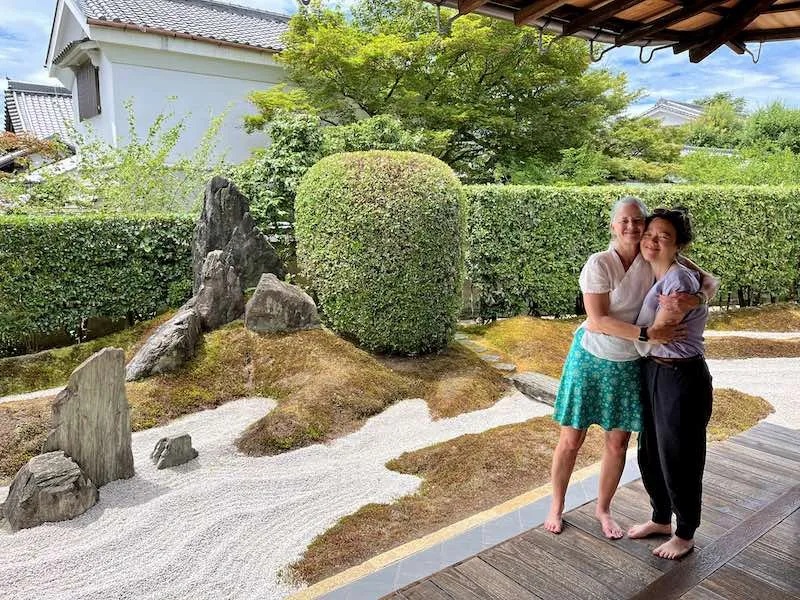
Planet Dharma has documented the specific dynamics of studying with Catherine Sensei with unusual candour — through practitioner accounts of accompanying her in settings like Kyoto, Japan, where the complex interplay of projection, realisation, cultural assumption, and genuine transmission that characterises the female guru relationship are explored with a directness that most dharma institutions would prefer to leave unexamined.
The Specific Shadow Work That Female Teachers Surface
Here's what practitioners who study with women spiritual teachers consistently discover, often to their surprise: the projections they bring to a female teacher are remarkably informative about their conditioning around authority, knowing, and whose wisdom deserves deference.
The student who finds themselves unconsciously applying a different standard of evidence to a female teacher's claims — requiring more demonstration, more credentials, more external validation before extending trust — is encountering their own inherited assumptions about gendered authority in a direct and potentially transformative way.
The student who finds themselves over-idealising a female teacher — projecting onto her a quality of perfect maternal wisdom, boundless nurturing presence, or impossible perfection — is equally encountering their own conditioned expectations about what female authority should offer and what relationship to it should feel like.
Both of these patterns carry shadow material. Both of them, when they surface in the context of genuine study with a skilled female teacher, become available for exactly the kind of honest examination that produces real change rather than remaining as unconscious influences on who the practitioner trusts, whose wisdom they receive, and what dimensions of their own experience they treat as spiritually reliable.
This is shadow work at its most specific and most precisely calibrated — not general inquiry into buried material, but the direct confrontation of exactly the conditioning most relevant to how the practitioner relates to authority, wisdom, and their own spiritual validity.
Dharma Reflections — Keeping the Teaching Alive Through the Week
The specific insights and confrontations that arise in genuine engagement with women spiritual teachers don't consolidate themselves automatically. They require a form of sustained, continuous contemplative engagement that keeps them moving through the practitioner's ordinary life rather than allowing them to recede into the background once the intensity of the direct encounter has passed.
Dharma reflections — Planet Dharma's programme of fifty-two weekly contemplative inquiries — provide exactly this. Each reflection is designed not to be processed and filed but to be genuinely carried across an entire week of ordinary life — surfacing the specific places where the conditioning that the teaching touches is still operating, still shaping reactions and decisions, still quietly determining what feels safe to trust and what doesn't.
What Weekly Reflection Does for the Transmission
When a practitioner has had a significant encounter with a female teacher — whether in person, through video teaching, or through written transmission — the dharma reflections programme provides the weekly structure for allowing what was encountered to continue working rather than becoming a memory of something interesting.
A reflection that touches directly on authority — on the specific quality of inner experience when you're receiving guidance from someone whose authority you don't immediately accept, and the examination of what's actually determining that acceptance — creates exactly the conditions for the shadow material surfaced by the female teacher encounter to become more conscious and more genuinely integrated rather than remaining as a vague sense that something significant had happened.
This is the specific function of dharma reflections in the context of women spiritual teachers: maintaining the productive friction of the encounter across ordinary time, so that the shadow material it surfaces has the sustained attention required to genuinely transform rather than simply producing temporary insight that dissolves when the next demand on attention arrives.
Dharma Class — Where Transmission Becomes Community
Individual study with women spiritual teachers, sustained by weekly dharma reflection, becomes genuinely complete when it's held within the context of a genuine community of practitioners navigating the same territory together.
A dharma class — a structured, guided, sustained group practice environment — provides the relational dimension that both individual study and private reflection structurally cannot. The specific shadow material that arises in relation to female teachers and female authority doesn't just surface in one-on-one teacher relationships. It surfaces in every dimension of genuine spiritual community — in how practitioners relate to each other's authority, in how leadership and wisdom are distributed and received, in what kinds of voices get heard and what kinds get reflexively discounted.
Planet Dharma's international network of affiliated dharma communities — including weekly groups in Toronto, across Europe in the UK, Germany, Italy, France, and Spain, in Calgary, Nelson BC, and Brazil, alongside the flagship Clear Sky Meditation Centre in the BC Rockies — all operate with a conscious community framework that explicitly addresses these dynamics rather than hoping they'll resolve themselves through goodwill alone.
What a Dharma Class Offers That Study Alone Cannot
The community context surfaces projection with a specificity and a directness that individual study and private reflection cannot match. The practitioner who has encountered their assumptions about female authority through study with a woman teacher will encounter those same assumptions — in different configurations, through different dynamics, with different specificity — in relationship with other practitioners within the dharma class.
The way authority circulates in the group. Whose contributions carry weight and whose get overlooked. The subtle dynamics of who gets to define what counts as genuine practice, genuine insight, genuine progress. All of this is live material — specific, real-time, available for observation and examination — in ways that individual study and private reflection can only gesture toward.
A skilled teacher holding the dharma class can see these dynamics with a precision that participants rarely have access to from within them. And naming what's visible — bringing the community's collective shadow material into the shared awareness of the group — is one of the most specifically valuable functions of experienced teaching in a community context.
FAQs
Q: What specifically distinguishes the transmission of women spiritual teachers from male teachers?
A: Not primarily different concepts, but the specific embodied wisdom that comes from having navigated genuine realisation while simultaneously working through the unique forms of friction that arise when your authority, knowing, and presence are consistently received through the filter of inherited gendered assumptions.
Q: What shadow material typically surfaces when studying with a female teacher?
A: Assumptions about whose authority deserves deference, what legitimate wisdom sounds like, which forms of knowing are spiritually reliable — all of which have been shaped by traditions historically dominated by male teachers and surfaces with unusual clarity when a female teacher's actual presence doesn't fit the inherited template.
Q: What are dharma reflections and why are they particularly useful after encounters with female teachers?
A: Fifty-two weekly contemplative inquiries designed to be carried across ordinary life rather than processed and filed. After encounters with female teachers, they provide the sustained structure for keeping the surfaced material working rather than allowing it to become a memory.
Q: How does a dharma class deepen the work that female teacher transmission initiates?
A: By providing the relational context in which the assumptions about authority, wisdom, and whose voice carries weight are visible in real-time community dynamics — where they can be observed, examined, and genuinely transformed rather than remaining as abstract insights.
Q: Is studying with women spiritual teachers only relevant for female practitioners?
A: No. The conditioning around gendered authority is carried by practitioners of every gender and shapes how everyone relates to wisdom, trust, and their own spiritual validity. The shadow work this surfaces is genuinely relevant to every serious practitioner.
Q: Where can I find Planet Dharma's dharma class communities?
A: Their affiliated communities span internationally — Toronto, the UK, Germany, Italy, France, Spain, Calgary, Nelson BC, Brazil, and their flagship Clear Sky Meditation Centre — alongside online options for practitioners unable to attend in person.
Final Thoughts
The teaching that women spiritual teachers carry is not a supplement to the main dharma or an alternative for practitioners who prefer a different style. It's a dimension of transmission that the tradition, at its full depth, requires — and that centuries of institutional dominance by male voices has left most Western practitioners without adequate access to.
Dharma reflections provide the sustained, weekly structure for allowing what that transmission surfaces to continue working through ordinary life rather than remaining as occasional powerful encounters that gradually lose their productive edge. And a genuine dharma class provides the community context in which what individual study and private reflection can only partially reach becomes visible in real-time relationship — where it can be genuinely worked with and genuinely transformed.
Planet Dharma holds all three of these elements within a teaching framework that takes the full scope of spiritual development seriously — including the collective shadow carried within the tradition itself, and the specific forms of transmission that genuine female teachers make available to every practitioner ready to actually receive them.
The missing dimension of your practice might not be a new technique or a more intensive schedule. It might simply be the half of human spiritual wisdom that institutional tradition has been holding just out of reach — and the courage to genuinely receive it when it's finally offered.





























Sign in to leave a comment.