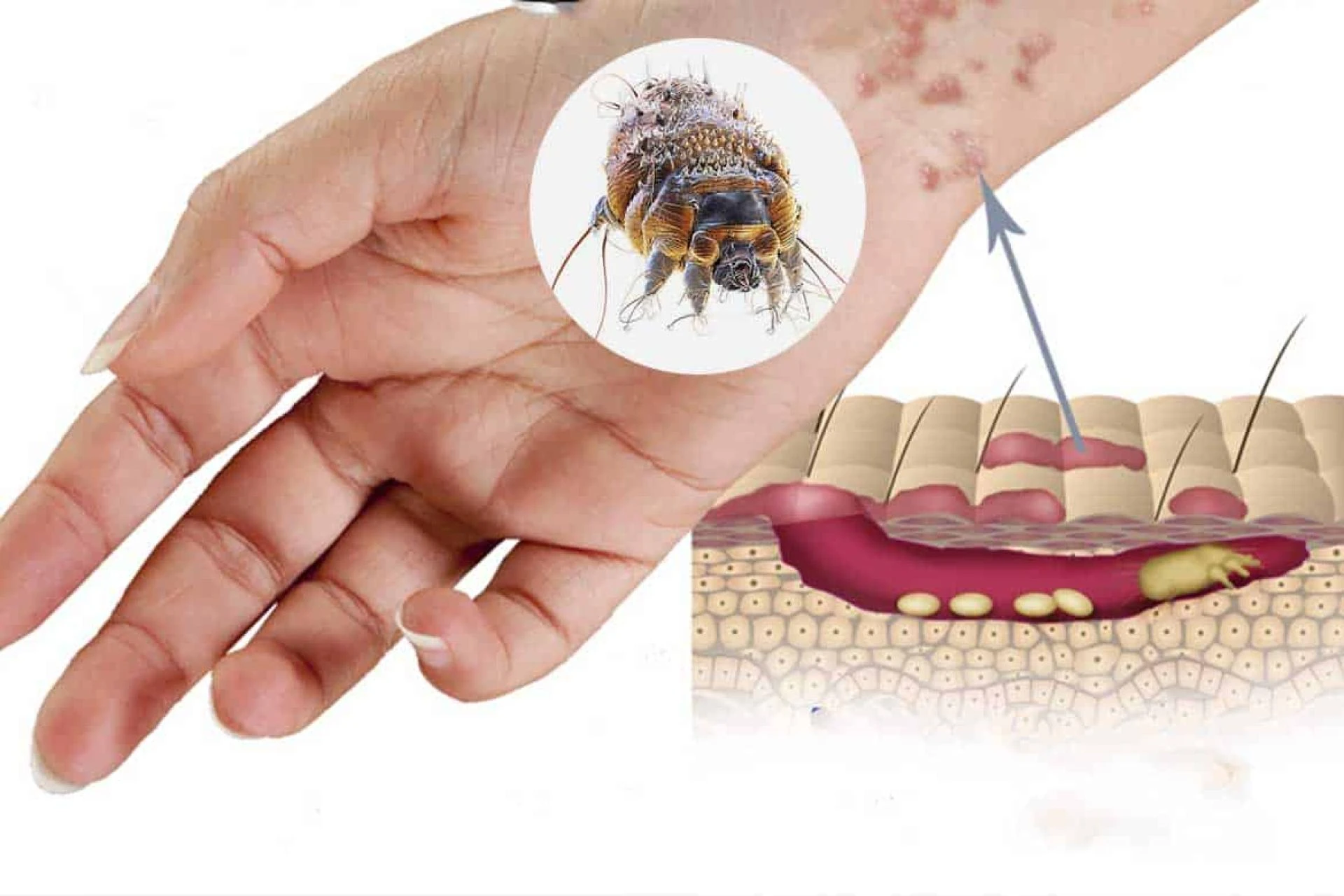

Scabies Disease Overview:
Scabies Disease is a contagious skin condition caused by the Sarcoptes scabiei mite. The microscopic mites burrow into the skin, causing an intensely itchy rash. While scabies can affect anyone, it is particularly common in crowded or close living conditions. The infestation is treatable, but prompt diagnosis and appropriate treatment are crucial to prevent the spread of the disease.
Scabies is a highly contagious skin disorder caused by a mite infestation. The Sarcoptes scabiei mite causes excruciating scratching when it burrows beneath the skin. It itch all the time, especially at night. Since the infectious organism spreads by skin-to-skin contact, family members and close skin-to-skin relationships are the groups most at risk. Patients that are infested must be located and treated quickly because a false positive leads to epidemics, greater rates of morbidity, and increased expenses. Scabies, one of the most common dermatological conditions, is a major cause of skin illness in developing countries. Scabies, one of the most common dermatological conditions, is a major cause of skin illness in developing countries. According to WHO, it affects more than 200 million people worldwide at any given moment and more than 400 million people yearly in total.
The Market Competitors Listed Below are Revolutionizing Healthcare with Innovative Diagnostic & Treatment Inventions:
Diagnostic Market Players:
Canfield Scientific Inc.Tre T Medical GroupIDCP MedTechFotoFinder SystemsFirefly GlobalCanfieldOthersTreatment Market Player:
YanoxCannote HealthcareSun Pharmaceutical Industries LtdZydus CadilaLupin LimitedMenarini India Pvt LtdManus Aktteva Biopharma LLPOthersSymptoms of Scabies Disease:
Scabies is characterized by severe itching, especially at night, as the mites are more active in the dark. The primary symptom is the development of a rash, often in the form of tiny, red bumps or blisters. Common sites for infestation include the webbing between fingers, wrists, elbows, armpits, and genitalia. Scratching the affected areas can lead to secondary bacterial infections.
Diagnostic Analysis:
Diagnosing scabies typically involves a physical examination by a healthcare professional. Skin scrapings may be taken from the affected area and examined under a microscope to identify the mites, eggs, or fecal matter. In some cases, a dermatoscope may be used to magnify the skin and aid in diagnosis.
Treatment Analysis:
The primary treatment for scabies involves topical medications, such as permethrin or ivermectin, which kill the mites. These medications are often applied to the entire body, from the neck down, and left on for a specified period before washing off. Antihistamines and corticosteroid creams may also be prescribed to relieve itching and inflammation.
Get a Free Sample Research Report:
https://www.diseaselandscape.com/downloadsample/postid/126
Regulatory Framework:
The regulatory environment for scabies treatments emphasizes the safety and efficacy of medications. Regulatory bodies evaluate and approve topical treatments to ensure they meet stringent standards, providing healthcare professionals and patients with confidence in the effectiveness of the prescribed interventions.
Clinical Assessment:
Clinical assessments for scabies involve a thorough examination of the skin, consideration of the patient's medical history, and sometimes microscopic analysis of skin scrapings. Ongoing research aims to improve diagnostic tools and treatment options, enhancing the overall clinical management of scabies.
Market Trends Analysis:
The scabies treatment market has witnessed a surge in research and development efforts to introduce more effective and patient-friendly therapies. Innovations in topical formulations and alternative treatment approaches are shaping the market landscape. Additionally, public health initiatives addressing scabies in high-risk populations contribute to market trends.
Browse Full Insights:
https://www.diseaselandscape.com/infectious/scabies-insights
Regional Insights:
Scabies prevalence varies across regions, influenced by factors such as population density, living conditions, and healthcare infrastructure. Regions with overcrowded living spaces and limited access to healthcare may experience higher rates of scabies. Tailoring intervention strategies to address regional challenges is crucial for effective management and prevention.
Conclusion:
Scabies is a common and treatable skin condition, but its impact can be significant, particularly in communities with close living quarters. Understanding the symptoms, diagnostic methods, and treatment options is essential for effective clinical management. As research and regulatory frameworks evolve, addressing scabies at both the clinical and public health levels remains a priority for global healthcare.
Browse Through More Infectious Diseases Research Reports.
Related Reports:
Epidemiology, FDA/EMA Updates, and Market Entry Strategy for Monkeypox
Analysis of Pneumonia | Medication & Market Entry
Market Insights for Lupus Disease | Consulting Services | Obstacles in the Market, Epidemiology
Treatment for Ringworms | Epidemiology Research and Regulatory Advice
Diverticulitis Illness | Advising on FDA- and EMA-Approved Treatments





























Sign in to leave a comment.