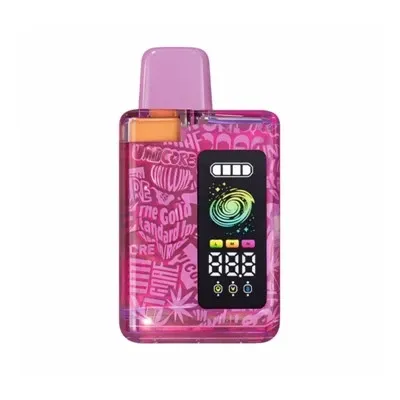

Every cannabis brand that has been in the market for more than a short time has a hardware failure story. The batch of devices that leaked during shipping. The clogging problem that emerged at scale after sampling seemed fine. The burnt taste complaints that appeared after the brand switched to a slightly different oil formulation. These failures share a common characteristic: they were largely preventable with the right hardware choices and quality standards.
The Preventable Nature of Most Hardware Failures
What makes hardware failures in the cannabis vaping category particularly frustrating is that most of them are not random. They are predictable outcomes of specific engineering decisions, material choices, or mismatches between hardware design and oil characteristics. Understanding the engineering root causes of the most common failure modes allows brands to make sourcing and specification decisions that prevent those failures before they occur.
Leaking: Causes and Prevention
Leaking in AIO Vape cannabis hardware occurs primarily through three mechanisms. First, inadequate sealing integrity at joint points allows oil to migrate along connection interfaces under the pressure differentials that occur during shipping, temperature changes, or normal use. Second, material degradation of the oil tank under chemical exposure from cannabis oils creates micro-cracks and surface changes that compromise seal integrity over time. Third, oil flow rates that exceed the ceramic heating element's vaporization rate cause flooding that eventually finds its way out of the device.
Prevention at the first mechanism requires airtight structural design with properly engineered and manufactured joint seals. Prevention at the second requires PCTG material from Eastman or equivalent in all oil-contact surfaces. Prevention at the third requires ceramic coil and oil chamber design matched to the oil's flow characteristics, with appropriate viscosity management for the specific formulation.
Clogging: The Thick Oil Problem
Clogging is the dominant failure mode for cannabis vaping hardware used with thick oils like live rosin and live resin. It occurs when oil cannot flow freely through the hardware to reach the ceramic heating element, resulting in progressively worsening vapor production that eventually stops entirely.
The primary mechanical cause of clogging with thick oils is the central post in traditional oil chamber designs. This post creates a resistance point where thick oil can stall, pool, and over time block airflow. The solution, eliminating the central post through a postless chamber design, is available in a range of AIO vape hardware models specifically engineered for high-viscosity cannabis oil compatibility.
Brands working with thick oils who choose hardware without postless designs are essentially accepting a significant clogging risk as a known product flaw. The engineering solution to this problem exists and is accessible. There is no reason to build it into a product unnecessarily.
Burnt Taste: Prevention Through Matching and Material Quality
Burnt taste in cannabis vaping products has two primary causes. The first is heating element temperature exceeding the oil's optimal vaporization range, which partially combusts terpenes and other compounds rather than vaporizing them cleanly. The second is the heating element running with insufficient oil supply, which causes residue on the ceramic surface to burn rather than fresh oil to vaporize.
Prevention at the first cause requires voltage configuration matched to the specific oil's optimal vaporization temperature range. For live rosin, this means voltage presets at or below 2.8V. For distillates, slightly higher presets in the 2.8V to 3.3V range may be appropriate. For live resin, the range is typically in between.
Prevention at the second cause requires oil chamber design that maintains consistent oil supply to the ceramic throughout the device's life. Postless designs help here by removing the resistance point that causes oil delivery interruptions. High-density mesh ceramic surfaces that have sufficient wicking area to absorb oil efficiently also contribute to consistent oil supply maintenance.
Weak Vapor: The Battery Variable
Weak vapor production that develops progressively as a device ages is often attributed to the oil or the ceramic heating element, but the battery is frequently the actual culprit. As standard lithium battery chemistry depletes, output voltage drops. Lower voltage means less heating power, which means less complete oil vaporization and weaker vapor.
Constant voltage battery systems using quality cells like EVE Energy maintain stable output throughout the discharge cycle, preventing the progressive vapor quality degradation that creates a disappointing end-of-device experience. For brands committed to delivering a consistent experience from the first draw to the last, battery selection is as important as ceramic coil and oil chamber design.
Poor Airflow: Design and Manufacturing Variables
Poor airflow in AIO cannabis hardware results from either design insufficiency, where the airflow path geometry creates too much draw resistance for the intended experience, or manufacturing quality issues where production tolerances allow airflow paths to be narrower than designed in some units.
The first issue is addressed through thoughtful hardware design that creates the appropriate draw resistance for the target oil type and consumer preference. The second is addressed through tight manufacturing tolerances and consistent quality control that catches airflow deviations in production before they reach consumers.
The Quality Control Standard That Prevents Scale Problems
Hardware issues that seem minor in sampling, where the sample size is small and attention is closely focused on the hardware, can become significant brand problems at production scale. A failure rate of 1% may not seem alarming during a 50-unit sample evaluation. In a 50,000-unit production run, it means 500 defective devices reaching consumers.
Manufacturing quality standards that maintain defect rates below 1 in 100,000 units provide a quality foundation that protects brands at scale. This standard is achievable with integrated in-house production, documented quality control procedures, and consistent application of those procedures across every production run.
Testing With Actual Oil at Every Development Stage
One of the most effective failure prevention practices brands can adopt is insisting on sample testing with their actual oil formulation rather than test fluids or generic oils. Hardware that performs well with test fluids but encounters problems with the actual cannabis oil formulation is a common development challenge.
The interaction between All-In-One Disposable Vape hardware materials and specific cannabis oil formulations is where most unexpected failure modes originate. Testing with actual oil during the sample phase identifies these interactions early, when they can be addressed through hardware adjustments rather than after mass production has been completed.
Conclusion
Most AIO vape hardware failures are preventable with the right engineering choices, material selections, and quality standards. Postless designs prevent clogging with thick oils. PCTG material prevents oil tank degradation and leaking. Voltage configuration matched to the specific oil prevents burnt taste. Constant voltage batteries prevent vapor quality degradation. Tight manufacturing quality control prevents scale problems. Brands that understand these failure modes and choose hardware designed to prevent them build products that earn customer loyalty through consistent reliability rather than losing it through predictable failures.





























Sign in to leave a comment.