Could Lower Back Pain Be Caused by Sciatica? Here's How to Tell
You wake up, bend down to pick something off the floor, and there it is again, that sharp, shooting pain running from your lower back down into your leg. Is it just a strained muscle, or is something else going on? This is one of the most common questions patients ask, and it's exactly why understanding sciatica matters.
Not all lower back pain is the same, and knowing the difference can change how quickly you get relief. If you've been searching for sciatica treatment in Ahmedabad, chances are you've already noticed your pain behaves a little differently than a typical backache. Let's walk through what sciatica actually is, what causes it, and how you can tell it apart from ordinary back strain.
What Actually Causes Sciatica?
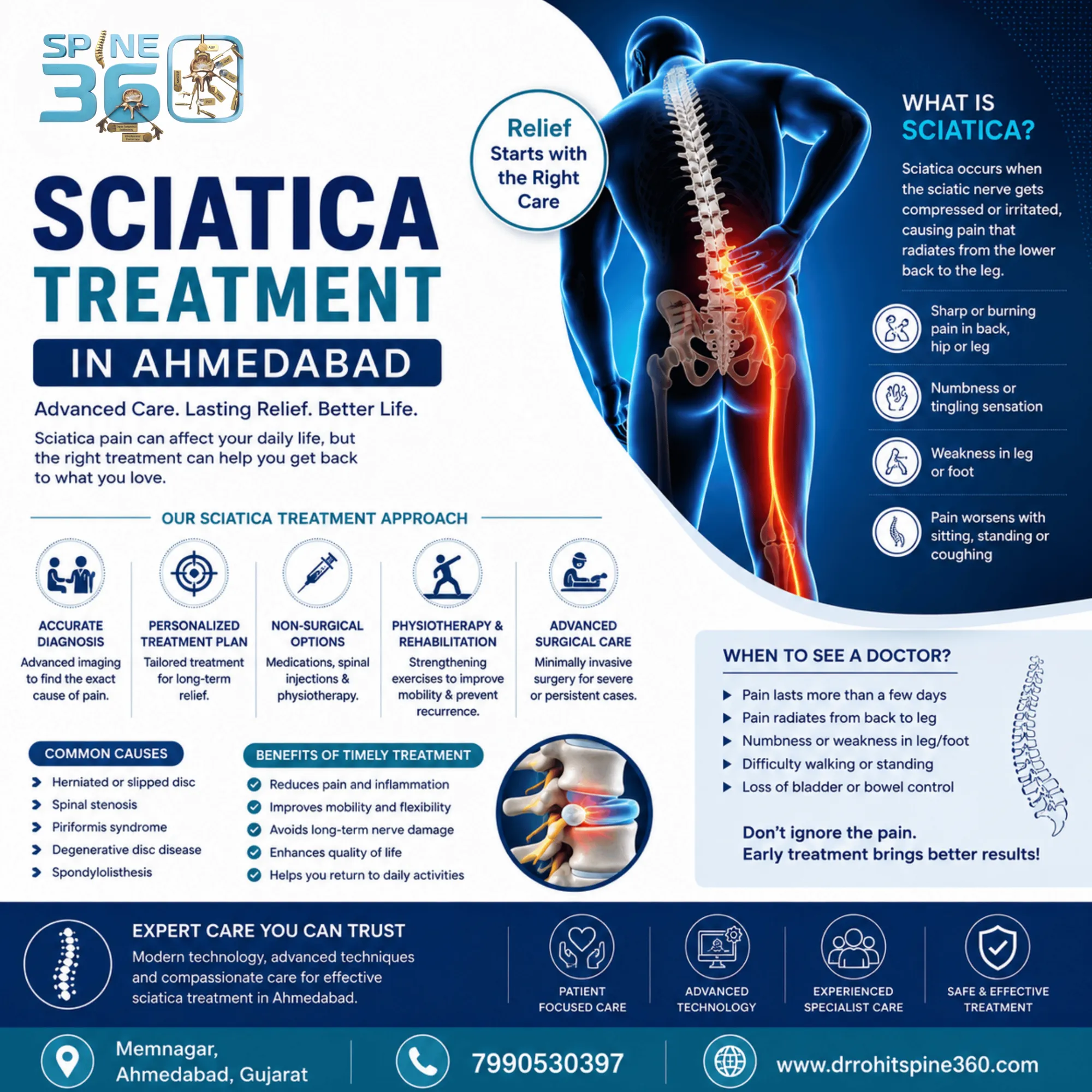
Sciatica isn't a condition on its own. It's a symptom, caused by irritation or compression of the sciatic nerve, the longest nerve in your body, running from your lower back through your hips and down each leg. When something presses on this nerve, pain travels along its entire path rather than staying confined to your back.
Common causes include:
- Herniated or slipped discs pressing directly on the nerve root
- Spinal stenosis, a narrowing of the space around the spinal cord
- Piriformis syndrome, where a muscle deep in the buttock irritates the nerve
- Degenerative disc disease, causing discs to lose height and cushioning
- Spondylolisthesis, where one vertebra slips forward over another
In many cases, the disc itself isn't broken so much as bulging or shifted just enough to press on a sensitive nerve root. That distinction matters because it often means the problem can improve with the right treatment, rather than requiring drastic intervention.
How Do You Know If It's Sciatica and Not Just a Backache?
This is usually where patients start connecting the dots. Ordinary muscle strain tends to stay localized, while sciatica has a distinct pattern.
- Pain that starts in the lower back or buttock and travels down one leg
- A burning or electric-shock sensation rather than a dull ache
- Numbness or tingling following the path of the nerve
- Weakness in the leg or foot, sometimes making it hard to lift your toes
- Pain that worsens when sitting, coughing, or sneezing
- Symptoms typically affecting one side of the body rather than both
If your pain fits this pattern and hasn't eased within a week or two, it's worth getting evaluated properly rather than assuming it will resolve on its own.
Who Is More Likely to Develop Sciatica?
Some people are simply more prone to this kind of nerve irritation than others. Common risk factors include:
- Age, since disc wear becomes more common after the mid-30s
- Jobs involving heavy lifting or repeated twisting motions
- Prolonged sitting, especially with poor posture
- Being overweight, which adds extra pressure on spinal discs
- Diabetes, which can affect nerve health over time
- A sedentary lifestyle, leading to weaker core and back support
Recognising these factors early doesn't guarantee you'll avoid sciatica altogether, but it does help you and your doctor address the problem before it becomes severe.
What Helps During Recovery?
The encouraging part is that most cases of sciatica improve with conservative treatment, without ever needing surgery. Recovery often includes a combination of the following:
- Rest in moderation, avoiding both complete bed rest and overexertion
- Physiotherapy, focused on gentle stretching and strengthening exercises
- Anti-inflammatory medication, to ease pain and swelling around the nerve
- Targeted injections, when pain is severe or not responding to other methods
- Heat or cold therapy, whichever brings you more relief
- Gradual return to activity, rather than jumping back into strenuous movement too soon
Most patients notice steady improvement over several weeks, though severe or persistent cases may need a more focused treatment plan from a spine specialist.
Can Sciatica Be Prevented?
While not every case can be avoided entirely, several habits genuinely lower your risk of it returning.
- Strengthen your core muscles to better support your lower spine
- Maintain good posture, particularly during long hours of sitting
- Take short movement breaks every 30 to 40 minutes if your work is desk-based
- Practice safe lifting technique, bending at the knees rather than the waist
- Stay physically active with low-impact exercise like walking or swimming
- Maintain a healthy weight to reduce pressure on your spine
Small, consistent habits tend to matter far more than occasional intense workouts when it comes to protecting your spine long-term.
A Reassuring Final Word
Living with sciatic pain can feel discouraging, especially when it disrupts simple daily movements you never used to think twice about. The good news is that once properly diagnosed, sciatica responds well to treatment for most patients, and lasting relief is genuinely achievable.
If your lower back pain has been traveling down your leg and hasn't improved on its own, seeking proper sciatica treatment in Ahmedabad is a sensible next step. Dr. Rohit Thaker and his team take the time to identify the exact cause of your pain before recommending a treatment plan, so you're never guessing what's actually helping. A clear diagnosis today can make all the difference in how quickly you get back to moving comfortably.
























Sign in to leave a comment.