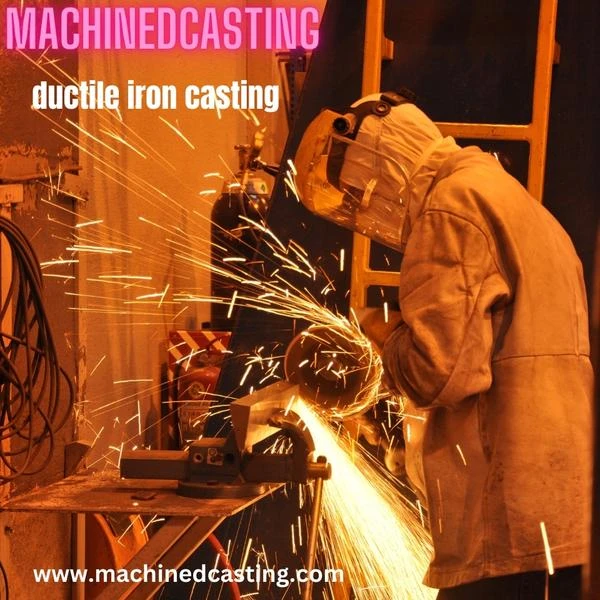

Ductile iron casting, also known as nodular or spheroidal graphite iron casting, is a versatile and widely used manufacturing process. Renowned for its strength, durability, and cost-effectiveness, ductile iron casting finds applications in various industries, including automotive, machinery, and infrastructure. In this guide, we\'ll delve into the intricacies of ductile iron casting, exploring its process, advantages, applications, and best practices.
Understanding Ductile Iron Casting Process
Ductile iron casting begins with the melting of high-quality iron, often supplemented with small amounts of additional elements such as carbon, silicon, manganese, and magnesium. The molten metal is then poured into a mold cavity, typically made of sand or other refractory materials. During solidification, the graphite in ductile iron forms spherical nodules, imparting enhanced ductility and toughness to the material.
Advantages of Ductile Iron Casting
Strength and Durability: Ductile iron exhibits excellent mechanical properties, including high tensile strength, yield strength, and impact resistance, making it suitable for heavy-duty applications.
Cost-Effectiveness: Compared to alternative materials like steel, ductile iron casting offers a cost-effective solution without compromising on performance.
Versatility: Ductile iron casting can be easily customized to meet specific design requirements, offering flexibility in shape, size, and complexity.
Machinability: Ductile iron is readily machinable, allowing for precise finishing and dimensional accuracy in the final product.
Applications of Ductile Iron Casting
Automotive Industry: Ductile iron components are widely used in automotive manufacturing, including engine blocks, cylinder heads, crankshafts, and suspension parts, owing to their strength, durability, and vibration damping characteristics.
Machinery and Equipment: Ductile iron casting finds applications in various machinery and equipment, such as gears, valves, pumps, and hydraulic components, where reliability and performance are critical.
Infrastructure and Construction: In infrastructure projects, ductile iron pipes, fittings, and manhole covers are commonly used due to their corrosion resistance, longevity, and ease of installation.
Best Practices for Ductile Iron Casting
Material Selection: Use high-quality raw materials with consistent chemical composition to ensure the desired mechanical properties and microstructure in the final casting.
Mold Design and Preparation: Design molds with proper gating and risering systems to promote uniform filling and solidification of the molten metal. Ensure adequate venting to prevent defects like porosity and gas entrapment.
Controlled Solidification: Optimize pouring and cooling processes to achieve controlled solidification, minimizing the formation of shrinkage defects and ensuring uniformity in mechanical properties.
Post-Casting Treatment: Implement heat treatment and surface finishing techniques as needed to enhance the mechanical properties, dimensional accuracy, and surface quality of the ductile iron castings.
Quality Assurance: Implement stringent quality control measures throughout the casting process, including inspection of raw materials, monitoring of process parameters, and testing of finished castings to ensure compliance with specifications and standards.
Conclusion
Ductile iron casting is a versatile and cost-effective manufacturing process with widespread applications across various industries. By understanding the process fundamentals, leveraging its advantages, and adhering to best practices, manufacturers can achieve high-quality ductile iron castings that meet the performance requirements of diverse applications. Whether in automotive, machinery, or infrastructure, ductile iron casting continues to play a pivotal role in shaping the modern industrial landscape.


























Sign in to leave a comment.