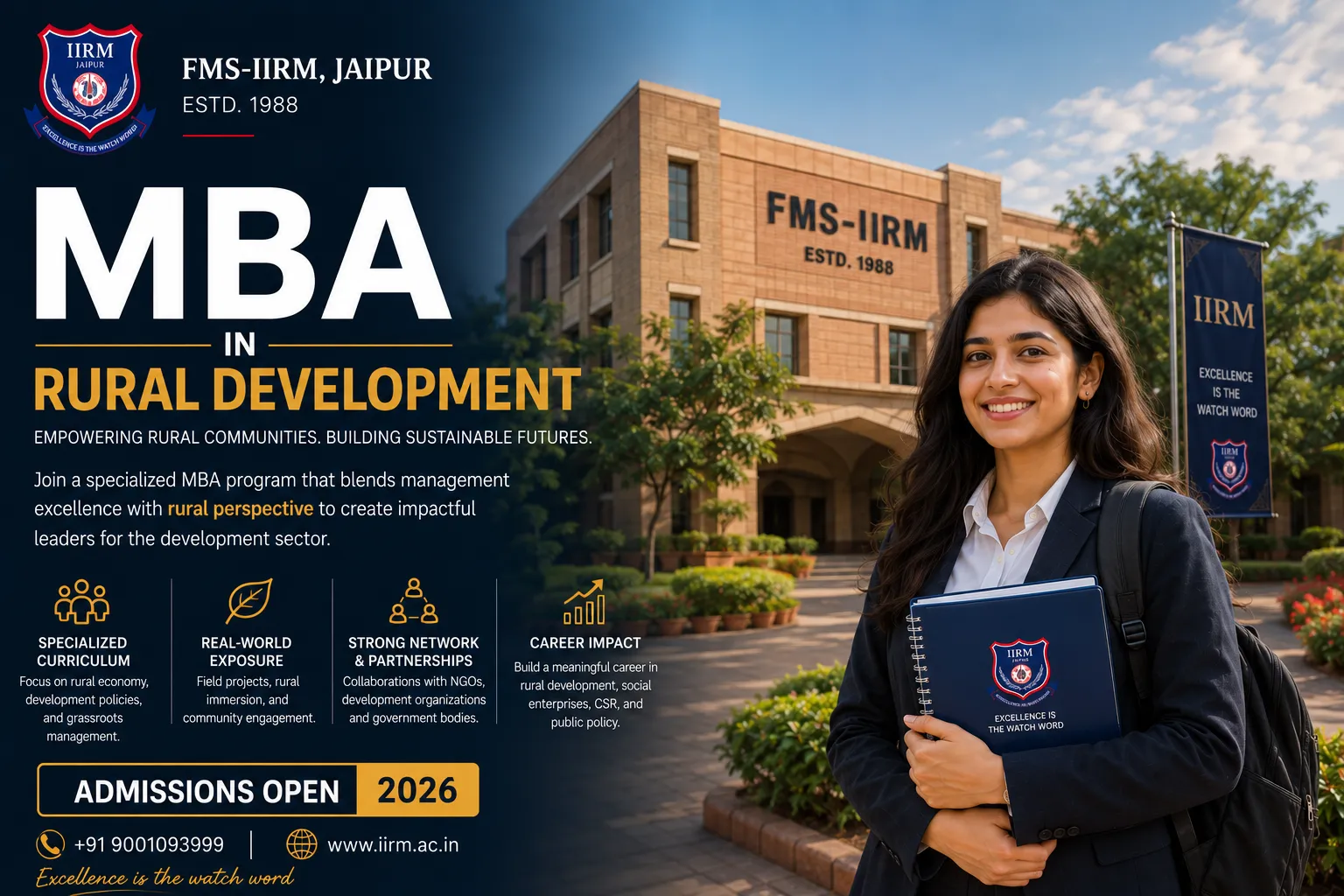

Rural India's economy is evolving rapidly, creating exciting opportunities for professionals with strong managerial skills. An MBA in Rural Development is designed for students who want to contribute to rural transformation while building a successful career in management. This program combines business management principles with rural development strategies, preparing students for careers in agriculture, rural banking, government organizations, NGOs, microfinance institutions, and Corporate Social Responsibility (CSR) initiatives.
If you are passionate about creating a positive social impact while securing a stable and rewarding career, this specialization could be the perfect choice. Before applying, it is essential to understand the course structure, eligibility criteria, career opportunities, and future scope.
What is an MBA in Rural Development?
An MBA in Rural Development is a two-year postgraduate management program that focuses on developing leadership and managerial skills for rural enterprises and development organizations. Unlike a traditional MBA, this program emphasizes rural marketing, agribusiness management, sustainable development, rural finance, and community development.
Students gain both theoretical knowledge and practical experience through internships, field visits, live projects, and industry interactions. This hands-on learning enables them to understand real-world rural challenges and develop effective business solutions.
Why Choose an MBA in Rural Development?
The demand for professionals specializing in rural management is steadily increasing because India's rural economy plays a significant role in agriculture, manufacturing, and consumer markets. Government initiatives promoting rural entrepreneurship, digital transformation, financial inclusion, and sustainable development have created numerous career opportunities for qualified professionals.
Some of the key benefits of pursuing this specialization include:
- High demand across multiple industries
- Career opportunities in both the government and private sectors
- Strong growth prospects in NGOs and CSR organizations
- Leadership roles in agribusiness companies
- Competitive salary packages
- Opportunities to create a meaningful social impact
Graduates are highly valued for their ability to manage rural projects, understand local markets, and implement sustainable business strategies.
Eligibility Criteria and Admission Process
Most colleges require applicants to hold a bachelor's degree from a recognized university with a minimum aggregate of 50%. Final-year undergraduate students are also eligible to apply at many institutions.
The admission process generally includes the following:
| Criteria | Details |
| Educational Qualification | Bachelor's Degree |
| Minimum Marks | 50% (may vary by institution) |
| Entrance Exams | CAT, CMAT, MAT, XAT, ATMA, or institute-level entrance tests |
| Selection Process | Group Discussion (GD), Personal Interview (PI), and Academic Performance |
Some institutes also offer direct admission based on academic performance, merit, and interview results.
Core Subjects Covered in the Program
The curriculum is designed to develop both managerial skills and expertise in rural development. Some of the major subjects include:
- Rural Marketing
- Agribusiness Management
- Rural Finance
- Microfinance
- Project Management
- Supply Chain Management
- Human Resource Management
- Entrepreneurship Development
- Sustainable Development
- Corporate Social Responsibility (CSR)
Students also participate in rural immersion programs, field research, and internships to gain practical industry experience.
Career Opportunities After Graduation
An MBA in Rural Development opens the door to a wide range of career opportunities in the public, private, and development sectors.
Popular job roles include:
- Rural Development Manager
- Project Manager
- CSR Manager
- Rural Marketing Manager
- Agribusiness Executive
- Microfinance Officer
- NGO Program Manager
- Supply Chain Manager
- Business Development Manager
- Rural Banking Officer
Leading recruiters include agribusiness companies, FMCG organizations, banks, NGOs, government agencies, consulting firms, and multinational corporations with rural operations.
Salary and Future Scope
The salary package depends on factors such as the institute, job role, employer, skills, and experience. Fresh graduates generally receive competitive salary packages, while experienced professionals can earn significantly higher compensation as they progress in their careers.
With increasing investments in agriculture, rural infrastructure, digital banking, renewable energy, and rural entrepreneurship, the demand for skilled rural management professionals is expected to grow steadily. Professionals with strong analytical, communication, leadership, and project management skills often advance to senior managerial positions within a few years.
How to Choose the Right MBA College
Selecting the right institute plays a crucial role in shaping your career. Before taking admission, evaluate a college based on the following factors:
- AICTE or UGC approval
- Experienced faculty members
- Industry-oriented curriculum
- Strong placement record
- Internship opportunities
- Industry collaborations
- Alumni network
- Campus infrastructure
- Specializations offered
- Return on Investment (ROI)
Institutes such as IIRM College Jaipur are well known for offering industry-oriented management programs with practical exposure, experienced faculty, and strong placement support, making them an excellent choice for students interested in rural management careers.
Conclusion
An MBA in Rural Development is much more than a management degree. It equips students with business knowledge, leadership skills, and practical experience to solve real-world rural challenges while building a successful and meaningful career. As rural markets continue to expand and organizations invest heavily in sustainable development, professionals with specialized rural management expertise will remain in high demand.
If you are looking for a career that combines professional growth with the opportunity to create a positive social impact, this specialization offers excellent opportunities across government organizations, private companies, NGOs, agribusiness firms, financial institutions, and CSR departments.
FAQs
1. Is an MBA in Rural Development a good career option?
Yes. It offers excellent career opportunities in agribusiness, rural banking, NGOs, CSR, consulting, government projects, and rural entrepreneurship.
2. What is the duration of the course?
The program is typically completed in two years, divided into four semesters.
3. What is the average salary after completing an MBA in rural development?
Salary varies depending on the institute, employer, job role, and skills. Fresh graduates generally receive competitive entry-level salary packages with excellent long-term career growth.
4. Can I work in the corporate sector after completing this MBA?
Yes. Many FMCG companies, banks, agribusiness firms, consulting organizations, and CSR departments actively recruit graduates with an MBA in Rural Development.
5. Which skills are essential for success in this field?
Strong communication, leadership, analytical thinking, project management, problem-solving abilities, and a good understanding of rural markets are essential for long-term success in this field.


























Sign in to leave a comment.