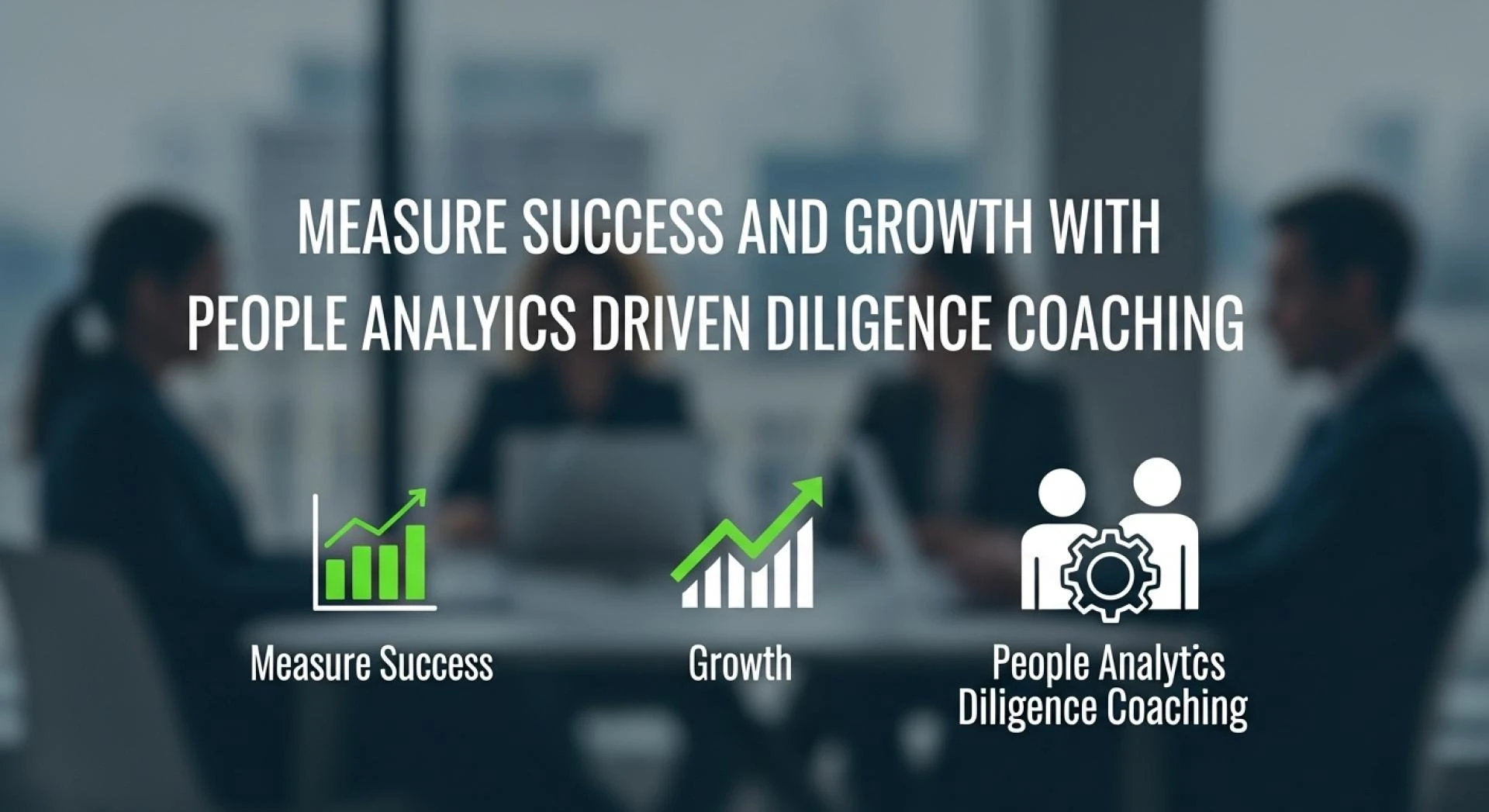

Have you ever wondered why some organizations consistently outperform others even when they share the same resources, budgets, and market conditions? It often comes down to one thing: understanding their people better. Many leaders talk about data, yet very few know how to use it effectively when it comes to human behavior, performance, and growth. That’s where the concept of People Diligence Coaching steps in combining analytics, behavioral insights, and leadership development to help businesses measure success and growth in a way that’s both human-centered and evidence-based.
As someone who’s worked closely with leaders and teams, I’ve seen firsthand how difficult it can be to measure real progress. Numbers like revenue, productivity, and turnover only tell part of the story. What truly drives sustainable success is the ability to connect data to the actual behaviors and decisions that make organizations thrive. People analytics gives us that visibility, while diligence coaching ensures that we act on it meaningfully.
Why is measuring success through people analytics so important?
Every leader asks the same questions: How do I know if my team is truly performing well? Are we growing in the right direction? Are our people thriving or just coping? Traditional HR metrics can’t fully answer these. Headcount, attendance, and performance ratings are static they tell you what is happening but not why.
People analytics, on the other hand, helps us see patterns behind outcomes. It reveals how leadership styles, communication habits, workload balance, and even psychological safety contribute to success or failure. By aligning these insights with a diligence coaching approach, we don’t just analyze people we help them grow through tailored, evidence-based development programs.
The benefit? You move from reactive management to proactive leadership. You start identifying potential problems before they escalate for example, spotting a drop in team sentiment before it affects performance, or identifying leadership fatigue before it leads to turnover.
What does “diligence” mean in people analytics?
When we talk about diligence in this context, we’re not referring to rigid processes. Instead, we mean consistency, depth, and fairness in how we assess people and make decisions. In practical terms, diligence means using data responsibly, asking the right questions, and ensuring that every people-related decision from hiring to promotion is supported by objective evidence.
The pillars of people diligence
- Transparency Everyone should understand how performance is measured and what data is being used.
- Fairness Avoiding bias by ensuring data reflects a true picture of individual and team contributions.
- Accountability Using insights to take constructive action, not to assign blame.
- Consistency Maintaining the same level of rigor across all departments and levels.
When analytics meets coaching under this framework, leaders gain both quantitative clarity and human understanding a combination that leads to smarter growth decisions.
How can people analytics reshape leadership decisions?
Modern leadership is shifting from intuition-based management to data-guided decision-making. But that doesn’t mean leaders should abandon empathy. Instead, it means learning to combine data with human judgment.
For instance, one of my clients, a mid-sized tech company, noticed that project deadlines were consistently missed despite employees working long hours. Analytics showed that collaboration across departments was weak and that unclear ownership caused rework. Through focused coaching and communication redesign, they reduced delays by 30% in just three months.
This example shows the value of integrating analytical insights into leadership coaching turning raw information into meaningful improvement.
What metrics should leaders really track?
There’s often confusion about which numbers matter most. Leaders sometimes focus on vanity metrics like total output or sales growth, but miss indicators that reveal real organizational health.
Below is a simple table that shows how performance metrics can be mapped to behavioral insights:
Category
Traditional Metric
Analytical Focus
Coaching Application
Productivity
Output per employee
Collaboration patterns
Build team clarity and accountability
Retention
Turnover rate
Engagement score changes
Address burnout and workload issues
Leadership
Manager ratings
Sentiment and feedback trends
Coach leaders on communication and influence
Culture
Survey participation
Peer network density
Strengthen inclusion and trust
Learning
Training hours
Skill acquisition rate
Personalize development pathways
This approach ensures that measurement isn’t limited to numbers but connects directly to real behavior and outcomes.
How does analytics-driven diligence coaching work in practice?
Let’s break it down. The process usually starts with gathering data from performance reviews, 360-degree feedback, project results, and even digital collaboration tools. But data alone doesn’t change behavior. That’s where coaching comes in.
A trained coach interprets patterns within this data to identify where individuals or teams may need support. For example, if communication delays frequently occur between departments, a coach might work with team leads to clarify decision-making processes and improve mutual trust.
This creates a cycle of learning and growth:
- Measure → 2. Analyze → 3. Coach → 4. Adjust → 5. Measure again.
Over time, this cycle builds an adaptive, self-aware organization that continuously improves performance and employee well-being.
Can people analytics improve culture?
Absolutely. Culture is not just about shared values; it’s about consistent behaviors that reinforce those values. Analytics helps visualize cultural patterns whether collaboration is strong, whether feedback is open, or whether people feel psychologically safe to speak up.
When leaders use these insights wisely, they can create interventions that actually stick. For example, if analytics shows a decline in peer recognition, it may signal disengagement. Coaching can then focus on strengthening appreciation habits, leading to a measurable boost in morale.
According to Deloitte’s 2024 Human Capital Trends report, companies using behavioral analytics to guide cultural improvements saw 27% higher employee trust scores and 21% lower turnover rates within a year.
What role does technology play?
Technology amplifies diligence by making people data visible, timely, and actionable. Tools like organizational network analysis (ONA), pulse surveys, and behavioral AI models provide insights that were once impossible to access.
However, the real skill lies not in collecting data but in interpreting it through a human lens. That’s why pairing analytics tools with skilled coaches is essential. Data reveals what’s happening, but coaches uncover why and help people act on it meaningfully.
How do we prevent misuse of people data?
With great data comes great responsibility. Misusing people analytics can damage trust and morale. Ethical use requires transparency, consent, and a focus on development rather than punishment.
Here are two simple guidelines to ensure ethical integrity:
- Always communicate why data is being collected and how it will benefit employees.
- Use data to empower learning, not to monitor or control behavior.
When employees understand that analytics supports growth, not surveillance, participation and data quality naturally improve.
How do you measure coaching effectiveness?
One challenge leaders often face is proving the ROI of coaching. By embedding analytics into the process, this becomes easier. You can track measurable changes in engagement scores, retention, performance trends, and collaboration quality before and after coaching interventions.
For example, one organization I worked with introduced manager coaching alongside analytics dashboards. Within six months:
- Cross-functional collaboration improved by 32%.
- Voluntary attrition decreased by 18%.
- Employee satisfaction increased by 24%.
These results weren’t based on perception but on validated data. That’s the power of analytics-backed diligence coaching.
What are common challenges in adopting this approach?
Introducing analytics-driven diligence requires cultural readiness. Some leaders hesitate because they fear exposing performance gaps or biasing decisions with data. Others struggle with fragmented systems that don’t integrate HR, performance, and feedback data effectively.
The key is to start small perhaps with a pilot program focusing on one business unit or leadership level. Over time, as people see results, acceptance grows.
Overcoming resistance
- Provide clear communication about goals.
- Share early wins.
- Involve teams in interpreting data, not just observing it.
This inclusiveness builds ownership and long-term commitment.
How can smaller organizations apply these principles?
Even without complex analytics tools, smaller companies can apply diligence-based thinking. Simple surveys, performance discussions, and reflection sessions can yield valuable insights. What matters most is consistency and openness to learning.
A small business that regularly reviews its team’s collaboration, satisfaction, and development progress already practices people diligence even without advanced software.
Why does data-backed coaching matter in the long run?
Businesses evolve fast. Skills that mattered five years ago might not matter tomorrow. Data helps leaders stay ahead of these shifts by showing trends early skills gaps, engagement risks, or team fatigue.
When this data guides coaching, organizations don’t just react to change; they anticipate it. This proactive mindset turns coaching from a remedial activity into a performance advantage.
What’s next for analytics and diligence coaching?
The future points toward greater integration between HR analytics, behavioral science, and leadership development. Predictive models will soon be able to highlight not only who is at risk of burnout but also why, allowing for timely coaching support.
Yet technology will never replace the human element. Data can guide decisions, but empathy drives growth. The combination of both creates organizations that are not only successful but also resilient and humane.
Conclusion
Measuring success and growth isn’t just about charts and dashboards it’s about understanding people as the driving force behind every number. People Diligence Coaching creates that bridge between analytics and human development. It turns scattered information into actionable learning, making organizations more adaptable, self-aware, and fair.
In my experience, the most successful leaders are those who treat data as a dialogue, not a verdict. They use insights to ask better questions, give better feedback, and make better choices. When analytics meets diligence and coaching, growth stops being a target it becomes a continuous, measurable journey.
























Sign in to leave a comment.