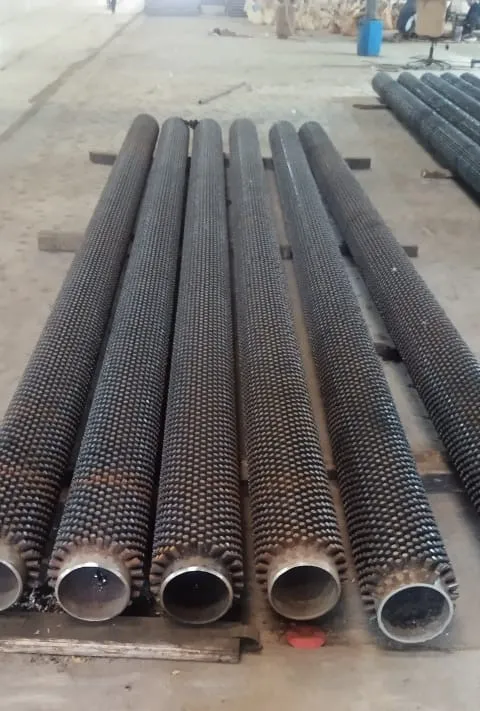

When it comes to selecting the right type of tube for an industrial or construction application, the choice between mechanical tubes and structural tubes is one that engineers, procurement teams, and project managers face regularly. While both may look similar on the surface, they serve very different purposes and are manufactured to meet entirely different sets of performance requirements. Choosing the wrong type can lead to structural failures, increased costs, and project delays.
This blog breaks down the key differences between mechanical tubes and structural tubes, explains where each one is best used, and helps you make an informed decision for your specific application.
What Are Mechanical Tubes?
Mechanical tubes are precision-engineered tubes designed for use in mechanical and engineering applications where dimensional accuracy, surface finish, and specific mechanical properties are critical. They are manufactured to tight tolerances and are used in components that experience dynamic loads, high pressure, stress, and movement during operation.
Seamless tubes are the most commonly preferred type for mechanical applications. Since they have no weld seam, they offer uniform strength throughout the entire cross-section, making them ideal for applications where the tube must withstand internal pressure, bending, or torsional forces without any weak points.
Mechanical tubes are widely used in hydraulic cylinders, automotive components, machine tools, pneumatic systems, bearings, axles, and precision shafts. The key characteristic of a mechanical tube is that its performance must be consistent, predictable, and measurable — because the components made from it are often part of moving assemblies where failure is not an option.
What Are Structural Tubes?
Structural tubes, also known as hollow sections, are designed primarily to carry loads in construction and fabrication applications. They are used to form frames, columns, beams, trusses, and support structures where the main requirement is load-bearing capacity and rigidity rather than dimensional precision or surface finish.
Structural tubes are typically manufactured using welded processes and are available in square, rectangular, and circular hollow sections. They are produced to meet structural standards and are specified based on yield strength, tensile strength, and wall thickness rather than tight dimensional tolerances.
Common applications include building construction, bridges, industrial structures, conveyor frames, gate fabrication, and equipment support structures. Since structural tubes are not typically used in moving parts or high-pressure systems, the presence of a weld seam is generally acceptable and does not compromise their structural performance.
Key Differences Between Mechanical and Structural Tubes
1. Manufacturing Process and Tolerances
The most fundamental difference lies in how they are made and to what level of precision. Mechanical tubes — particularly seamless tubes — are manufactured with very tight dimensional tolerances on outer diameter, wall thickness, and straightness. This precision is essential because mechanical components must fit together accurately and perform under dynamic conditions.
Structural tubes are manufactured to broader tolerances since their application demands load-bearing performance rather than dimensional exactness. Minor variations in thickness or diameter do not affect their ability to support a structure.
2. Surface Finish and Internal Quality
Mechanical tubes require a clean, smooth internal bore because in many applications — such as hydraulic cylinders or bearing sleeves — the internal surface is a functional surface. Any roughness, scale, or irregularity can affect the performance of the component.
Structural tubes do not require a smooth internal finish since the inner bore is not a functional surface. The outer surface finish matters primarily for aesthetic or corrosion protection purposes.
3. Strength and Pressure Ratings
Seamless tubes used in mechanical applications are manufactured to specific mechanical property requirements including tensile strength, yield strength, hardness, and impact resistance. They can be produced in various grades and heat treatment conditions to meet demanding performance criteria.
Structural tubes are specified based on their ability to carry compressive, tensile, or bending loads in a static or semi-static structure. While they are certainly strong, they are not designed to handle the kind of dynamic, cyclic, or high-pressure loading that mechanical tubes endure.
4. Testing and Certification
Mechanical tubes undergo extensive testing including hydrostatic testing, ultrasonic testing, eddy current testing, and mechanical property testing. Each batch is certified to specific material standards such as EN 10305, DIN, or ASTM specifications.
Structural tubes are tested and certified to structural standards such as EN 10219 or EN 10210, focusing on yield strength, impact toughness, and dimensional compliance. The testing regime is less intensive compared to mechanical tubes.
5. Material Grades
Mechanical tubes are available in a broader range of material grades including carbon steel, alloy steel, and case-hardening steel grades, allowing engineers to select the exact grade that meets their mechanical and chemical requirements.
Structural tubes are generally available in standard structural steel grades such as S235, S275, and S355, which are adequate for most construction and fabrication needs.
How to Choose the Right Tube for Your Application
The decision between mechanical and structural tubes ultimately comes down to the nature of your application and the performance demands it places on the material.
If your application involves moving parts, high pressure, tight dimensional fits, or dynamic loading — choose mechanical tubes. Applications like hydraulic systems, automotive engineering, machine components, and precision assemblies demand the accuracy, surface quality, and mechanical properties that only precision seamless tubes can deliver.
If your application involves building frames, support structures, enclosures, trusses, or fabricated assemblies that primarily carry static loads — structural tubes are the appropriate and more cost-effective choice.
In some applications, particularly in heavy engineering and industrial equipment manufacturing, both types may be used in the same project. The main structure may use structural tubes while the moving mechanical components use precision seamless tubes.
Anand Seamless Limited is a well-known manufacturer of high-quality seamless tubes catering to both mechanical and industrial applications, offering a wide range of grades and specifications to meet diverse engineering requirements across industries.
Frequently Asked Questions (FAQs)
Q1. Can structural tubes be used in place of mechanical tubes to save costs?
This is a common question, and the short answer is no — not in critical mechanical applications. While structural tubes may appear similar and are generally less expensive, they do not meet the dimensional tolerances, surface finish requirements, or mechanical property standards needed for precision engineering components. Using structural tubes in place of mechanical tubes in hydraulic cylinders, bearing housings, or pressure systems can lead to premature component failure, leakage, or serious safety incidents. Always use the tube type specified for the application.
Q2. What industries use seamless tubes most extensively?
Seamless tubes are extensively used across several high-demand industries including oil and gas, automotive manufacturing, aerospace, hydraulics and pneumatics, power generation, and heavy engineering. In all these sectors, the requirement for tubes that can handle high pressure, extreme temperatures, or precise dimensional fits makes seamless tubes the preferred and often the only acceptable choice. Their uniform wall thickness and absence of a weld seam make them inherently stronger and more reliable than welded alternatives in critical service conditions.
Q3. How do I identify whether a tube is mechanical grade or structural grade?
The most reliable way to identify the grade and type of a tube is through its material test certificate, also known as a mill certificate or test report. This document, provided by the manufacturer, specifies the material standard, chemical composition, mechanical properties, dimensional tolerances, and testing carried out on the batch. Mechanical grade tubes will reference precision or engineering tube standards, while structural tubes will reference hollow section structural standards. Always request and verify the mill certificate before using tubes in critical applications.



























Sign in to leave a comment.