
Mera Peak Climbing — 19 Days Highlights
- Conquer the highest trekking peak of Nepal, Mera Peak, standing at 6,476 meters (21,247 feet)
- Experience the wilderness of the mainstream Khumbu region and off the beaten path of the Hinku region
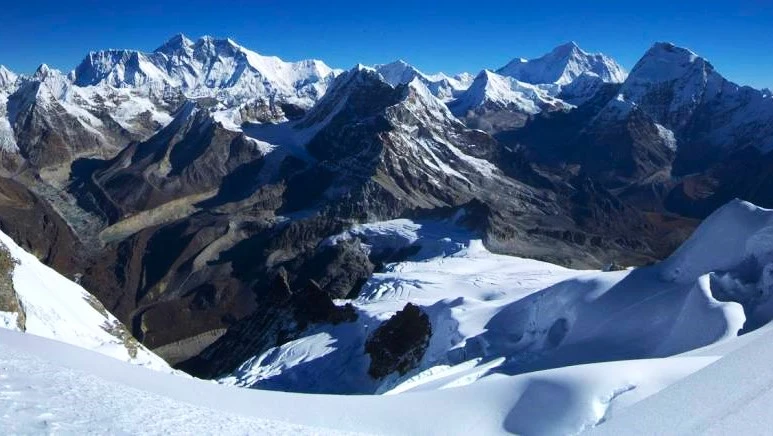
- Expansive view of the snow-clad mountain including Everest, Kanchenjunga, Lhotse, Makalu, Cho Oyu, Kangtega, Thamserku, Kusum Kanguru, Ama Dablam, Cholatse, Baruntse, Kongde Ri, and many more surround
- Witness the diverse flora and fauna in the Makalu Barun National Park and cross the Zatrwa La Pass (4,600m)
Overview of Mera Peak Climbing — 19 Days
Mera Peak climbing is an exhilarating expedition that introduces you to the serene and secluded Hinku valley, full of massive moraines, glacial lakes, and spectacular peaks. Standing at an incredible height of 6,476 meters, Mera Peak is the epitome of the highest trekking peak with three distinctive summits: Mera South (6,065 m), Mera Central (6,461 m), and Mera North (6,467 m). Among all three summits, Mera Central is considered the main summit for mountaineering.
First successfully ascended by J. O. M. Roberts and Sen Tenzing Sherpa in 1953, the Mera Peak expedition is popular among mountaineering enthusiasts as an introductory peak. With strenuous but zero to less technical climbing sections, Mera Peak has been a practice peak for beginners aiming for mountains above 8000 m and a warm-up climb for seasoned mountaineers.
Your 19-Day Mera Peak Climbing itinerary unfolds after disconnecting from the crowded Everest Base Camp trek and leading towards the remote Hinku Valley. You will follow the lush forest and alpine meadows of the unspoiled valley. Progressing with the trek, you will pass mountain passes, glacial rivers, and charming villages like Tangnag and Khare.
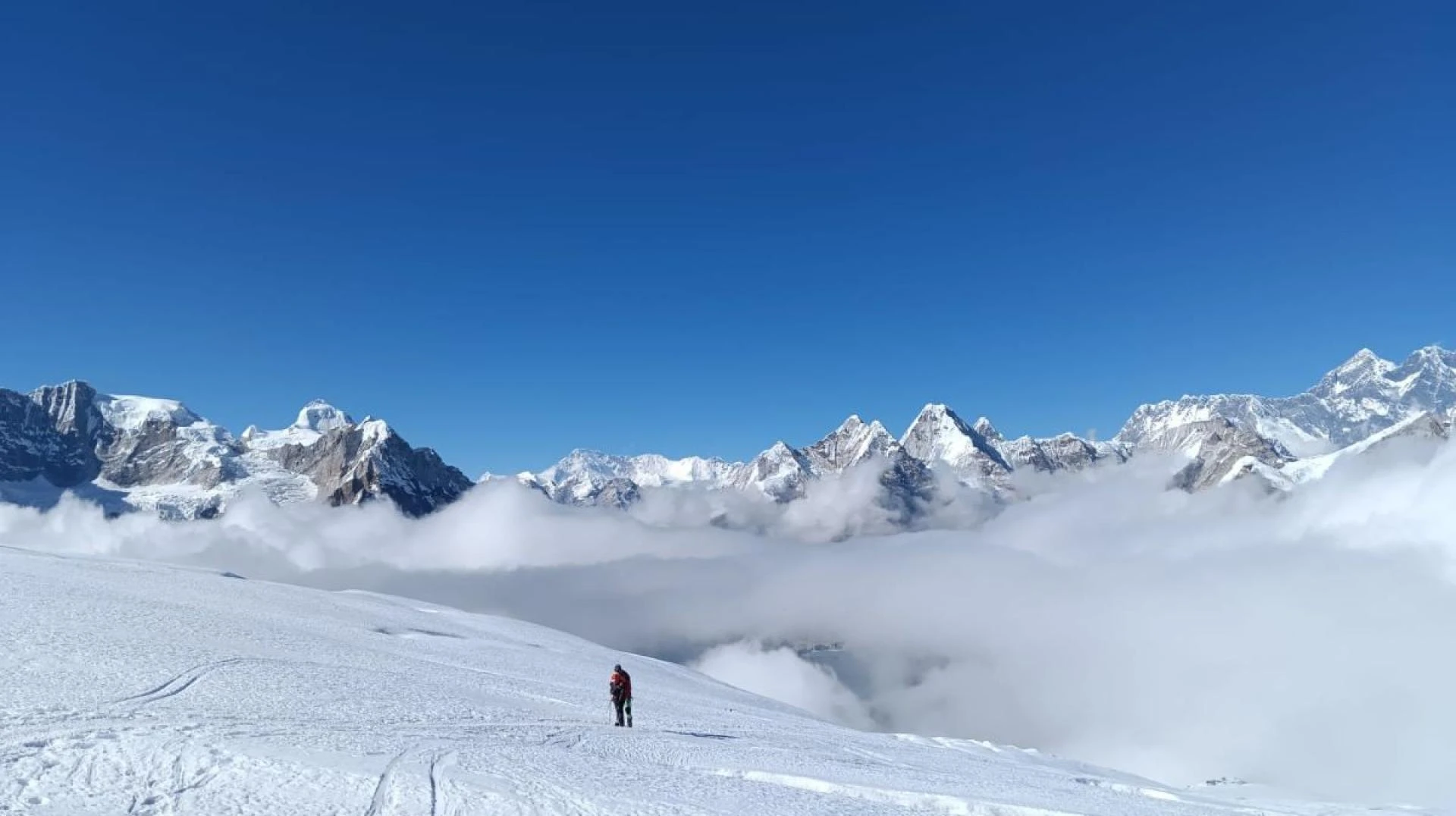
Following the itinerary, you will acclimatize properly at High Camp and later make the final push to the Mera Peak summit. The panorama from the summit is superb, one of the best in the Himalaya. The incredible view of five of the world’s highest peaks, Mt. Everest, Mt Kanchenjunga, Lhotse, Cho Oyu, and Makalu, will be bestowed upon you, making you forget every exhaustion of the journey.
After reaching the summit, you will descend towards the high-altitude grazing area like Thuli Kharka. Crossing the Zatrwa La Pass, you will finally complete the trek on the Mera Peak trails after reaching Lukla.
Mera Peak Climbing — 19 Days Itinerary
Day 1: Arrival in Kathmandu: (1400m/ 4593 ft)
Day 2: Kathmandu Sightseeing & Trip Preparation
Day 3: Fly to Lukla (2840m/ 9317 ft) and trek to Chutok (2800m/ 9186 ft) — 3 hours
Day 4: Trek to Pangkongma/Panggom (2950m/ 9678 ft) — 6 hours
Day 5: Trek to Kurke (3800m/ 12467 ft) — 5 hours
Day 6: Trek to Thuli Kharka (4200m/ 13779 ft) — 6 hours
Day 7: Trek to Khothey (3600m/ 11811 ft) — 5 hours
Day 8: Trek to Tangnag (4350m/ 14271 ft) — 6 hours
Day 9: Trek to Khare (4900m/ 16076 ft) — 4 hours
Day 10: Acclimatization and pre climbing training
Day 11: Trek to High Camp (5800m/ 19028 ft) — 7 hours
Day 12: Summit Mera Peak (6476m/ 21246 ft) and return to Khare (4900m/ 16076 ft) — 10 to 12 hours
Day 13: Spare day for the climb in case of bad weather in the previous day
Day 14: Trek to Khotey (3600m/ 11811 ft) — 7 hours
Day 15: Trek to Thuli Kharka (4200m/ 13779 ft) — 6 hours
Day 16: Trek to Lukla — 7 hours
Day 17: Morning Flight to Kathmandu — 35 minutes
Day 18: Leisure day at Kathmandu
Day 19: Transfer to Airport for Departure
Mera Peak Climbing — 19 Days Includes
04 nights’ accommodation in Kathmandu in a 3 star hotel inclusive of breakfast on a twin shared basis
12 nights’ accommodation during Trek in a Tea House or Lodge
02 nights’ accommodation in tented camp
Welcome and Farewell Dinner
All meals during trek & Climb (Breakfast, Lunch & Dinner)
Domestic Flight Kathmandu — Lukla — Kathmandu
Airport — Hotel — Airport Transfers (Arrival & Departure) on private car
Half day guided sightseeing in Kathmandu inclusive of entrance fees
English speaking trained trekking Guide/Leader and climbing guide/leader with assistant guide
Porters to carry your bags (1 porter for 2 trekkers) 1 porter will carry maximum of 20 kg
Sleeping bags
Food, Accommodation, Salary, Insurance and equipment’s for all staffs
Duffel bag and T shirt (yours to take)
Sleeping bag (to be returned after the trek)
Good quality tents and kitchen utensils for camping
Group climbing equipments
All paper work and permits for the trek and Mera Peak Climbing Permit
Medical Kit (carried by guide)
All ground transfers on comfortable private vehicle
All government, hotel and other taxes
Mera Peak Climbing — 19 Days Excludes
International Airfare and taxes
Travel and rescue Insurance which covers emergency and evacuation.
Lunch and dinner in Kathmandu
Nepal Entry visa (Visa is obtained in Nepal Airport immigration on arrival. USD 25 per visa for 15 xdays, USD 40 per visa for 30 days and USD 100 per visa for 90 days. All the visas are multiple entry xvisas. Please carry 02 passport sized photograph
Personal trekking and climbing equipment and oxygen cylinder All items of personal nature like telephone bills, laundry, drink etc. Items such as hot water for shower/drinking; Mobile phone and camera charging etc will be extra during trek which can
Tipping to guide, porter and driver
Any other item that is not mentioned in the price inclusion list.
What Can You Expect From the 19-Day Mera Peak Expedition?
- You will be stunned with an eye-bird view of the eastern Nepal as you take a scenic and thrilling flight back and forth between Kathmandu and Lukla.
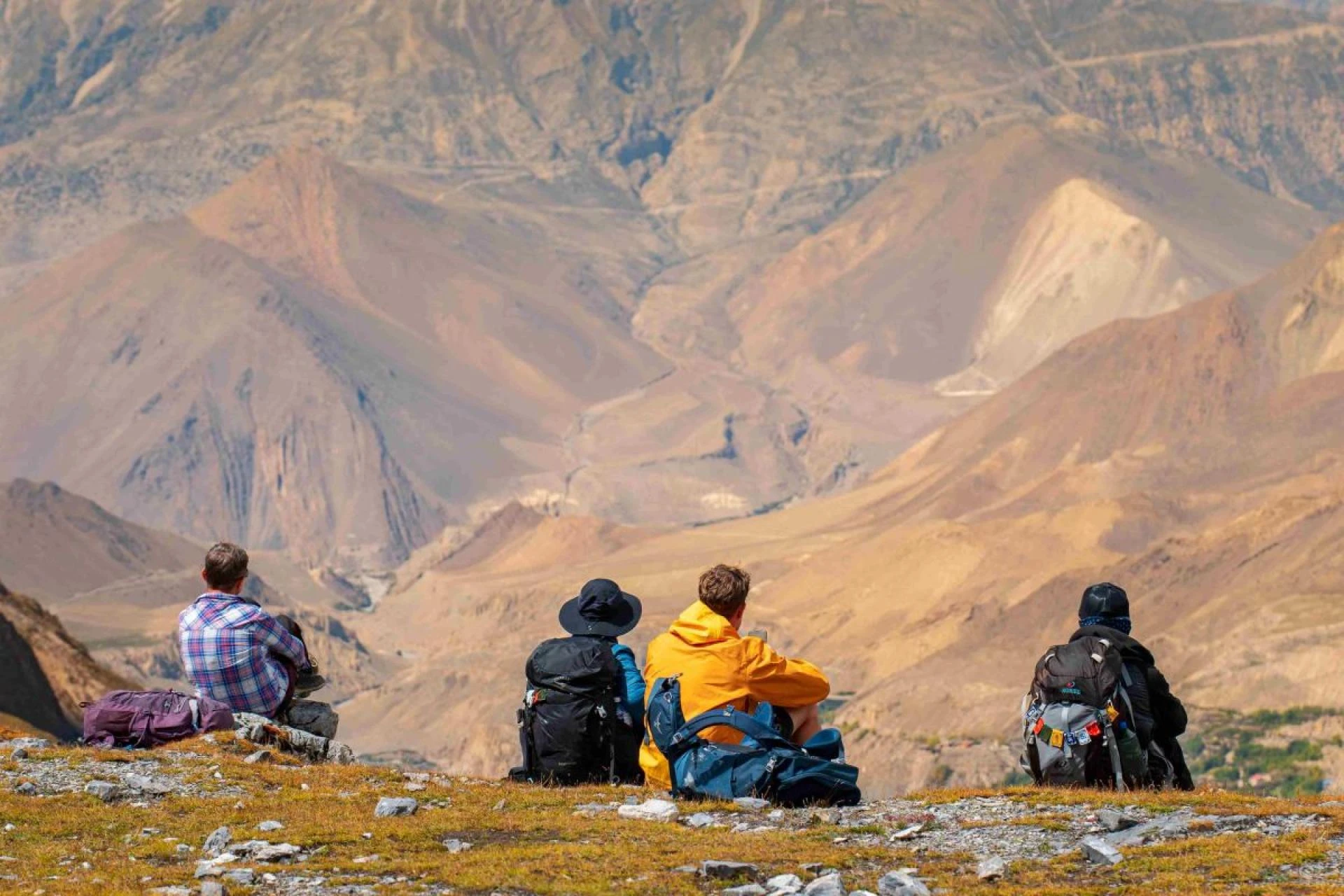
- Passing through lush forests, yak pastures, and tranquil glacial rivers, you will experience the untouched side of the Hinku region.
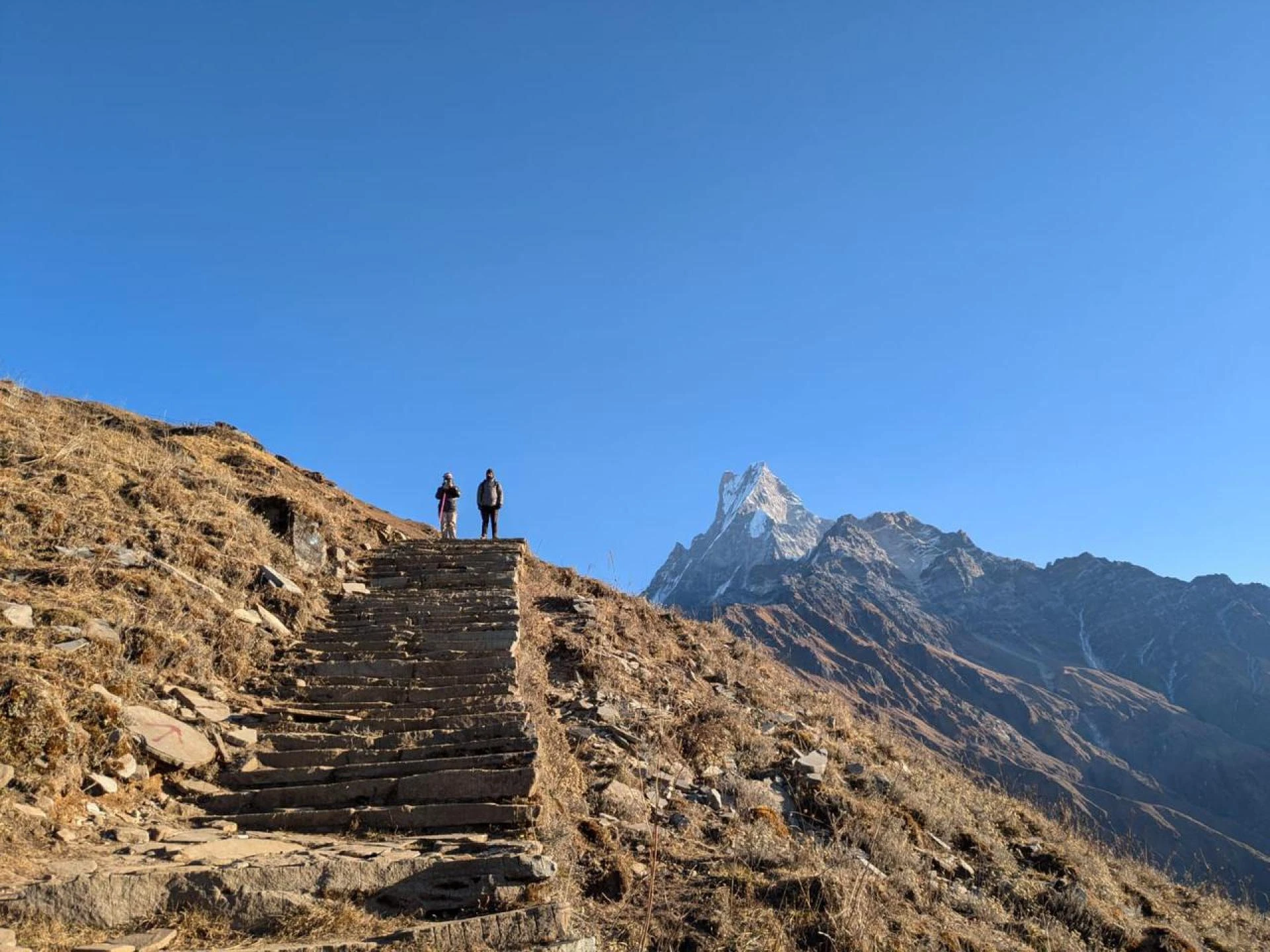
- Throughout the trail, you’ll see panoramic views of Everest, Lhotse, Makalu, Baruntse, and the Hinku Valley. From High Camp, the sunrise over the Himalayan range is absolutely unforgettable.
- You can expect some spare days in your itinerary. These spare days will help you to attempt to summit in case you cannot make it to the summit due to unpredictable weather changes.
- Despite this journey being non-technical climbing, walking across the ridgeline, steep ascents and descents on mountain passes, etc, can be extremely daunting and tiring.
How difficult is Mera Peak Climbing?
As per the Alpine grading system, Mera Peak Climbing is considered PD grade. Usually, these grade expeditions are considered good introductory climbs for beginners due to the less technical climbing sections. However, this journey is a moderately challenging climb due to the requirement of crossing crevasses, formidable mountain passes, and glacial moraines.
Moreover, the short sections of steep and icy terrain and precarious, rugged sections while attempting the summit make the Mera Peak expedition more difficult. Additionally, the weather in the high Himalayas can be unpredictable. The changeable weather can create more chaos while expediting if you are not well prepared regarding a packing list and spare days.
Likewise, you will be gaining elevation of 300m to 600m each day during this peak climbing. Beginning the journey at Lukla at 2,860 meters, the peak climbing eventually gains elevation at Mera Peak Base Camp (5300 meters) and High Camp (5,800 meters) before arriving at the summit of Mera Peak at 6,476 m. Hence, this expedition poses a great risk of altitude sickness, which can add more folds of difficulty in climbing Mera Peak.
Is Climbing Mera Peak Suitable For Me?
Mera Peak climbing demands traversing through the difficult terrain of rocky ridgeline, steep ascents, icy landscapes, and glacial moraine for more than two weeks at high altitude. On top of that, you will be walking for 6 to 8 hours daily at high elevation. Therefore, if you are someone with great physical fitness and mental endurance, then this expedition is suitable for you. Even though you do not need any prior mountaineering experience, high-altitude trekking is mandatory for this peak climbing.
Even though you do not need advanced mountaineering skills, you need basic mountaineering skills like using crampons, ice axes, harnesses, and ropes. Additionally, you need strong determination and willpower to complete this rewarding journey. After long hours of walking at such high altitudes, your legs can give up due to exhaustion and fatigue. However, in these situations, your mental resilience takes you forward while pushing the summit.
Hence, if you are someone with excellent physical and mental fitness with prior high-altitude trekking experience, along with a great sense of adaptability, this trek is suitable for you.
How Long is the Mera Peak Expedition?
The Mera Peak expedition typically takes around 15 to 21 days. However, the duration of the trek can be different for trekkers because every trekker does not take the same route or have the same pace or acclimatization needs. The most common route that many trekkers take is via Panggom, where you will descend the steep Zatrwa La Pass during the last trek of the day. The trek for Mera Peak can be completed within 15 to 19 days.
However, if you take the route of Zatrwa La Pass at the beginning of the trek, it may take quite longer time since it is a difficult trek and needs more acclimatization days. Moreover, you will need 1–2 spare days to take into account the weather conditions while pushing the summit. These spare days can also increase the duration of your trek.
Preparation For Mera Peak Climb
When you are thinking of going for the Mera Peak expedition, there is a lot of preparation for trekking and climbing sections that you will need to make. Even though this climbing is non-technical, it should not be underestimated in any way. You will need an excellent level of physical strength and mental determination, along with some basic mountaineering skills.
For increasing your physical agility, you can practice strength and cardio exercises for many weeks before the trek to increase your leg, back, and core muscles. Going on high altitude treks like Manaslu Circuit Trek, Mardi Trek, etc, can be extremely beneficial. Moreover, you should be familiar with some basic mountaineering equipment and how to use it. If you are taking our Mera Peak climbing package, we will give you some pre-climbing training.
Accommodation on Mera Peak Expedition
During this journey of climbing Mera Peak, you will need two modes of accommodation. You will spend the majority of the expedition days staying at the teahouses and lodges scattered along the trail. Nestled in a remote area, you will get a basic type of amenities like rooms on a twin-sharing basis and shared bathrooms. Do not expect advanced accommodations like mainstream trekking, the Annapurna Circuit Trek, or the Annapurna Base Camp Trek.
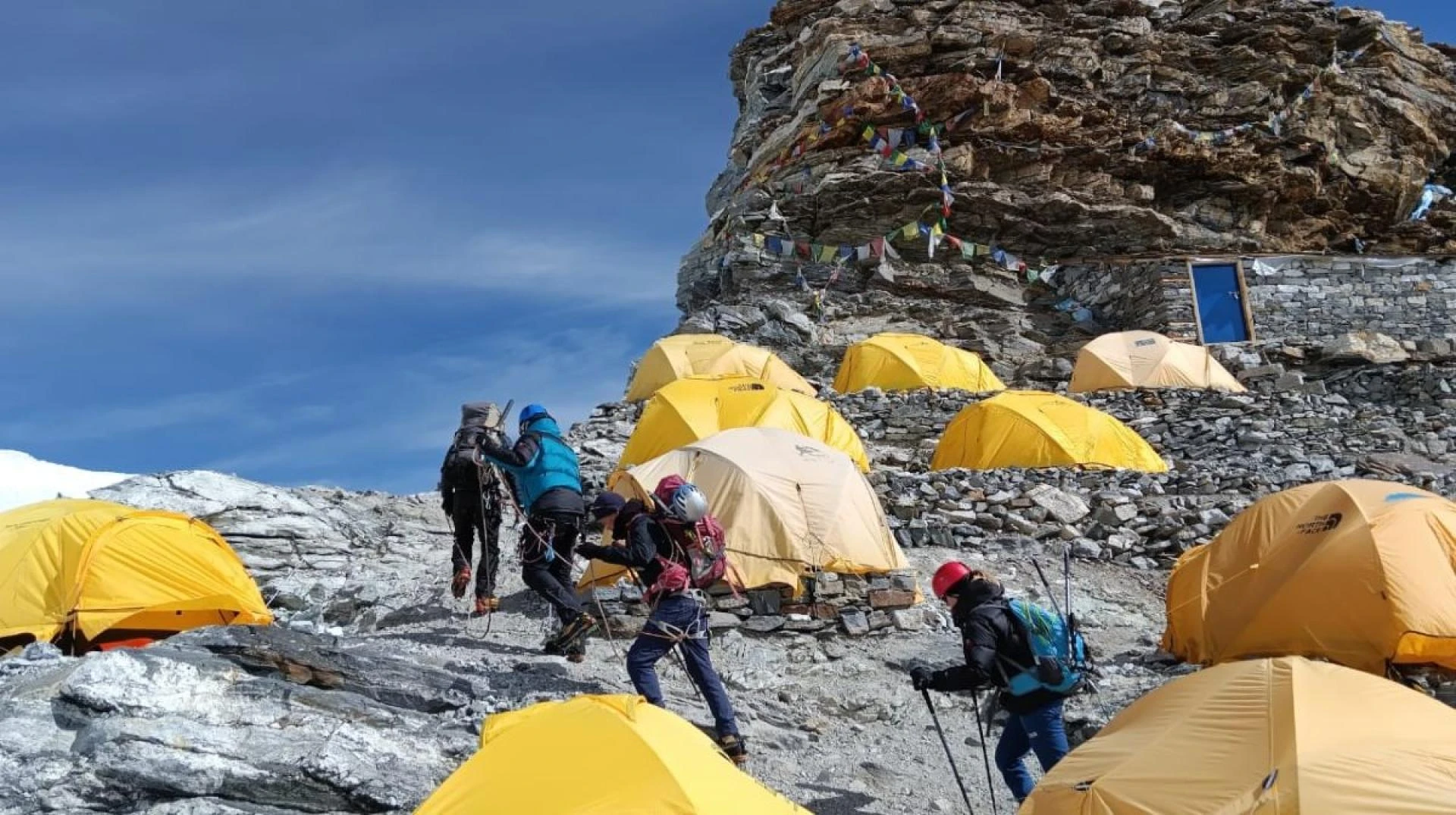
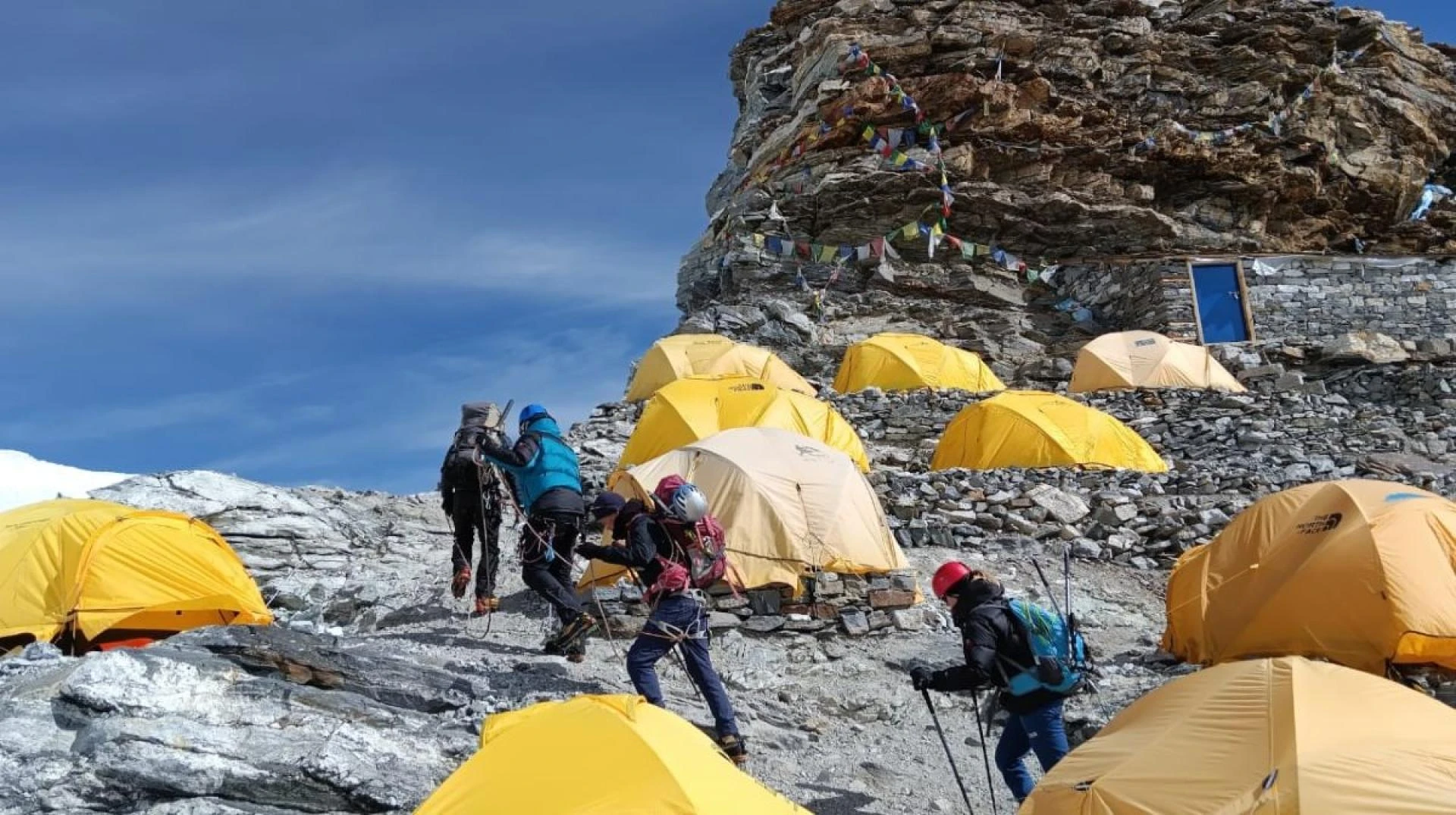
For 2 nights, you will stay at a tented camp at Base Camp and High Camp while preparing for the summit. Camping is not a comfortable mode of accommodation; however, you will be provided with everything you need for high altitude camping, like sleeping bags, tents, etc, if you opt for our 19-day Mera Peak Climbing package.
Meal on Mera Peak Expedition
To keep you fueled throughout the Mera Peak Climbing, you will eat meals made at teahouses and camping-style cooking above the Mera Peak Base Camp. The teahouses and lodges will offer you diverse menus full of Nepali food, regional food, and even some foreign cuisines. However, above the base camp, our guided team will cook for you. If you have any dietary requirements, you can let us know at the very start of the journey, so that we can address your requirements.
Best Season for Climbing Mera Peak
Similar to trekking in Nepal, peak climbing is most suitable when done during the spring(March to May) and autumn(September to November) seasons. Both seasons are considered the best time for trekking and climbing in Nepal because of the dry trail conditions, pleasant weather, and clear skies. Moreover, there are optimal chances of snowfall and rainfall during these seasons, which create ideal conditions for climbing glaciers and icy terrain.
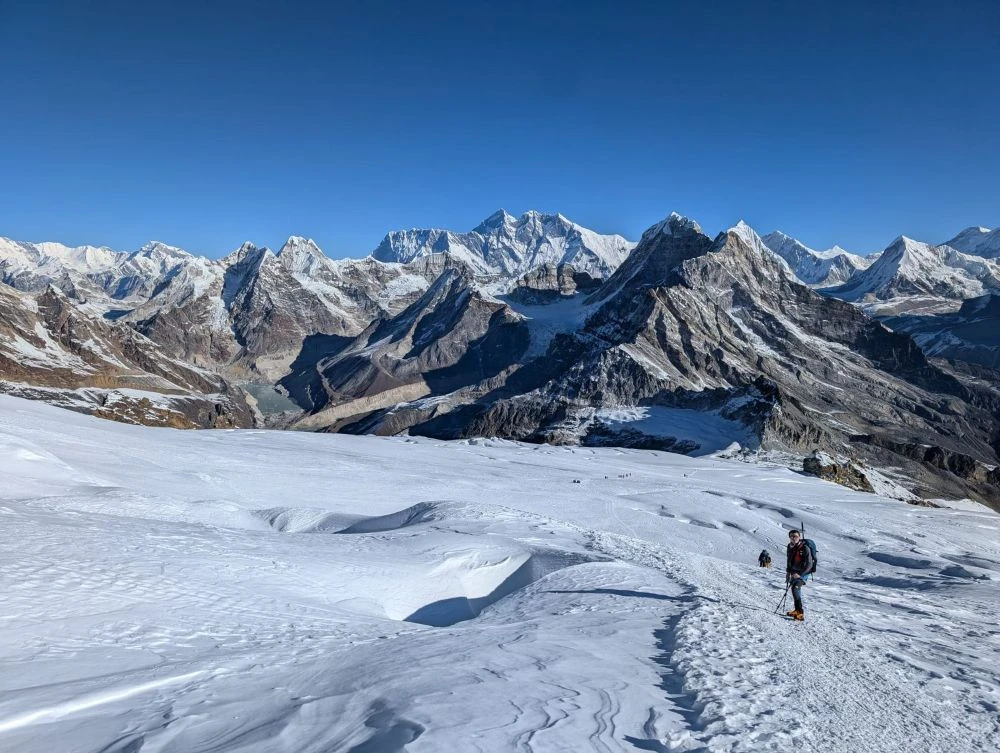
Mera Peak Climbing Routes
There are three main routes that you can take to complete the Mera Peak Journey.
The first route is the classic Mera Peak climbing route.
Lukla →Chutanga → Zatrwa La Pass (4,600 m) → Thuli Kharka → Kothe → Thangnak → Khare → Mera Base Camp → High Camp → Summit
In the second route, you will walk some portion of the classic Everest Base Camp trek route and then join the Mera Peak climbing itinerary.
Lukla →Phakding → Namche Bazaar → Thame → Panch Pokhari → Kothe → Khare → Mera Base Camp → High Camp → Summit
The third route is quite long and challenging, as you have to cross many passes and a glacial river.
Lukla → Paiya (Chutok) → Panggom (Pangokma) → Panggom La Pass → Ningsow → Chhatra Khola → Kothe → Thangnak → Khare → Mera Base Camp → High Camp → Summit
Altitude Sickness While Climbing Mera Peak
It is very obvious that going above 6000 m poses a great risk of altitude sickness. So, as a mountaineer, it is extremely important to acclimatize properly and take necessary safety measures to avoid altitude sickness. Likewise, you should choose a package that has enough acclimatization days. You can go on short hikes to explore the side highlights during this trek. Likewise, if you do not feel like exploring side highlights, you can rest in the camp or teahouses to properly acclimate your body.
Make sure to stay hydrated and walk at your own pace while trekking and climbing on the trail. Remember that your body starts giving you signals whenever you feel unwell. So, listen to your body. Likewise, eat well and rest well during the entire trek. If necessary, take altitude sickness medications to lessen the symptoms of AMS.
Mera Peak Expedition Cost
If you are wondering how much it will cost for Mera Peak climbing, then let us clear your confusion. It can cost you approximately between USD 2,000 to 3,500 per person. However, this cost also depends on many factors such as route, services included, itinerary, highlights, trekking agency, etc. Moreover, if you are embarking on this journey during the peak season, the NMA permit and other services can get expensive, which will naturally increase your overall cost.
We are providing you with this wonderful experience for USD 2250 per person. This price is quite reasonable with many inclusions such as domestic flights, trekking permits, accommodation and meals during the trek, and even guides and porters. We are also providing you with climbing equipment at the above cost. However, our package does not include international flights, visa, insurance, evacuation, and other types of personal costs.
Why Choose Mountain Adventure Trekking For Climbing Mera Peak?
Mountain Adventure Trekking has been providing these Himalayan experiences to its clients for many decades now. We have our trained teams, well-planned itinerary, proper logistics, ethical practices, and expertise, etc, that ensure your safety, comfort, and unforgettable experience. Whether you are attempting Mera Peak climbing for the first time or coming back to relive the experience, we will definitely make your Mera Peak climb a truly rewarding and safe experience. Contact us today.






















Sign in to leave a comment.