

The shipping industry plays a vital role in global trade, and the Merchant Navy is at the heart of it. If you are looking for a career that offers high salary, international exposure, and adventure, then choosing the right merchant navy courses can be a life-changing decision. This guide covers everything you need to know, including eligibility, fees, course types, and salary prospects.

What Are Merchant Navy Courses?
Merchant navy courses are specialized training programs designed to prepare candidates for careers in the commercial shipping industry. These courses focus on navigation, marine engineering, safety procedures, and ship operations.
After completing these courses, candidates can work on cargo ships, tankers, cruise ships, and other vessels transporting goods and passengers worldwide.
Types of Merchant Navy Courses
There are various merchant navy courses available depending on your educational qualification and career goals.
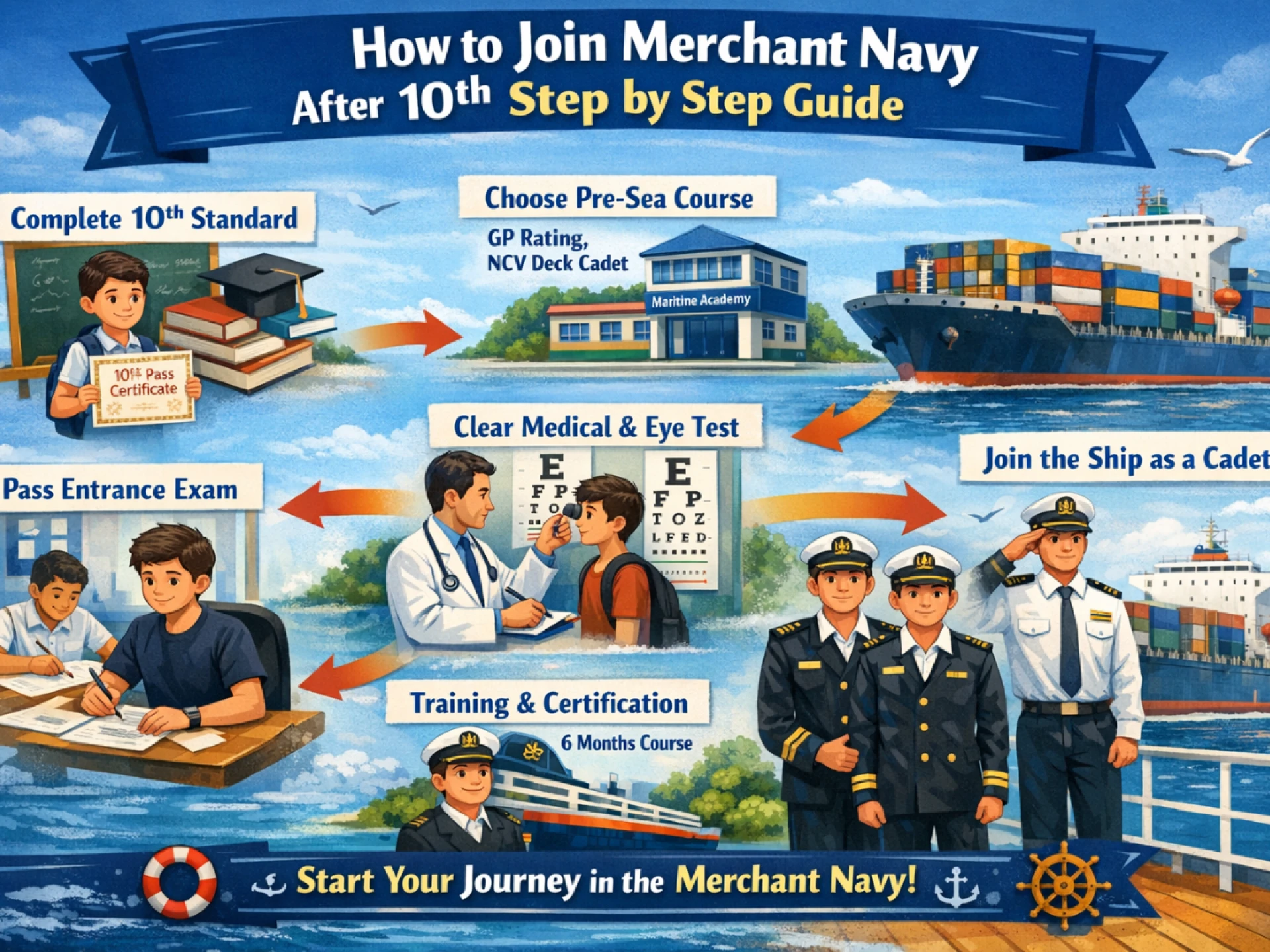
1. Courses After 10th
- GP Rating (General Purpose Rating)
- Saloon Rating
- Engine Rating
These are entry-level courses for students who want to start early in the shipping industry.
2. Courses After 12th (Science Stream)
- Diploma in Nautical Science (DNS)
- BSc Nautical Science
- BTech Marine Engineering
- BSc Maritime Science
These are the most popular merchant navy courses for students aiming for officer-level positions.
3. Postgraduate Courses
- MTech Marine Engineering
- MBA in Shipping and Logistics
- PG Diploma in Marine Engineering (GME)
These courses are ideal for graduates looking to specialize further.
Eligibility Criteria for Merchant Navy Courses
Eligibility varies depending on the course, but here are the general requirements:
Educational Qualification
- For deck/engineering courses: 10+2 with Physics, Chemistry, and Mathematics (PCM)
- Minimum 50%–60% marks in most cases
- English should be a compulsory subject
Age Limit
- Usually between 17 to 25 years (may vary by course and institute)
Medical Fitness
- Candidates must be physically fit
- Good eyesight (6/6 vision preferred)
- No color blindness
Entrance Exams
Some institutes may require entrance exams or sponsorship tests before admission into merchant navy courses.
Merchant Navy Course Fees
The fees for merchant navy courses can vary depending on the institute, course type, and facilities.
Average Fee Structure:
- GP Rating Course: ₹2 lakh – ₹5 lakh
- Diploma in Nautical Science: ₹4 lakh – ₹8 lakh
- BSc Nautical Science: ₹6 lakh – ₹12 lakh
- Marine Engineering (BTech): ₹8 lakh – ₹15 lakh
- GME Course: ₹3 lakh – ₹7 lakh
Private institutes generally charge higher fees compared to government institutions. However, scholarships and sponsorships are sometimes available.
Duration of Merchant Navy Courses
- GP Rating: 6 months
- Diploma in Nautical Science: 1 year (plus onboard training)
- BSc Nautical Science: 3 years
- Marine Engineering: 4 years
- GME Course: 1 year
After completing the course, candidates must undergo sea training to gain practical experience.
Career Opportunities After Merchant Navy Courses
Completing merchant navy courses opens up multiple career paths in the maritime industry:
Deck Department
- Deck Cadet
- Third Officer
- Second Officer
- Captain
Engineering Department
- Trainee Marine Engineer
- Fourth Engineer
- Chief Engineer
Other Roles
- Radio Officer
- Catering Staff
- Logistics Manager
With experience and certifications, you can rise to top-level positions with excellent pay.
Salary After Merchant Navy Courses
One of the biggest attractions of merchant navy courses is the high salary.
Entry-Level Salary
- GP Rating: ₹25,000 – ₹60,000 per month
- Deck Cadet: ₹30,000 – ₹80,000 per month
- Trainee Marine Engineer: ₹30,000 – ₹70,000 per month
Mid-Level Salary
- Second Officer: ₹1.5 lakh – ₹3 lakh per month
- Marine Engineer: ₹2 lakh – ₹4 lakh per month
Senior-Level Salary
- Captain: ₹8 lakh – ₹20 lakh per month
- Chief Engineer: ₹6 lakh – ₹15 lakh per month
Salaries also depend on the type of ship, company, and international exposure.
Skills Required for Merchant Navy
To succeed after completing merchant navy courses, candidates should have:
- Strong technical knowledge
- Leadership and teamwork skills
- Physical and mental fitness
- Problem-solving ability
- Good communication skills
Advantages of Merchant Navy Career
- High salary packages
- Opportunity to travel worldwide
- Tax benefits (in some cases)
- Fast career growth
- Unique and adventurous lifestyle
Challenges in Merchant Navy
- Long periods away from family
- Physically demanding work
- Risky working environment
- Strict discipline and regulations
How to Choose the Best Merchant Navy Course
When selecting among various merchant navy courses, consider:
- Course approval by DG Shipping
- Placement records
- Training facilities
- Internship opportunities
- Course fees and ROI
Avoid unapproved institutes to ensure a secure career.
Conclusion
Choosing the right merchant navy course can open doors to a rewarding and high-paying career. With the right eligibility, proper training, and dedication, you can build a successful future in the maritime industry. Make sure to research well, select a recognized institute, and prepare yourself for a disciplined yet exciting lifestyle at sea.
FAQs on Merchant Navy Courses
1. What are the best merchant navy courses after 12th?
The best options include Diploma in Nautical Science, BSc Nautical Science, and Marine Engineering.
2. What is the minimum qualification for merchant navy courses?
You need at least 10th or 12th pass depending on the course. For officer-level roles, 12th with PCM is required.
3. Are merchant navy courses expensive?
Yes, fees can range from ₹2 lakh to ₹15 lakh depending on the course and institute.
4. Is there any entrance exam for merchant navy courses?
Some institutes conduct their own entrance exams or sponsorship tests.
5. What is the starting salary after merchant navy courses?
Freshers can earn between ₹25,000 to ₹80,000 per month depending on the role.
6. Can I join merchant navy after 10th?
Yes, you can join through GP Rating or other entry-level courses.
7. Is medical fitness important for merchant navy?
Yes, candidates must meet strict medical and eyesight requirements.
8. How long does it take to complete merchant navy courses?
Course duration ranges from 6 months to 4 years depending on the program.



























Sign in to leave a comment.