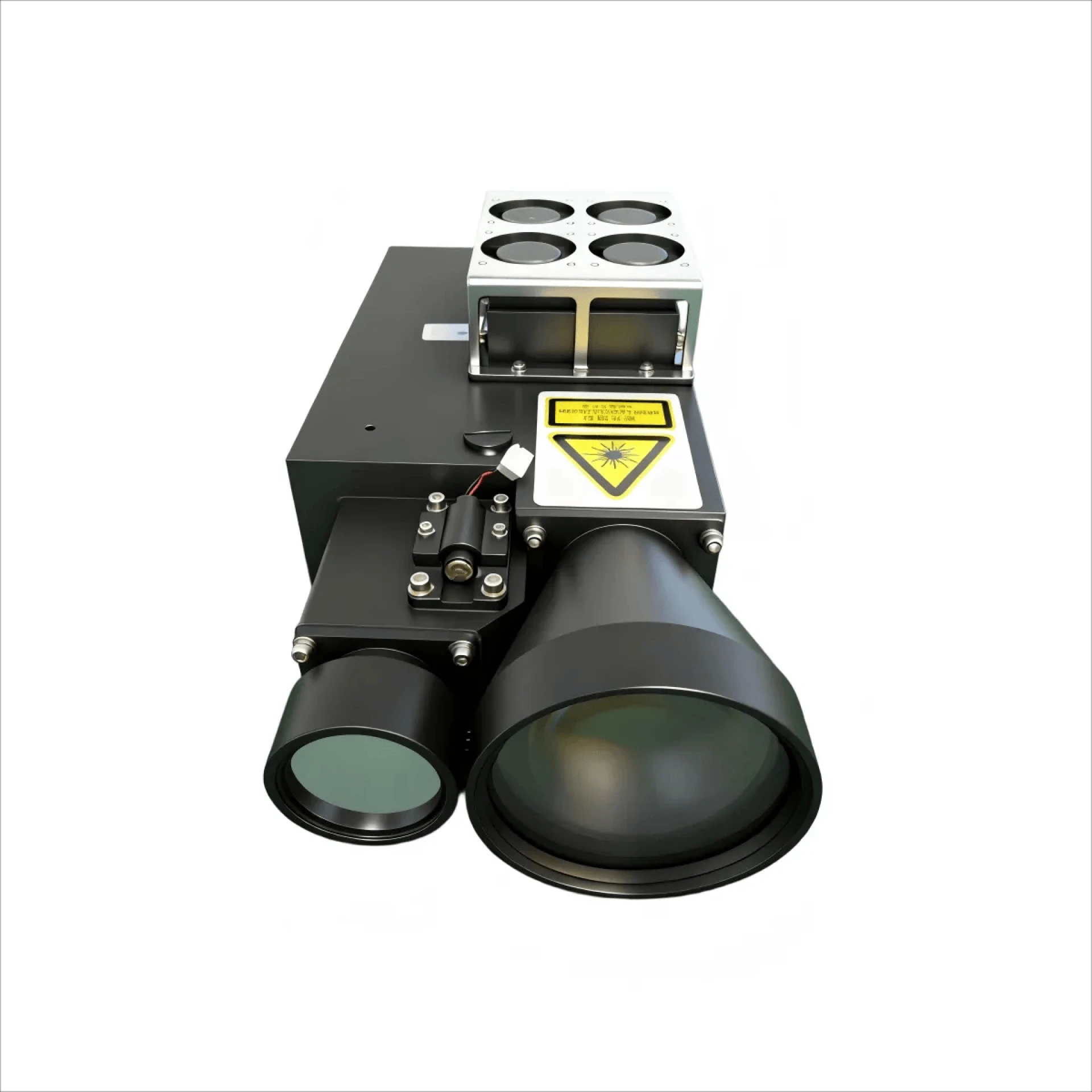

While laser has been at the core of precision targeting during military operations, it is integration of other technologies that enhance their capabilities and performance.military operations demand precision, speed, and minimal collateral damage, all these are achieved through technologies that enhance targeting and precision of laser target designators.
Nowadays, military laser target designators feature laser-guiding functions in the integration with advanced sensing, computation, and communication systems. This fusion of technologies enhances the capability, accuracy, and survivability of modern forces across diverse mission environments.
What are expected functions of laser target designators in military operations?Several, including:
· Designating a target with a coded laser beam
· Providing precise coordinates for laser-guided weapons
· Enabling Joint Terminal Attack Controllers (JTACs), UAV operators, and aircraft to execute accurate strikes
· Minimizing damage to civilian structures and reduce munition waste
The effectiveness of laser-based designators increases when combined with other technologies, such as:
Thermal imaging and infrared sensors
Laser designators integrated with thermal/IR imaging can detect targets in low light, fog, smoke, or camouflage. With more power, they can designate heat-emitting vehicles, artillery, or personnel, and can support night operations.
Electro-optical (EO) camera systems
This integration facilitates high-resolution visuals, and allows forces to verify whether a target is hostile. It does so while reducing the risk of friendly-fire and civilian casualties. EO/Laser combination is key in urban warfare, peacekeeping zones, and precision raids.
GPS, GNSS & Inertial Navigation Integration
Pairing laser designation to precise navigation systems enhances long-range target engagement beyond visual range, accurate geolocation even when GPS is jammed (with inertial backup), and real-time data sharing with command centers and strike aircraft. This integration is critical for beyond-line-of-sight (BLOS) drone or artillery missions.
AI-Assisted target recognition
Enabled with AI, laser target designators can facilitate automatic detection and tracking of moving or partially concealed targets, prioritization of high-value threats, and enhance situational awareness for operators under stress.
In military operations, AI-enabled laser designators are used in drone swarms, autonomous strike systems, and high-density battlegrounds.
Network-centric warfare connectivity
Integrated with network, military laser target designators can share live target data with air and ground units to support multi-domain operations (land, air, sea, cyber). It can even facilitate coordination of strikes from different weapon platforms.
SWIR (Short-Wave Infrared) & Low-Probability-of-Detection lasers
These are advanced lasers that are used to reduce the risk of enemy detection or jamming. It is also essential for better penetration through haze, humidity, and other obstructions.
Visit Now: https://erdicn.com/product-category/1064nm-laser-rangefinder-laser-target-designator-system/


























Sign in to leave a comment.