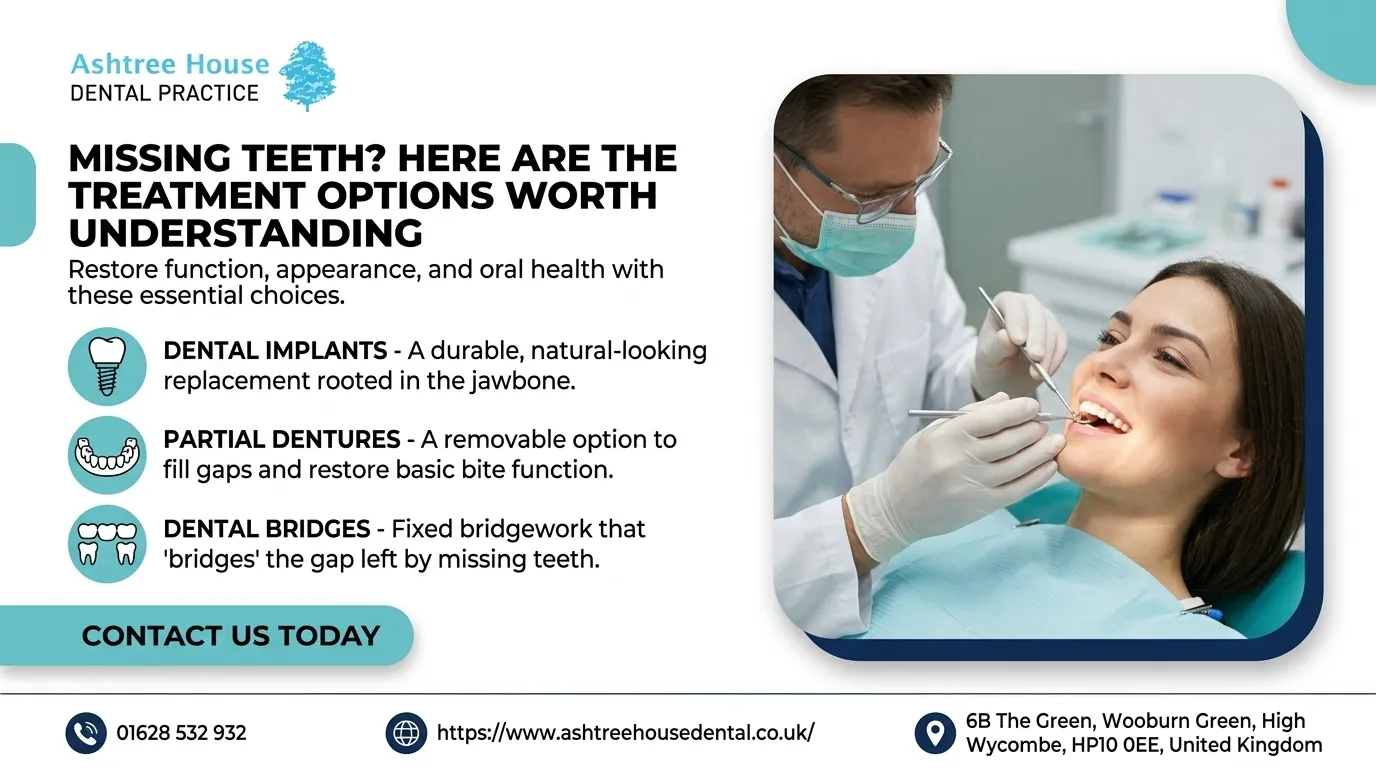

Missing teeth are more common than people often realise. Decay, gum disease, an accident, or simply years of wear can all lead to gaps that weren't there before. Whatever the cause, one thing tends to be true—most people aren't sure where to start when it comes to treatment.
If you're exploring missing teeth treatment in Beaconsfield, this guide walks through the main options available, how they differ, and what tends to influence which one might suit you.
Why Replacing Missing Teeth Matters
It's tempting to think of a missing tooth as a cosmetic issue alone, but there's usually more to it than appearance.
Gaps left untreated can lead to:
- Difficulty chewing certain foods comfortably
- Changes in speech, depending on the tooth's position
- Nearby teeth gradually shifting into the gap over time
- Bone loss in the jaw where the tooth root used to be, as the bone is no longer stimulated by chewing
None of this happens overnight, but it's part of why dentists generally recommend addressing missing teeth sooner rather than leaving things as they are.
An Overview of Your Options
There's no single answer that suits everyone. The right choice depends on how many teeth are missing, your general oral health, bone density, and personal preference. Here's a look at the main routes worth understanding.
Dental Bridges
A bridge fills a gap by anchoring a replacement tooth to the natural teeth on either side. It's a fixed option, meaning it isn't removed for cleaning like a denture, but it does rely on the surrounding teeth being strong enough to support it.
Removable Dentures
Dentures remain a familiar option, particularly for people missing several teeth or all teeth in an arch. They're removable, generally more affordable upfront, and don't require any surgical procedure. That said, some patients find they take a little adjustment in terms of comfort and stability, particularly when eating.
Dental Implants
Dental implants patients often ask about involve a small titanium post placed into the jawbone, acting as a replacement for the natural tooth root. Once healed, a crown is fitted on top. Implants are a fixed solution and don't rely on neighbouring teeth for support, though suitability depends on factors like bone density and general health.
Implant-Supported Dentures
For patients missing multiple teeth or a full arch, implant-supported dentures offer a middle ground between traditional dentures and a full set of individual implants. A small number of implants are placed to anchor a denture in place, which can improve stability compared with a conventional removable denture.
How a Dentist Decides What's Suitable
There isn't a standard answer that applies to everyone, which is why an assessment matters more than assumptions. Factors typically considered include:
- Bone density – enough healthy bone is needed to support implants
- Gum health – untreated gum disease usually needs addressing first
- Number of missing teeth – a single gap is approached differently to several missing teeth
- General health – certain conditions or medications can affect healing
- Personal preference – some patients prioritise a fixed solution, others prefer to avoid surgical procedures
A proper consultation is really the only way to know which options apply to your specific situation.
Questions Worth Asking at a Consultation
Coming prepared with questions can make the decision-making process feel less overwhelming:
- Which options am I actually suitable for, based on my bone and gum health?
- How long does treatment typically take from start to finish?
- What's involved in aftercare and long-term maintenance?
- What happens if my situation changes over time?
- Are there simpler options worth considering before something more involved?
A dentist who talks through these clearly, rather than steering you toward one option immediately, is generally giving you the full picture.
What to Expect From the Process
Regardless of which option is being considered, most journeys follow a similar shape:
- Initial consultation – examination, discussion of your history, and sometimes X-rays or scans
- Treatment planning – a tailored plan based on your specific needs
- Treatment itself – timelines vary considerably depending on the option chosen
- Aftercare and review – ongoing check-ups to monitor how things are settling
It's worth asking your dentist to walk you through each stage in more detail, so there are no surprises along the way.
A Few Practical Tips
- Don't leave a gap untreated for too long—the longer it's left, the more neighbouring teeth may shift
- Ask about maintenance requirements before committing to any option, as some involve more day-to-day care than others
- If cost is a factor, ask for a clear breakdown early on, so you can weigh up what's realistic for you
- Keep up with regular dental check-ups even after treatment, as ongoing monitoring matters regardless of which option you choose
Missing teeth don't have to mean living with discomfort or self-consciousness indefinitely. Whether you're leaning toward dental implants, considering implant-supported dentures, or simply want to understand what's realistic for your situation, the right next step is usually a straightforward conversation with a dentist who can assess your individual case.
At Ashtree House Dental Practice, patients exploring missing teeth treatment in Beaconsfield are welcome to book a consultation to discuss what's suitable for them—without any pressure to decide on the spot. If you're ready to look into your options, get in touch with Ashtree House Dental Practice to arrange an appointment.


























Sign in to leave a comment.