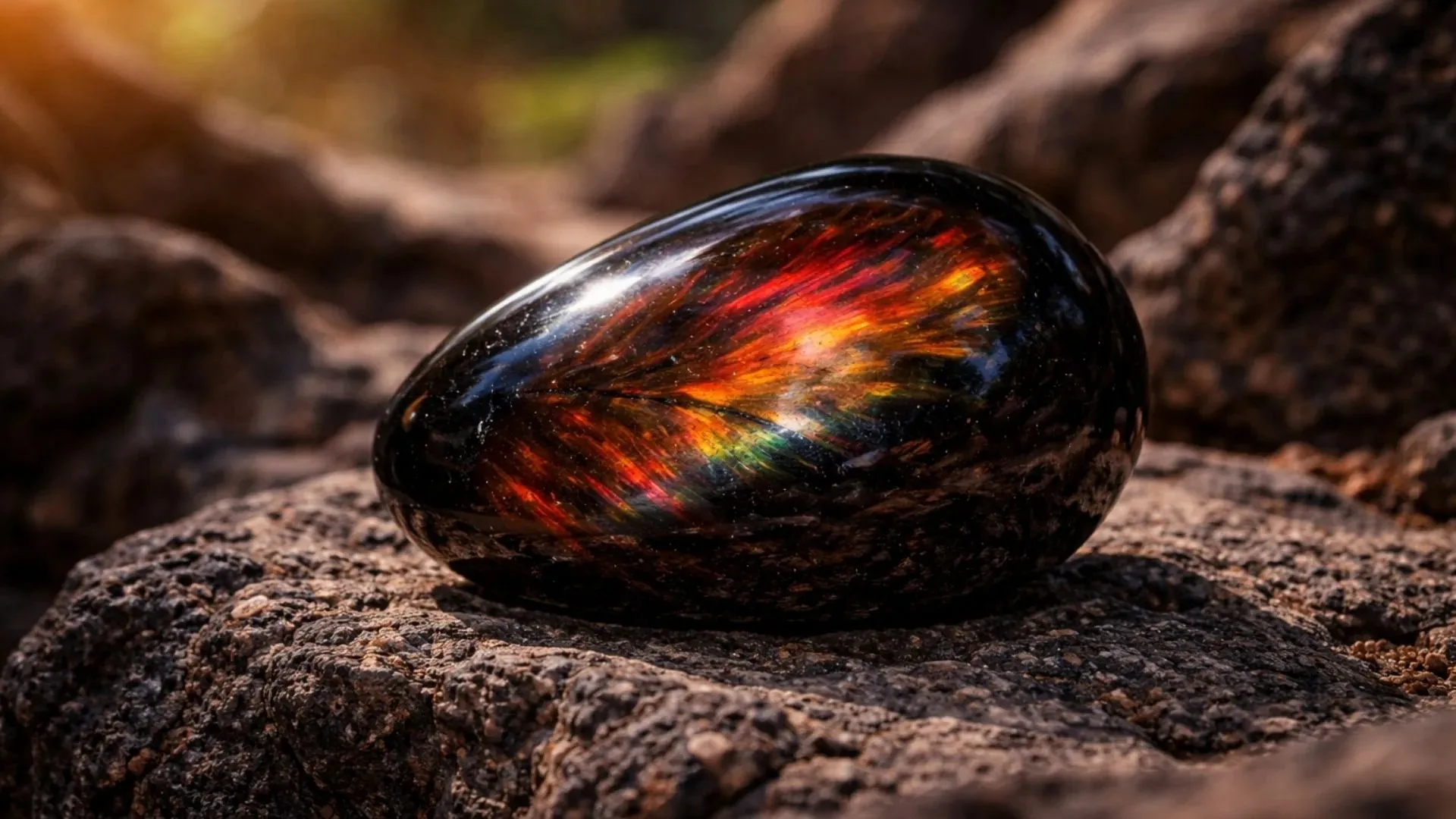

A polished black stone can look wonderfully simple. Shopping for one rarely feels that way. One listing calls it a crystal, another describes volcanic glass, and a third promises protection, confidence, and a complete change of fortune. Meanwhile, the photographs all show something shiny and dark.
Black obsidian deserves a clearer introduction. Understanding the material helps you decide whether a bracelet, pendant, palm stone, or display piece suits your life. It also gives you useful questions to ask a seller before paying. Start with what the object actually is, then consider its finish, construction, and personal meaning. You can appreciate its appearance without accepting every claim attached to it.
What the name tells you about the material
Obsidian is naturally occurring volcanic glass. The US Survey classifies it as dark volcanic glass, commonly associated with rhyolitic composition and curved fracture surfaces. Calling it a crystal is common in shops, but that everyday label should not be confused with a scientific description.
For a buyer, the important distinction is between the material and the finished object. An obsidian bead may be natural in origin while still being drilled, shaped, and polished by people. A pendant can combine natural obsidian with a manufactured cord and metal fittings. Those processes are normal; a seller should simply describe them accurately.
HVibeTune’s guide to black obsidian provides a broader introduction to the material, its historical uses, and contemporary design. Use that background to frame your questions rather than expecting a product photograph to answer everything.
Decide how you will actually use it
The right first purchase depends on an ordinary question: where will this piece spend most of its time? A necklace needs to sit comfortably against clothing. A desk ornament needs a stable base. A bracelet must fit a moving wrist without continually knocking against a keyboard or table.
Imagine a typical weekday before ordering. If you wear fitted sleeves, oversized beads may catch at the cuff. If you work with your hands, a hanging pendant may be less practical than a small display piece kept at home. If you mainly want to examine the material, a simple polished specimen may provide more satisfaction than an elaborate carving.
Avoid buying the biggest piece merely because it seems like better value. Large objects require more space, more careful storage, and sometimes more effort to wear. Start with a format that solves your actual preference. You can always expand a collection once you know which forms you enjoy handling or displaying.
Look beyond the most attractive photograph
A listing should show enough detail to judge the object, not only enough atmosphere to make you want it. Ask for photographs from different angles, a clear size reference, and close views of any drilling or fittings. A hand photograph can help, but stated measurements are more useful than guessing from somebody else's fingers.
For a bracelet, check the bead diameter and the finished internal circumference. For a pendant, distinguish the stone measurements from the total length including its hanging loop. For a carving, ask whether the base is flat and whether the pictured item is the exact piece you will receive.
Lighting can change how glossy black surfaces appear. Bright reflections may conceal small marks, while a dark background can hide edges. A short video in ordinary light is often useful. You are looking for adequate information, not an impossibly flawless stone. Natural variation and poor finishing are different issues, and a seller should help you tell them apart.
Ask what supports the identification
Colour alone cannot establish that an object is obsidian. Several materials can look black after polishing, and manufactured glass can also have a glossy surface. An honest seller should explain what they know about the material and what evidence supports the label.
Useful questions include whether the item has been independently identified, whether any treatment is disclosed, and whether the supplier provides a documented origin. Be realistic about the answer. An inexpensive bracelet may not come with an individual laboratory report. That does not automatically make it false, but it does mean you should avoid treating a confident sales sentence as proof.
Do not scratch, chip, or heat a finished piece to perform an internet authenticity test. Damage creates a new problem without necessarily providing a reliable answer. If identification matters because the object is expensive or disputed, ask a qualified gemologist what examination would be appropriate. Your goal is confidence based on evidence, with the amount of checking proportionate to the purchase.
Judge the workmanship separately
A correctly identified material can still be poorly made into jewellery. Look at the parts that carry the load: elastic, cord, clasps, drilled holes, and pendant loops. These details determine whether you can wear the piece comfortably and how easily it can be repaired.
On a beaded bracelet, inspect the holes and check whether the beads have sharp or damaged edges near the cord. Ask how the knot is secured and whether restringing is possible. On a necklace, consider whether the cord length is adjustable and whether the clasp is manageable with your hands. Attractive styling should not make daily use unnecessarily fiddly.
Think about your clothing too. A rough decorative surface might catch delicate fabric; a heavy pendant might pull a lightweight neckline out of shape. When trying a piece on, move normally rather than standing still in front of a mirror. Sit down, bend an arm, and check where the object rests. Good workmanship becomes clearer when the item is doing its job.
Keep symbolism personal and specific
You may encounter obsidian described as a symbol of grounding, protection, or self reflection. Those associations can make a purchase meaningful. They are best understood as beliefs, traditions, or personal interpretations rather than measurable properties guaranteed by the stone.
A person might wear a black bracelet as a reminder to pause before responding to a difficult message. Another might enjoy its restrained appearance with everyday clothing. Both are reasonable reasons to own one. Neither requires a promise that the object changes health, income, relationships, or external events.
When buying a gift, consider the recipient's outlook. A practical explanation such as “I thought you would like the colour and simple design” is often more welcome than assigning them a spiritual need. If they enjoy symbolism, include a short note explaining the meaning you chose. Leave room for them to give the piece their own significance.
Questions before your first purchase
Should a first purchase come with a laboratory report?
That depends on the value of the piece and how important identification is to you. An individual report may be disproportionate for an inexpensive accessory. For a substantial purchase, ask a qualified professional which evidence is useful and whether the available report applies to the exact item. A generic certificate shown beside several products may not answer that question.
Is a simple design a good starting point?
A simple piece can make it easier to judge the material, fit, and finish without several decorative details competing for attention. It also helps you discover whether you enjoy wearing the object regularly. Choose simplicity because it suits your taste and routine, rather than assuming it guarantees higher quality. The construction still deserves close inspection.
Make the final purchase decision
Before paying, confirm the dimensions, material description, construction, return terms, and delivery arrangements. Save the listing and any answers that influenced your decision. Clear records are especially useful when the item received differs from the photograph or measurements.
Plan its first home as well. A soft pouch or separate compartment prevents a new piece from becoming tangled with everything else in a drawer. A display object should have a stable position where it is unlikely to be knocked over. These small choices matter more than elaborate ownership rituals.
A satisfying first obsidian purchase should fit your budget, your routine, and your taste. Its appeal can begin with a dark glossy surface and deepen as you understand the material. Buy with enough information to enjoy the object confidently, and let experience guide whatever comes next.



















Sign in to leave a comment.