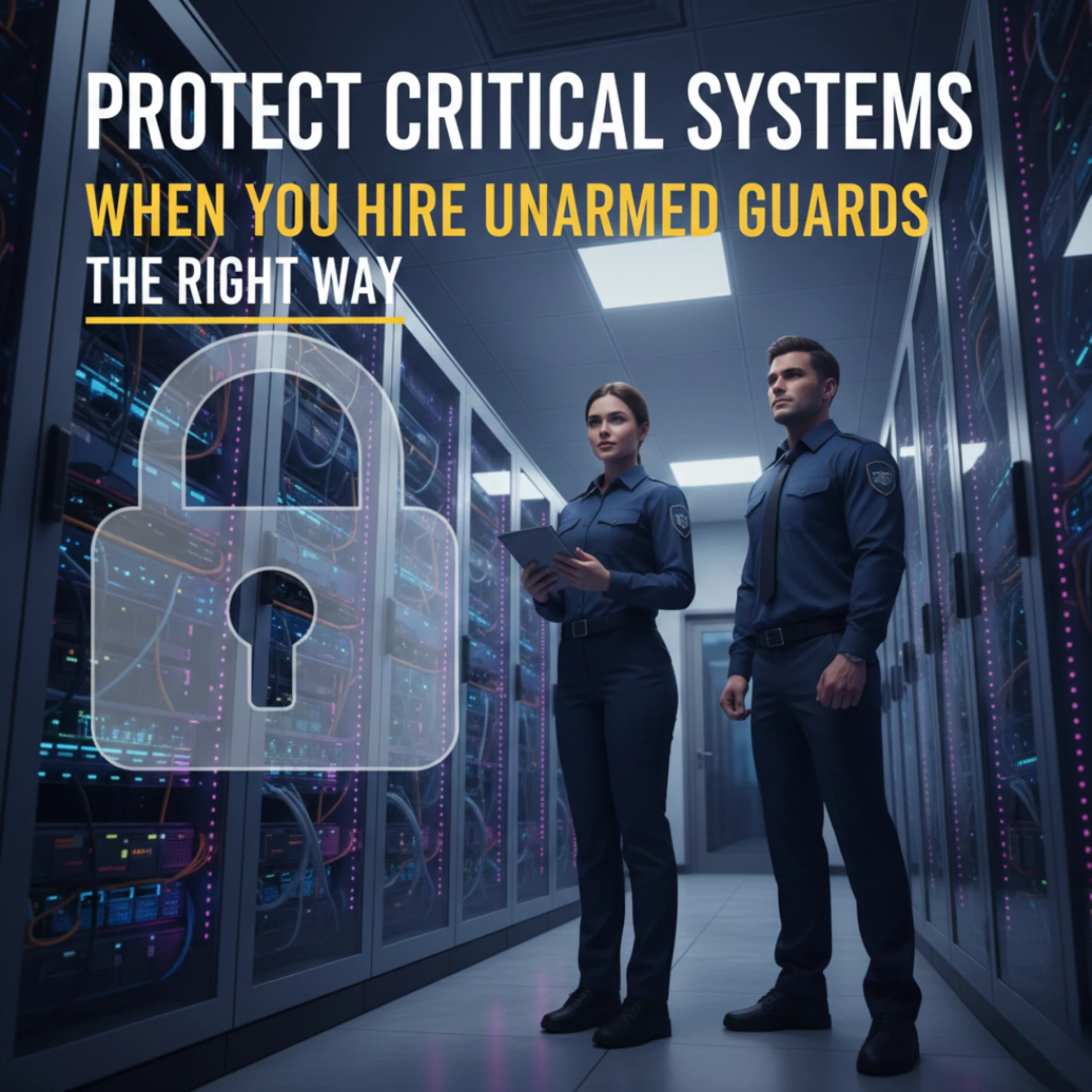

Data centers hold the digital backbone of modern businesses. These facilities store sensitive information, critical infrastructure, and valuable assets that require round-the-clock protection. When you hire unarmed guard security for your data center, making the right choice can mean the difference between robust protection and costly vulnerabilities.
However, many organizations make critical errors during the hiring process. These mistakes can compromise security protocols, increase operational risks, and even lead to data breaches. Understanding what to avoid helps you build a stronger security foundation for your facility.
Overlooking Specialized Training Requirements
Not all security personnel possess the skills needed for data center environments. Therefore, one of the biggest mistakes is hiring guards without specialized training in technology facilities.
Data centers differ significantly from retail spaces or office buildings. Guards must understand access control systems, surveillance technology, and emergency protocols specific to IT infrastructure. Additionally, they should recognize potential cyber-physical threats that target these facilities.
When you hire unarmed guards, verify their training credentials thoroughly. Ask about certifications in:
- Data center security protocols
- Access management systems
- Incident response procedures
- Technology infrastructure basics
- Emergency evacuation planning
Many companies assume general security training suffices. Unfortunately, this approach leaves gaps in your protective measures. Guards unfamiliar with data center operations may miss warning signs or respond inappropriately during critical situations.
Failing to Conduct Comprehensive Background Checks
Data centers contain sensitive information worth millions to cybercriminals and competitors. Consequently, thorough background screening becomes absolutely essential.
Some organizations rush the hiring process or rely on security companies that cut corners with background checks. This mistake exposes your facility to insider threats and compromised security personnel.
Comprehensive screening should include:
- Criminal history verification
- Employment history validation
- Credit checks (financial stability matters)
- Reference verification from previous security positions
- Social media screening for potential red flags
Moreover, background checks shouldn't be one-time events. Regular re-screening helps identify issues that develop after initial hiring. Guards with access to critical infrastructure require ongoing vetting to maintain security integrity.
Ignoring Communication and Technical Skills
Modern data centers rely heavily on technology-driven security systems. Guards must effectively communicate and interact with various technical platforms.
A common oversight involves hiring personnel who struggle with basic technology or communication tools. These guards cannot efficiently monitor surveillance systems, operate access control interfaces, or report incidents through digital platforms.
Evaluate candidates for:
- Proficiency with security management software
- Clear verbal and written communication abilities
- Comfort level with technology and digital systems
- Ability to generate accurate incident reports
- Understanding of communication protocols during emergencies
Furthermore, guards need strong interpersonal skills. They interact with IT personnel, executives, visitors, and contractors daily. Poor communication creates confusion and potentially dangerous security gaps.
Discover Essential Security Guard Services for Your Facility →
Neglecting to Define Clear Responsibilities
Ambiguous job descriptions lead to security vulnerabilities. When you hire unarmed guard security, clearly outline expectations and responsibilities from the start.
Many data center managers assume guards automatically know their duties. However, this assumption creates inconsistent security coverage and missed protocols.
Detailed job descriptions should specify:
- Patrol schedules and routes
- Access control procedures
- Visitor management protocols
- Incident reporting requirements
- Equipment monitoring responsibilities
- Emergency response duties
Additionally, document these responsibilities in writing. Verbal instructions get forgotten or misunderstood. Written protocols ensure consistency across shifts and provide accountability standards.
Regular training sessions reinforce these responsibilities. Security needs evolve, so guards require ongoing education about updated procedures and emerging threats.
Choosing Based Solely on Price
Budget considerations matter for every business decision. Nevertheless, selecting security services based exclusively on cost often backfires dramatically.
Low-cost security companies typically cut corners somewhere. They might provide inadequately trained personnel, skip thorough background checks, or offer minimal supervision. These shortcuts compromise your data center's security posture.
Consider the true cost of security failures:
- Data breach remediation expenses
- Regulatory fines and penalties
- Reputation damage and lost business
- Legal liability costs
- Insurance premium increases
Instead of focusing only on hourly rates, evaluate the overall value proposition. Quality security services invest in training, proper vetting, and ongoing support. These investments translate into better protection for your critical assets.
Compare security providers based on:
- Training programs and certifications
- Background check thoroughness
- Client references and track record
- Technology integration capabilities
- Incident response protocols
Furthermore, remember that when you hire unarmed guards, you're investing in your facility's protection. Quality security services pay for themselves through prevented incidents and reduced risk exposure.
Overlooking Cultural Fit and Professionalism
Data centers maintain professional environments where guards represent your organization. Hiring personnel who lack professionalism or don't align with your company culture creates problems.
Guards interact with employees, clients, and visitors regularly. Unprofessional behavior reflects poorly on your organization and can damage business relationships.
Assess candidates for:
- Professional appearance and demeanor
- Respectful communication style
- Reliability and punctuality
- Positive attitude and problem-solving mindset
- Alignment with company values
Interview processes should evaluate these soft skills alongside technical qualifications. Role-playing scenarios reveal how candidates handle various situations and interactions.
Additionally, observe how security companies train their personnel in customer service. Guards should balance security vigilance with professional courtesy toward authorized personnel and visitors.
Inadequate Supervision and Management
Even well-trained guards need proper oversight. Many organizations make the mistake of assuming security personnel will perform consistently without active management.
Lack of supervision leads to:
- Complacency during shifts
- Missed security protocols
- Inadequate incident documentation
- Inconsistent patrol coverage
- Reduced alertness over time
When you hire unarmed guard security, establish clear supervision structures. Determine who oversees security operations, reviews performance, and addresses issues promptly.
Regular performance evaluations keep guards accountable. Schedule periodic reviews that assess:
- Adherence to security protocols
- Quality of incident reports
- Punctuality and reliability
- Interaction quality with staff and visitors
- Knowledge of updated procedures
Moreover, security supervisors should conduct random audits. Unannounced checks ensure guards maintain vigilance throughout their shifts rather than only during scheduled inspections.
Failing to Integrate Guards with Technology Systems
Modern data center security combines human vigilance with advanced technology. However, many facilities fail to properly integrate guards with existing security systems.
This disconnect creates operational inefficiencies. Guards cannot maximize protection when they don't understand or effectively use available technology tools.
Ensure guards receive training on:
- Video surveillance management systems
- Access control platforms
- Alarm monitoring interfaces
- Communication equipment
- Incident management software
Additionally, establish clear protocols for technology-assisted monitoring. Guards should know how to respond to system alerts, verify access credentials, and utilize surveillance footage during investigations.
Regular technology updates require corresponding guard training. New systems or software upgrades necessitate retraining sessions to maintain operational effectiveness.
Not Planning for Contingencies
Unexpected situations arise in every security operation. Failing to plan for contingencies leaves your data center vulnerable during critical moments.
Common scenarios requiring contingency planning include:
- Guard illness or absence
- Emergency situations requiring additional personnel
- System failures or power outages
- Natural disasters or extreme weather
- Security incidents requiring specialized response
When contracting security services, clarify contingency procedures. Understand how quickly replacement guards arrive, what backup systems exist, and how emergency situations escalate.
Furthermore, conduct regular drills and exercises. These practices ensure guards understand emergency protocols and respond effectively during actual incidents.
Ignoring Ongoing Training and Development
Security threats constantly evolve. Guards hired today need continuous education to remain effective against emerging risks.
Unfortunately, many organizations view training as a one-time event. This approach leaves guards unprepared for new threats, updated technologies, and changing protocols.
Implement ongoing training programs covering:
- Emerging security threats specific to data centers
- Updated access control procedures
- New technology system features
- Enhanced communication protocols
- Regulatory compliance changes
Schedule monthly or quarterly training sessions. These regular updates keep security knowledge fresh and demonstrate your commitment to professional development.
Additionally, encourage guards to pursue industry certifications. Professional development enhances their skills while improving your overall security posture.




























Sign in to leave a comment.