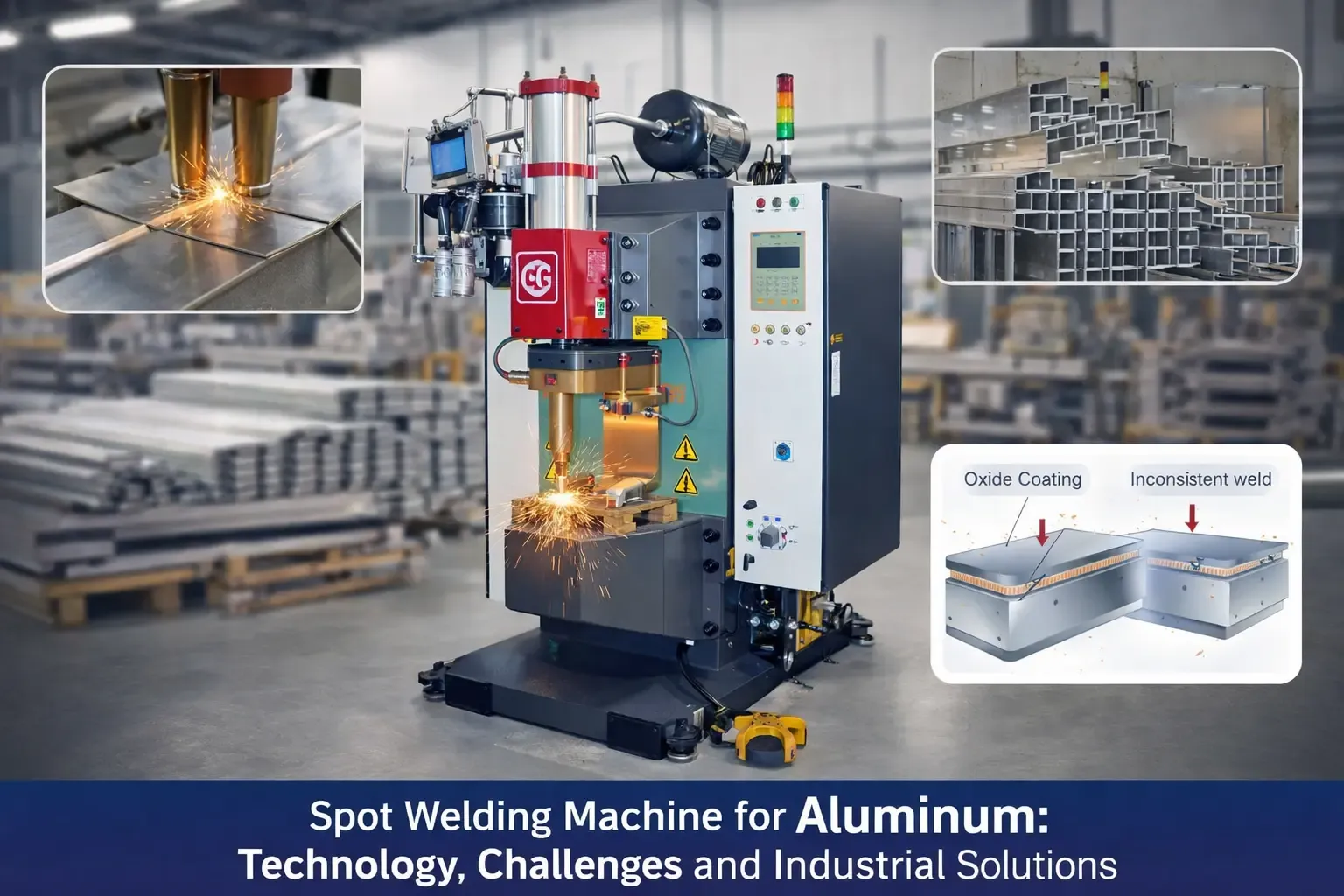

In modern manufacturing, joining metal components with speed, precision, and repeatability is essential for high-volume production. A spot resistance welder is one of the most widely used solutions in automotive, appliance, HVAC, and sheet metal fabrication industries due to its efficiency, low consumable cost, and strong joint quality.
As global manufacturing shifts toward automation and smart production lines, spot resistance welding continues to evolve with advanced controls, MFDC technology, and integrated robotic systems. Companies like Heron Welder, a global manufacturer of industrial welding and metal-joining solutions, are at the forefront of delivering high-performance welding systems for OEMs and production facilities worldwide.
This article explains the working principle, types, applications, advantages, limitations, and selection criteria of spot resistance welders to help engineers and decision-makers choose the right solution for their production needs.
What is a Spot Resistance Welder?
A spot resistance welder is a type of resistance welding machine used to join two or more overlapping metal sheets by applying:
- Pressure through copper electrodes
- Electric current through the contact point
- Heat generated by electrical resistance
The localized heat melts the metal interface, forming a small “weld nugget” that solidifies under pressure, creating a strong and durable joint.
Unlike mechanical fastening methods such as rivets or bolts, spot welding does not require additional materials like filler metals or adhesives, making it highly efficient for mass production.
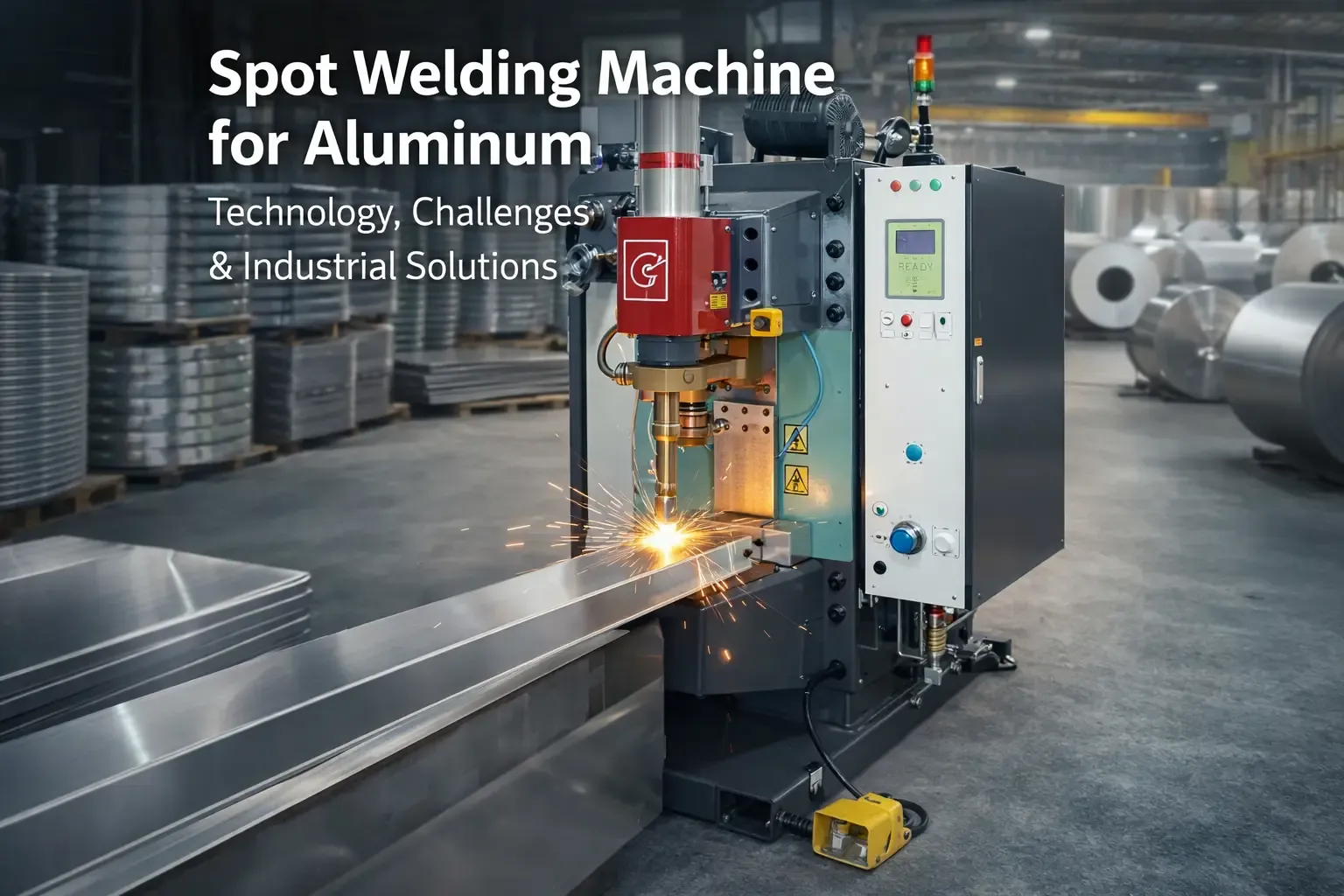
Working Principle of Spot Resistance Welding
The core principle of spot resistance welding is based on Joule heating:
Heat generated = I² × R × t
Where:
- I = welding current
- R = electrical resistance at the interface
- t = welding time
Step-by-step process:
1. Electrode Clamping
Copper alloy electrodes press the metal sheets together under controlled force.
2. Current Application
A high electrical current passes through the contact point.
3. Heat Generation
Resistance at the interface generates heat, melting the metal locally.
4. Weld Nugget Formation
A molten metal pool forms between the sheets.
5. Cooling & Solidification
Pressure is maintained while current stops, forming a solid weld nugget.
This process is extremely fast, typically completed in milliseconds to seconds, making it ideal for high-speed production environments.
Types of Spot Resistance Welders
Modern manufacturing systems use different configurations depending on production requirements.
1. AC Spot Welders
Traditional systems using alternating current. Suitable for general-purpose applications but less precise in energy control.
2. MFDC Spot Welders (Medium Frequency DC)
These systems offer:
- Higher energy efficiency
- Better control of weld quality
- Reduced heat distortion
- Improved consistency in automation systems
MFDC technology is widely used in automotive and precision manufacturing.
3. Pneumatic Spot Welders
Air-pressure driven systems ideal for medium-duty applications and manual workstations.
4. Robotic Spot Welding Systems
Fully automated solutions integrated with robotic arms for:
- Automotive body-in-white production
- High-speed assembly lines
- Precision welding in repetitive tasks
Key Industrial Applications
A spot resistance welder is essential across multiple industries where sheet metal joining is required.
Automotive Manufacturing
- Car body panels
- Doors and chassis assemblies
- EV battery enclosures
- Structural reinforcements
Home Appliance Industry
- Washing machines
- Refrigerators
- Air conditioners
- Metal housings and panels
HVAC and Sheet Metal Fabrication
- Ducting systems
- Ventilation units
- Control cabinets
Electrical & Metal Equipment
- Busbars
- Metal enclosures
- Electrical cabinets
Aerospace and Light Engineering
- Lightweight aluminum assemblies
- Precision sheet metal components
Advantages of Spot Resistance Welding
Spot welding remains a preferred industrial joining method due to its operational and economic benefits.
1. High Production Speed
Weld cycles are extremely fast, making it ideal for mass production lines.
2. Cost Efficiency
No need for filler materials, flux, or additional consumables.
3. Automation Compatibility
Easily integrated with robotic systems and automated production lines.
4. Strong and Clean Joints
Produces consistent weld nuggets with minimal surface distortion.
5. Energy Efficiency (Especially MFDC Systems)
Modern systems reduce power consumption and improve process stability.
Limitations of Spot Resistance Welding
Despite its advantages, spot welding has certain limitations:
- Suitable mainly for thin sheet metals
- Requires access from both sides of the workpiece
- Surface preparation is critical for consistent quality
- Not ideal for thick or highly dissimilar materials
Understanding these constraints helps engineers select the right welding process for each application.
Spot Resistance Welder vs Other Welding Methods
Spot Welding vs MIG Welding
- Spot welding: faster, cleaner, automation-friendly
- MIG welding: more flexible for thicker materials and complex joints
Spot Welding vs Riveting
- Spot welding: permanent, cost-effective, no extra hardware
- Riveting: requires additional components and manual or semi-automated installation
Spot Welding vs Laser Welding
- Spot welding: economical and widely used in mass production
- Laser welding: higher precision but significantly higher equipment cost
Selection Criteria for Spot Resistance Welders
Choosing the right spot resistance welder depends on several engineering and production factors.
1. Material Type and Thickness
Different metals (steel, stainless steel, aluminum) require specific current and electrode configurations.
2. Production Volume
High-volume lines benefit from automated or robotic spot welding systems.
3. Power Supply Requirements
MFDC systems are preferred for precision and energy control.
4. Weld Quality Standards
Critical industries like automotive require strict weld consistency and testing standards.
5. Integration with Automation Systems
Compatibility with PLCs, robotics, and production monitoring systems is essential for smart factories.
Advanced Trends in Spot Resistance Welding
The welding industry is rapidly evolving with Industry 4.0 technologies.
Smart Welding Control Systems
Digital controllers now enable real-time monitoring of:
- Current stability
- Electrode wear
- Weld quality data
Robotics Integration
Fully automated welding cells are replacing manual stations in large-scale production.
Energy Optimization
MFDC inverter-based systems reduce energy loss and improve efficiency.
Predictive Maintenance
Sensors and data analytics help prevent electrode failure and downtime.
Heron Welder: Industrial Spot Resistance Welding Solutions
Heron Welder specializes in advanced resistance welding technologies designed for modern manufacturing environments. With expertise in:
- Spot resistance welding machines
- MFDC welding systems
- Automated welding production lines
- Welding guns and controllers
- Custom industrial joining solutions
Heron focuses on delivering reliable, high-performance equipment for OEMs, Tier-1 suppliers, and global manufacturing facilities.
From automotive production lines to heavy industrial fabrication, Heron’s solutions are engineered to ensure:
- Stable weld quality
- High production efficiency
- Long-term operational reliability
- Seamless automation integration
Frequently Asked Questions (FAQs)
1. What is a spot resistance welder used for?
A spot resistance welder is used to join overlapping metal sheets by applying pressure and electrical current, commonly in automotive, appliance, and sheet metal industries.
2. What materials can be welded using spot welding?
It is primarily used for low-carbon steel, stainless steel, and some aluminum applications depending on machine capability and electrode configuration.
3. What is the difference between AC and MFDC spot welders?
MFDC welders provide better energy efficiency, precise control, and improved weld consistency compared to traditional AC systems.
4. Can spot resistance welders be automated?
Yes, spot welding systems are widely integrated with robotic arms and automated production lines for high-speed manufacturing.
5. How do I choose the right spot welder for my factory?
Selection depends on material type, production volume, weld quality requirements, and automation needs.
Conclusion
A spot resistance welder remains one of the most critical tools in modern industrial manufacturing due to its speed, cost efficiency, and adaptability to automation. As industries move toward smart factories and high-precision production systems, advanced welding technologies such as MFDC and robotic spot welding are becoming essential.
Manufacturers seeking reliability, scalability, and precision must carefully evaluate their welding systems to ensure long-term production efficiency.
Request a Custom Welding Solution
For manufacturers, OEMs, and automation integrators looking to upgrade their welding systems, Heron Welder provides tailored spot resistance welding solutions designed for industrial performance, efficiency, and long-term reliability.
Contact Heron Welder to discuss your production requirements and receive a customized quotation for advanced welding and automation systems.


























Sign in to leave a comment.