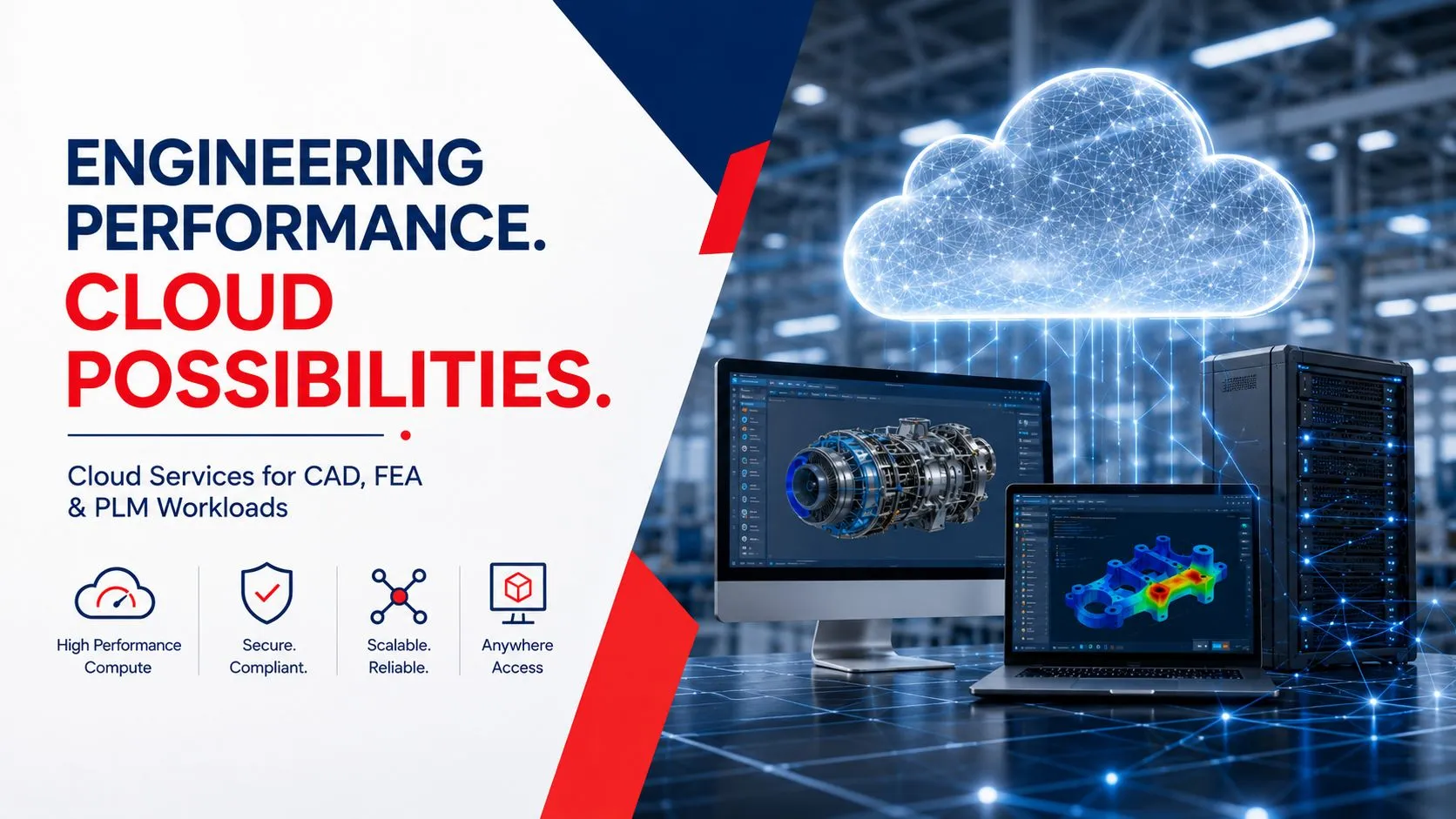

For decades, heavy computer-aided design (CAD) and finite element analysis (FEA) workloads remained stubbornly anchored to on-premises hardware. The rationale was simple: rendering massive multi-gigabyte assemblies and solving complex non-linear structural matrices demanded high-performance local workstations and dedicated on-site computing clusters. However, as global supply chains fragment and distributed engineering teams become the industry norm, on-premises isolation is transforming from an operational asset into an agility bottleneck.
To overcome these physical constraints, engineering organizations in fields like aerospace, automotive, high-tech electronics, and medical device manufacturing are aggressively shifting their product lifecycle management (PLM) and simulation environments to hyperscale cloud architectures. Yet, executing this shift successfully requires navigating distinct technical hurdles, including data gravity, viewport pixel latency, and intricate software licensing. Consequently, selecting specialized cloud migration service providers who possess explicit domain knowledge in industrial product development is the most critical decision an engineering leader can make.
The Unique Anatomy of Engineering Workloads in the Cloud
Why do engineering applications experience severe performance degradation when migrated via generic enterprise IT strategies?
Engineering workloads depend heavily on sustained, low-latency GPU visualization and rapid synchronous read/write performance for millions of interdependent CAD file links, requiring highly specialized network architectures that generic cloud lift-and-shift methods completely fail to address.
Addressing Data Gravity and Latency Surprises
Unlike standard web databases or enterprise document repositories, parametric CAD files are deeply interconnected. A single assembly model is not a monolithic file; it is a complex web of external component links, assembly constraints, geometric tolerances, and historical revisions. When an engineer attempts to open a 2GB model file from a poorly optimized cloud environment, the resulting network lag can completely stall productive work. Elite service providers address this "data gravity" challenge by designing hybrid storage environments, utilizing intelligent edge-caching mechanisms, and setting up virtual workstations in close physical proximity to the cloud data repository.
Provisioning High-Performance Compute and GPU Virtualization
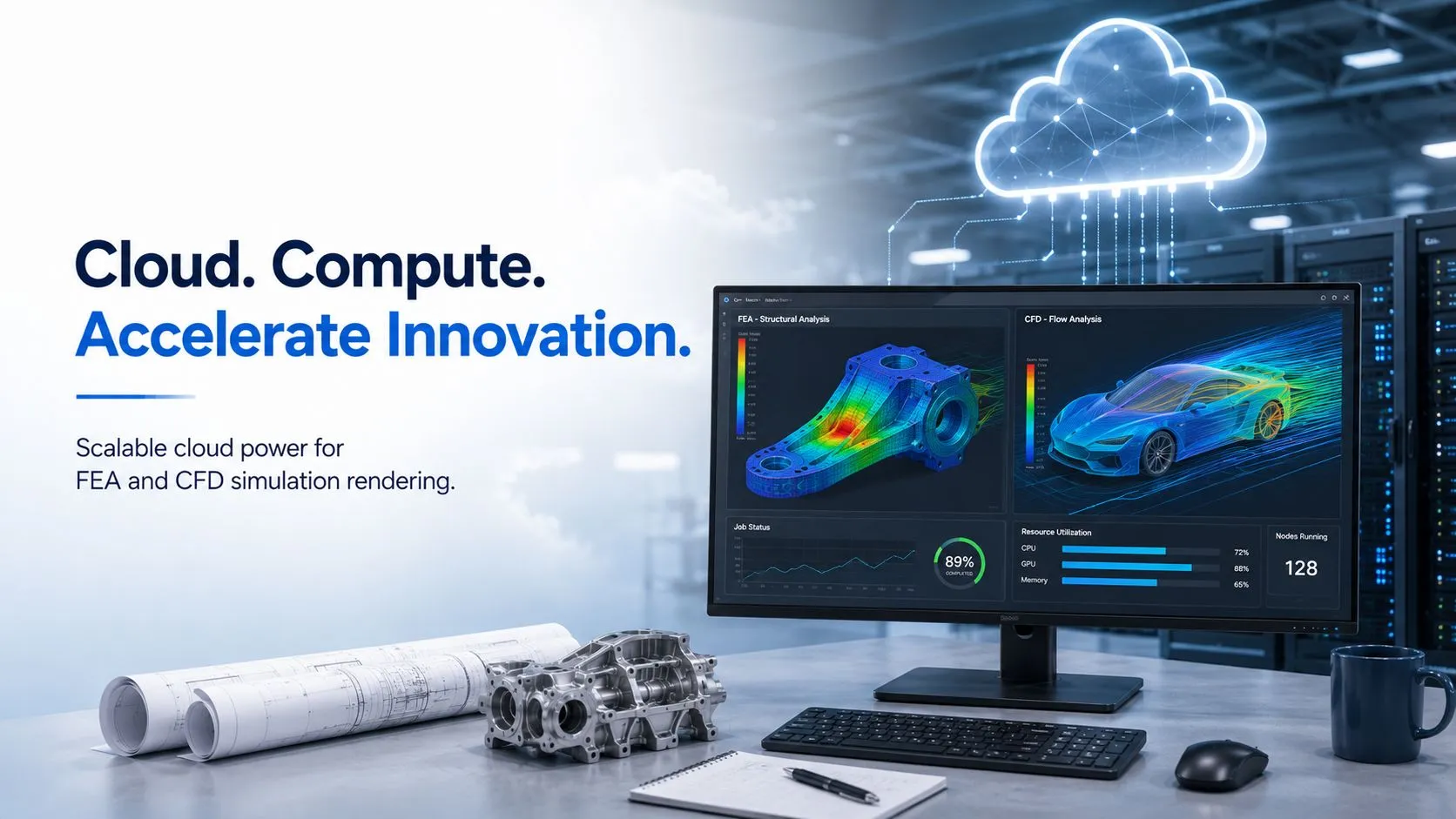
Simulations like FEA and computational fluid dynamics (CD) rely on massive mathematical matrices that require parallel processing via High-Performance Computing (HPC) nodes. Migrating these elements involves more than just allocating raw virtual CPUs. It requires the deep technical expertise to configure public cloud infrastructure such as AWS EC2 GPU instances or Microsoft Azure NV-series virtual machines to deliver performance that matches or exceeds a high-end local physical desktop.
Vetting the Experts: Critical Criteria for Selecting Cloud Migration Service Providers
What differentiates a specialized engineering integrator from a standard enterprise IT migration firm?
A specialized provider understands the native data structures of CAD, product data management (PDM), and PLM applications, ensuring seamless file connectivity, license pool mapping, and optimized server-side rendering post-migration.
When evaluating potential cloud migration service providers, engineering decision-makers should deploy a rigid, domain-specific technical matrix rather than relying on generalized cloud certifications:
- CAD/PLM Application Fluency: Ensure the provider has a documented track record of migrating complex engineering systems such as PTC Windchill, Creo, or Siemens Teamcenter. They must understand underlying relational database structures and software dependencies.
- GPU and VDI Experience: The provider should demonstrate deep proficiency in configuring advanced virtual graphics solutions (e.g., NVIDIA vGPU) paired with optimized remote display protocols like Teradici PCoIP or AWS NICE DCV to minimize viewport lag during heavy modeling sessions.
- Advanced HPC Networking Knowledge: High-performance solvers demand low-latency cluster interconnects to maintain efficient parallel processing across multiple compute nodes during complex structural or thermal analyses.
- Hybrid and Multi-Cloud Architecture Design: Heavy engineering architectures rarely function as pure public-cloud setups. Your chosen partner must be capable of deploying unified hybrid models that seamlessly bridge cloud computing power with existing on-premises testing labs or factory floor manufacturing execution systems (MES).
- Security and Industrial Compliance Alignment: In sensitive sectors like defense and life sciences, standard data encryption is insufficient. Vetted cloud migration service providers must possess the capabilities to architect environments that fully comply with specialized frameworks like ITAR, NIST SP 800-171, and FDA 21 CFR Part 11.
Mitigating Risks: Common Pitfalls in Engineering Cloud Transitions
Overlooking the operational nuances of product development often leads to costly post-migration surprises. The most pervasive mistake is treating engineering data exactly like corporate office documents. Moving structural engineering databases to standard cloud object storage without mapping application dependencies inevitably leads to broken assembly paths, lost metadata, and severe application performance degradation.
Another critical risk involves software license compliance. Many engineering software vendors enforce strict license verification routines tied to specific hardware configurations, localized license servers, or MAC addresses. If your chosen cloud migration service providers lack deep engineering domain experience, moving these tools to dynamic, auto-scaling cloud environments can inadvertently trigger licensing violations or lock users out of their software during critical development sprints.
Elevating Performance via Specialized Cloud Managed Services
A successful cloud migration is not a finite IT project with a fixed endpoint; it marks the beginning of an ongoing operational optimization cycle. Once your core workloads are successfully established in the cloud, sustaining peak engineering efficiency requires a deliberate combination of holistic digital transformation consulting services and targeted cloud managed services.
Rather than overloading internal IT teams with the complexities of monitoring cloud infrastructure, forward-thinking manufacturers choose to leverage the deep expertise of 3HTi cloud services to manage their environments. This specialized approach guarantees that your GPU allocations, virtual workstation performance, and PLM database responses remain continuously tuned to real-time engineering workflows. By entrusting day-to-day environment maintenance to a dedicated partner, your internal engineering teams can redirect their focus toward core product innovation, shrinking time-to-market margins and maximizing software return on investment.
Conclusion
Migrating heavy CAD and FEA environments to the cloud unlocks unmatched organizational agility, rapid design iteration, and friction-free global collaboration. However, the unique computing requirements, massive file dependencies, and tight hardware-software relationships of engineering data mean that generalized IT approaches fall short. By partnering with specialized cloud migration service providers who understand the intricate mechanics of product development, manufacturing organizations can mitigate operational risks, protect file sovereignty, and build a scalable foundation for modern digital engineering.
Frequently Asked Questions (FAQs)
Q1: How do cloud migration service providers minimize network latency for remote CAD engineers?
Providers utilize specialized virtual desktop infrastructures (VDI) equipped with server-side GPUs and advanced display protocols like Teradici PCoIP, ensuring real-time pixel streaming that matches local workstation responsiveness over standard connections.
Q2: Can we run non-linear FEA or CFD simulations efficiently in a cloud environment?
Yes. Competent service providers configure dedicated cloud High-Performance Computing (HPC) clusters utilizing high-speed parallel processing nodes and low-latency interconnects, which drastically slashes multi-day simulation solve times down to a few hours.
Q3: How are software licensing models affected during an engineering cloud migration?
Many legacy engineering licenses require specialized network configurations or virtual license servers. Experienced migration partners audit your software agreements upfront to map floating or node-locked licenses cleanly into cloud architectures without non-compliance risks.
Q4: What role do digital transformation consulting services play prior to the actual cloud migration?
These services thoroughly evaluate your current engineering workflows, discover complex data dependencies, and eliminate legacy process redundancies. This ensures your future cloud-native architecture is fully optimized for scalable, modern product development.
Q5: Why are standard cloud managed services often inadequate for managing engineering software in the cloud?
Standard IT services lack deep familiarity with the distinct data structures of CAD and PLM tools. Specialized engineering managed services understand application behavior, ensuring database tuning, file synchronization, and GPU resource management are fully optimized.
Q6: Is it secure to move proprietary aerospace or medical device design data to the cloud?
Absolutely, provided your environment is built correctly. Expert migration firms deploy zero-trust architectures, end-to-end data encryption, and robust access controls that fully comply with rigorous industrial regulations like ITAR, NIST, and ISO standards.
Q7: How does data gravity impact our choice of cloud architecture for multi-CAD environments?
Data gravity requires that highly interdependent multi-CAD files remain stored in close proximity to the virtual desktops processing them. Migration experts design centralized data repositories to eliminate distributed cross-region latency bottlenecks.
























Sign in to leave a comment.