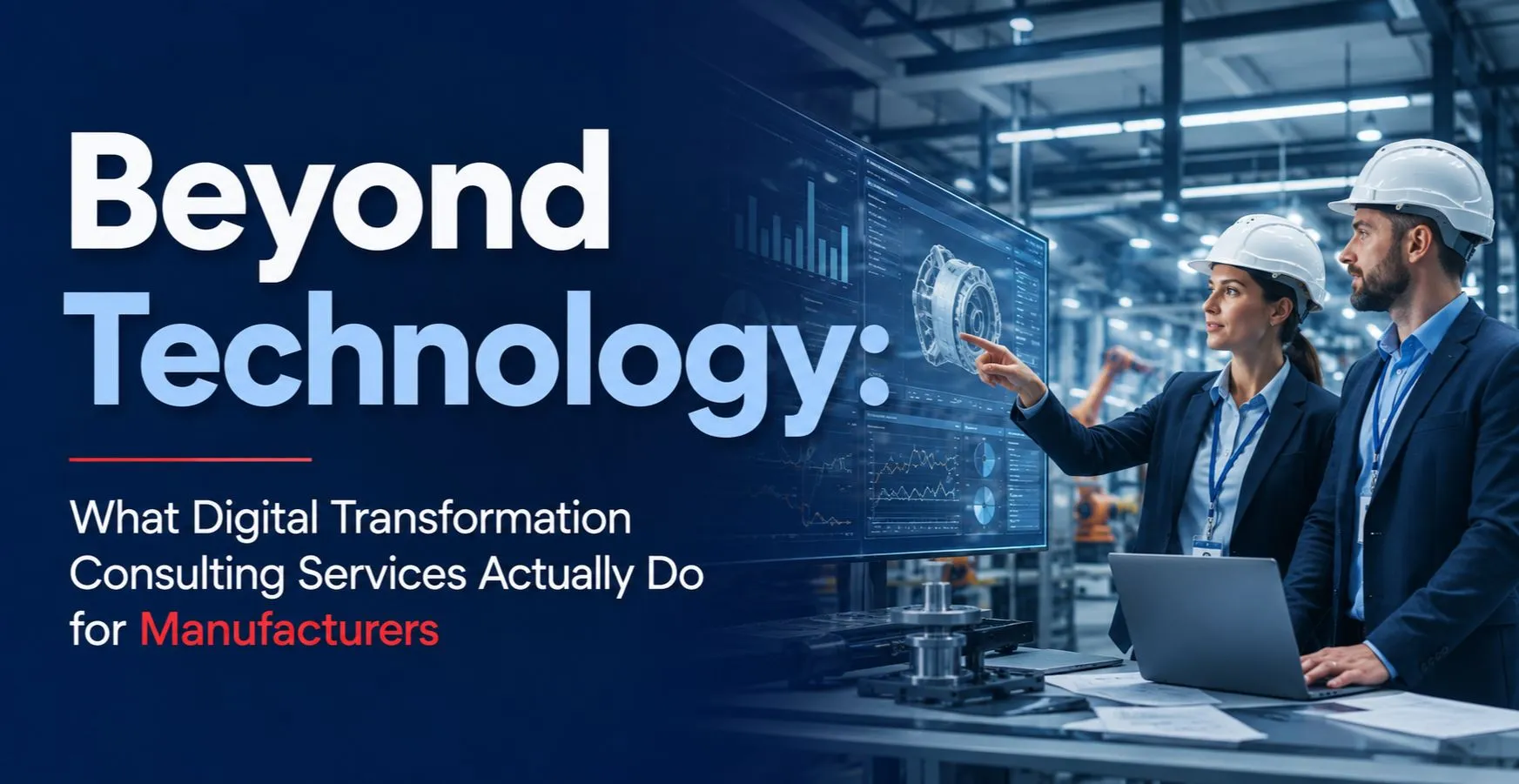

Manufacturers have spent decades investing in ERP systems, CAD platforms, PLM environments, automation technologies, and increasingly, cloud-based infrastructure. Yet many organizations still struggle with slow product launches, fragmented engineering data, disconnected processes, and limited visibility across the product lifecycle.
This reality raises an important question: if the technology already exists, what exactly do digital transformation consulting services contribute?
The answer is surprisingly straightforward. A digital transformation consulting firm is not simply a technology implementer. Its primary role is to help manufacturers align people, processes, data, and technology to achieve measurable business outcomes. The most successful initiatives focus less on software deployment and more on eliminating operational barriers that prevent organizations from innovating efficiently.
Why Manufacturers Pursue Digital Transformation
Short answer: Manufacturers are trying to solve business problems, not technology problems.
Across industries such as aerospace, automotive, medical devices, life sciences, and industrial equipment, leaders face common challenges:
- Increasing product complexity
- Growing regulatory requirements
- Global supply chain disruptions
- Rising customer expectations
- Engineering talent shortages
- Pressure to reduce time-to-market
Many organizations discover that their biggest obstacle is not a lack of technology but a lack of integration between systems, teams, and workflows.
This is where structured transformation initiatives become valuable.
What Digital Transformation Consulting Services Actually Deliver
Short answer: They identify operational inefficiencies and build a roadmap for sustainable improvement.
The most effective digital transformation consulting services begin with understanding how a business operates today before recommending future-state technologies.
Rather than asking, "Which software should we implement?" experienced consultants ask:
- Where are delays occurring?
- Which processes create bottlenecks?
- How does information flow between departments?
- What prevents teams from making faster decisions?
- Which systems create duplicate work?
The objective is to uncover root causes rather than treat symptoms.
Assessing Current-State Operations
Most transformation projects begin with a comprehensive evaluation of existing processes.
This often includes:
- Engineering workflows
- Product development processes
- Manufacturing operations
- Quality management procedures
- Data management practices
- Technology ecosystems
By understanding current performance, organizations can identify opportunities with the highest business impact.
Building a Digital Transformation Roadmap
A common misconception is that digital transformation requires large-scale technology replacement.
In reality, successful programs often prioritize incremental improvements.
Typical roadmap components include:
- Process optimization
- System integration
- Data governance
- Workflow automation
- Organizational change management
- Technology modernization
The roadmap provides a practical path toward measurable outcomes rather than a collection of disconnected technology projects.
The Importance of the Operational Audit Process
Short answer: Organizations cannot improve what they do not fully understand.
One of the most overlooked activities in transformation initiatives is the operational audit process.
Before recommending solutions, experienced consultants evaluate how work actually gets done throughout the organization.
This assessment often uncovers hidden inefficiencies such as:
- Duplicate data entry
- Manual approval cycles
- Unnecessary engineering reviews
- Poor version control practices
- Inefficient change management procedures
- Disconnected supplier communication
For example, a manufacturer may believe product development delays are caused by engineering capacity limitations. An operational audit may reveal that most delays originate from approval workflows and document management practices rather than engineering itself.
These insights allow organizations to focus investments where they generate the greatest return.
How Product Development Solutions Fit Into Digital Transformation
Short answer: They help organizations reduce friction throughout the product lifecycle.
Modern product development solutions are central to many transformation initiatives because product data drives decisions across engineering, manufacturing, quality, procurement, and service operations.
When product information exists in isolated systems, teams often struggle with:
- Inconsistent product definitions
- Design rework
- Slow engineering changes
- Limited traceability
- Collaboration challenges
Consulting teams frequently help manufacturers establish integrated environments that connect:
- CAD systems
- Product lifecycle management platforms
- Requirements management tools
- Enterprise resource planning systems
- Quality management applications
The result is improved visibility and better coordination across departments.
Practical Example
Consider a medical device manufacturer developing a new product platform.
Engineering teams create designs in CAD systems while quality teams maintain documentation separately. Regulatory specialists track compliance records in another environment.
As development progresses, maintaining consistency becomes increasingly difficult.
A transformation initiative may focus on creating a connected digital thread that links requirements, design data, testing records, risk assessments, and manufacturing documentation.
The outcome is not merely improved compliance—it is faster decision-making and reduced development delays.
Common Misconceptions About Digital Transformation
Many manufacturers begin transformation efforts with unrealistic expectations.
Misconception #1: Digital Transformation Is Primarily About Technology
Technology is only one component.
People, processes, governance, and organizational culture often have a greater influence on project success.
Misconception #2: Transformation Is a One-Time Project
Digital transformation is an ongoing capability.
Organizations continuously adapt technologies, processes, and operating models to meet changing business requirements.
Misconception #3: More Technology Equals Better Results
Additional software does not automatically improve performance.
In many cases, simplifying workflows and integrating existing systems delivers greater value than introducing new platforms.
What Successful Manufacturers Do Differently
Organizations that achieve meaningful transformation outcomes typically share several characteristics:
They Prioritize Business Outcomes
Successful leaders define measurable objectives such as:
- Reduced product development cycle times
- Improved engineering productivity
- Faster change management
- Enhanced compliance readiness
- Better cross-functional collaboration
Technology decisions are then aligned with those objectives.
They Focus on Data Connectivity
Connected data enables faster decisions.
Manufacturers increasingly invest in digital thread strategies that connect engineering, manufacturing, quality, and service information across the enterprise.
They Embrace Continuous Improvement
Transformation is treated as an ongoing discipline rather than a fixed destination.
Organizations continuously refine workflows, evaluate performance, and identify new opportunities for optimization.
Industry Perspective: The Evolution of Manufacturing Transformation
The role of consulting firms has evolved significantly over the past decade. Earlier initiatives often focused on software implementation alone. Today, organizations increasingly seek guidance that combines process improvement, digital engineering, systems integration, and organizational alignment.
This shift is reflected in firms specializing in manufacturing-focused transformation programs. For example, resources such as 3HTi’s digital transformation practice highlight how modern initiatives increasingly center on digital thread strategies, product lifecycle optimization, and enterprise-wide process connectivity rather than standalone technology deployments.
Conclusion
Manufacturers often begin digital transformation initiatives searching for better technology. However, the organizations that achieve lasting results recognize that transformation is fundamentally about improving how information, decisions, and work flow across the business.
Effective digital transformation consulting services help organizations identify operational bottlenecks, improve collaboration, modernize workflows, and connect critical business systems. Through structured assessments, roadmap development, integrated product development solutions, and a disciplined operational audit process, manufacturers can create a foundation for faster innovation and greater operational agility.
As products become more complex and market expectations continue to rise, the ability to connect people, processes, and technology will increasingly determine which organizations lead their industries and which struggle to keep pace.
FAQs
1. What are digital transformation consulting services?
Digital transformation consulting services help organizations improve business performance by aligning technology, processes, data, and people. The focus is typically on solving operational challenges and achieving measurable outcomes rather than simply implementing software.
2. Why do manufacturers hire digital transformation consultants?
Manufacturers often seek external expertise to identify inefficiencies, optimize workflows, improve system integration, accelerate product development, enhance collaboration, and create practical roadmaps for modernization initiatives.
3. What is included in an operational audit process?
An operational audit process evaluates workflows, technology usage, governance structures, data management practices, and organizational performance to identify bottlenecks, inefficiencies, risks, and opportunities for improvement.
4. How do product development solutions support digital transformation?
Product development solutions connect engineering, manufacturing, quality, and business functions by improving data visibility, enhancing collaboration, reducing rework, and streamlining lifecycle management processes.
5. Is digital transformation only relevant for large manufacturers?
No. Mid-sized manufacturers often realize substantial benefits from process optimization, workflow automation, and system integration because improvements can have a significant impact on operational efficiency and growth.
6. How long does a manufacturing digital transformation initiative typically take?
Timelines vary depending on scope and complexity. Many organizations begin with focused improvement projects that deliver results within months while pursuing broader transformation goals over multiple years.
7. What is the biggest factor influencing digital transformation success?
Clear business objectives, executive alignment, strong change management, process optimization, and effective data integration are often more important than the specific technologies selected during the initiative.




























Sign in to leave a comment.