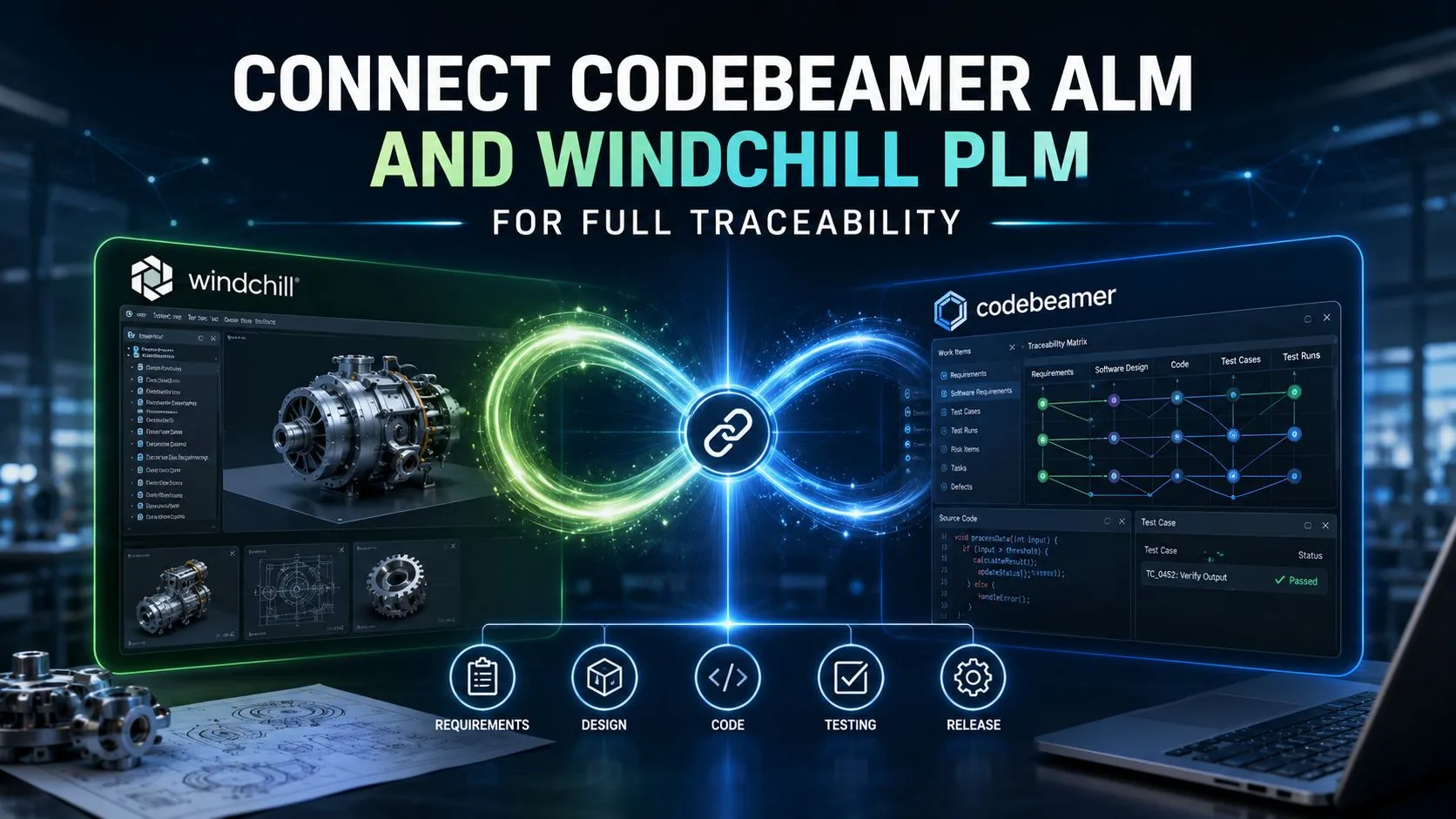

The manufacturing landscape is undergoing a profound paradigm shift. Today’s most innovative products are no longer purely mechanical or electrical; they are complex, software-driven ecosystems. From medical devices to autonomous vehicles, hardware components must operate in perfect synchronization with embedded code. This evolution creates a massive operational challenge for engineering teams. Hardware lifecycles are typically managed within Product Lifecycle Management (PLM) systems like Windchill, while software development moves at a completely different velocity inside Application Lifecycle Management (ALM) systems.
To bridge this operational divide, organizations must achieve end-to-end traceability across both domains. Connecting Windchill PLM with a modern solution like codebeamer ALM ensures that requirements, source code, test cases, and physical parts remain linked throughout the entire lifecycle.
The Strategic Value of Integrating Windchill and codebeamer ALM
When hardware and software teams operate in isolated environments, systemic inefficiencies inevitably emerge. Requirements defined by systems engineers can easily get lost in translation when passed down to software developers. A minor change in a mechanical casing might disrupt an embedded sensor’s performance, yet without an integrated pipeline, software engineers may not discover the modification until physical prototyping begins.
Integrating Windchill with codebeamer ALM establishes a single, cohesive source of truth. This connectivity allows cross-functional teams to track the impact of a change from a high-level system requirement down to a specific line of code or a physical bill of materials (BOM). By embedding codebeamer ALM into the core engineering ecosystem, organizations can significantly reduce rework, accelerate time-to-market, and eliminate the manual data entry that often leads to costly human errors.
Overcoming the Integration Challenge
Achieving a seamless connection between PLM and ALM platforms requires a clear technical strategy. Historically, companies relied on fragile, custom-built scripts that required constant maintenance and fell apart during software upgrades. Modern enterprise architectures have moved toward more robust, standardized connection methodologies.
Many organizations turn to external expertise, utilizing specialized digital transformation consulting services to design and execute these complex system architectures. Expert consultants typically deploy Open Services for Lifecycle Collaboration (OSLC) protocols or enterprise service buses to enable real-time, bi-directional data exchange. This methodology ensures that data remains in its native environment—meaning software developers stay within codebeamer ALM while hardware engineers remain in Windchill—yet both teams can view linked data through live, dynamic previews.
Key Steps to Connect PLM and ALM Frameworks
Building an architecture that supports full traceability involves several critical phases. Implementing these steps correctly ensures that your integrated environment remains scalable and compliant with strict industry standards.
- Define a Unified Requirement Architecture: Begin by mapping out where master requirements will live. Often, system-level requirements originate in codebeamer ALM, while physical requirements reside in Windchill. Establishing a clear hierarchy is vital for downstream tracking.
- Deploy OSLC-Based Linking: Utilize OSLC links to connect software requirements or test cases directly to specific Windchill CAD parts or documents. This creates a data relationship without duplicating the actual files across databases.
- Establish Cross-System Change Management: Configure automated workflows so that a change request initiated in Windchill automatically triggers a notification or a review task within codebeamer ALM, and vice versa.
- Configure Live Traceability Matrices: Leverage the built-in visualization tools within the codebeamer ALM platform to generate end-to-end traceability reports that span from the initial customer requirement down to verification testing and the physical asset configuration.
Enhancing Comprehensive Product Development Solutions
Achieving full lifecycle traceability is more than just a technical convenience; it is a foundational pillar of modern product development solutions. In highly regulated industries such as aerospace, automotive, and medical device manufacturing, proving compliance requires absolute transparency. Regulatory bodies demand clear evidence that every safety requirement has been thoroughly implemented and verified by a corresponding test case.
When codebeamer ALM is tightly woven into the Windchill ecosystem, generating compliance documentation transforms from a multi-week administrative nightmare into an on-demand activity. Auditors can easily follow the digital thread from a physical component in the BOM to the embedded software governing its behavior. This comprehensive visibility not only satisfies regulatory mandates but also elevates overall product quality by ensuring that no requirement is left unverified.
Furthermore, this cross-domain visibility drastically simplifies risk management. When a defect is discovered during field operations, engineering teams can instantly trace the issue back through the integrated codebeamer ALM pipeline to identify whether the root cause stems from a hardware tolerance issue or a software anomaly. This speed of resolution preserves brand reputation and reduces warranty liabilities.
Conclusion: Securing a Unified Engineering Future
The divide between physical manufacturing and software engineering is rapidly dissolving. To remain competitive, enterprises must replace fragmented legacy workflows with unified digital threads. Connecting Windchill PLM with codebeamer ALM is no longer an optional luxury—it is a strategic necessity for any organization building smart, connected products. By anchoring your infrastructure with robust integration strategies and partnering with specialized experts, you unlock unprecedented operational visibility, ensuring your engineering teams build higher-quality products with total confidence.
Frequently Asked Questions
What is the primary benefit of connecting Windchill PLM and codebeamer ALM?
The primary benefit is establishing a unified digital thread. This bi-directional link provides complete visibility across hardware and software lifecycles, ensuring that changes in mechanical parts or software code are instantly visible to all engineering teams.
How do OSLC protocols assist in connecting these two enterprise systems?
OSLC protocols enable live, secure data linking instead of data duplication. This allows engineers to view real-time data from Windchill directly inside the ALM platform without experiencing database bloat or synchronization lag.
Can we automate change management across both enterprise systems?
Yes. Integrating these platforms allows organizations to synchronize workflows. A change request approved in Windchill can automatically generate or update corresponding software tasks, tracking requirements, and testing validations within codebeamer ALM.
Why are digital transformation consulting services recommended for this integration?
Specialized consulting services ensure the integration aligns with specific industry regulations and complex corporate workflows. Experts handle data mapping, secure authentication configurations, and system optimization to maximize long-term scalability.
How does this cross-platform connectivity improve regulatory compliance audits?
It automates the creation of end-to-end traceability matrices. Auditors can seamlessly trace a requirement from design through software testing to the physical hardware component, eliminating manual compilation errors and compliance gaps.
Is data duplicated between the ALM and PLM databases during integration?
No. Modern integration methods leverage reference linking rather than data replication. Data remains entirely within its native system, meaning software assets reside in the ALM system while physical records stay in Windchill.
What role do product development solutions play in unifying engineering teams?
Unified solutions break down traditional engineering silos. They foster collaboration by providing shared visibility into requirements, testing milestones, and design modifications, resulting in accelerated development cycles and superior product quality.























Sign in to leave a comment.