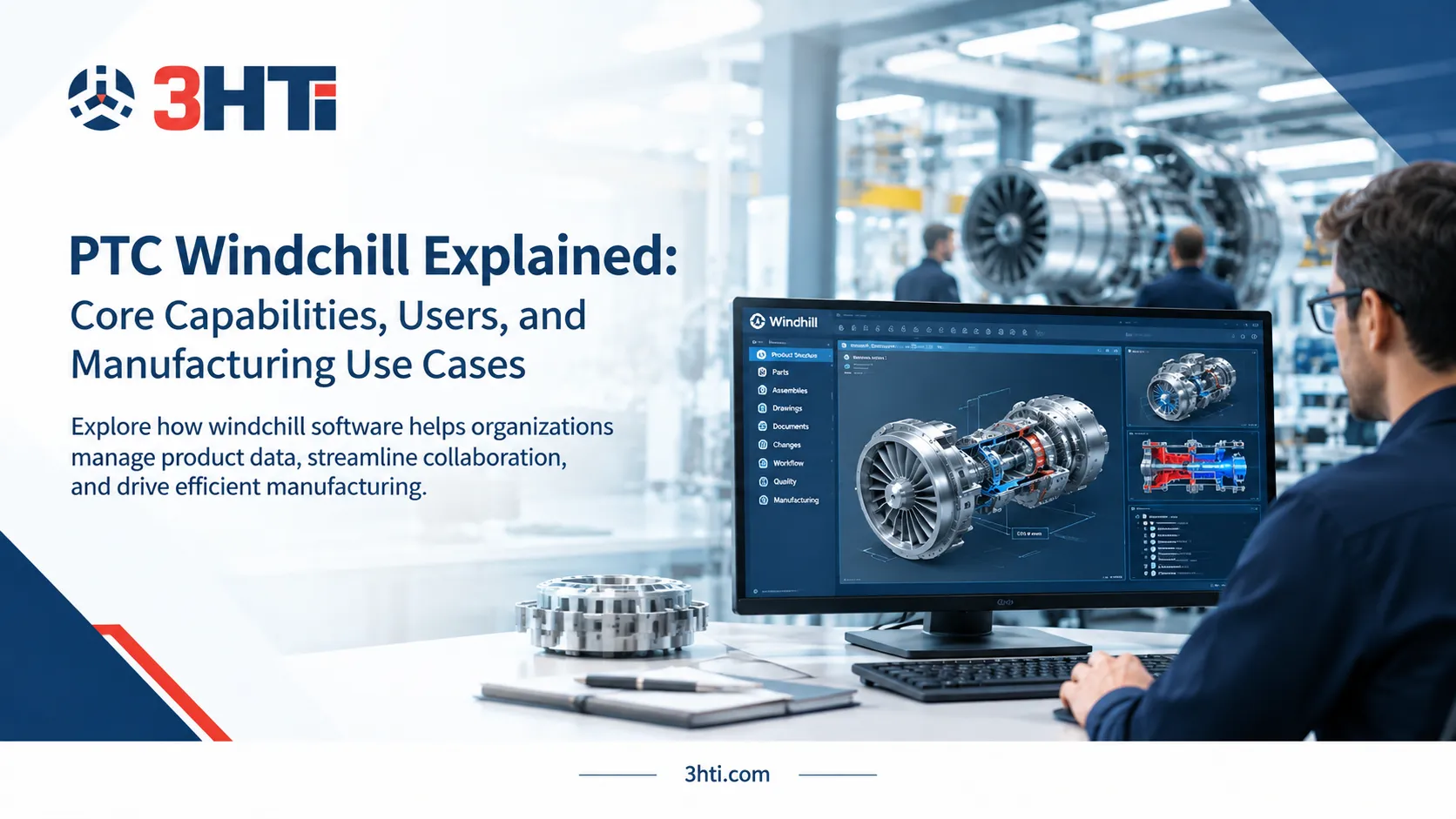

Windchill software is PTC’s enterprise Product Lifecycle Management (PLM) platform for controlling product data, product structures, bills of materials, changes, quality information, and lifecycle processes across engineering and manufacturing. For organizations managing complex products, distributed teams, multiple configurations, and regulated development processes, Windchill provides a structured digital foundation that connects product information from design through manufacturing and service.
For manufacturers in aerospace and defense, automotive, medical devices, life sciences, and industrial equipment, the value of Windchill is less about storing files and more about creating controlled relationships between product data, people, processes, and downstream systems.

What Is Windchill Software?
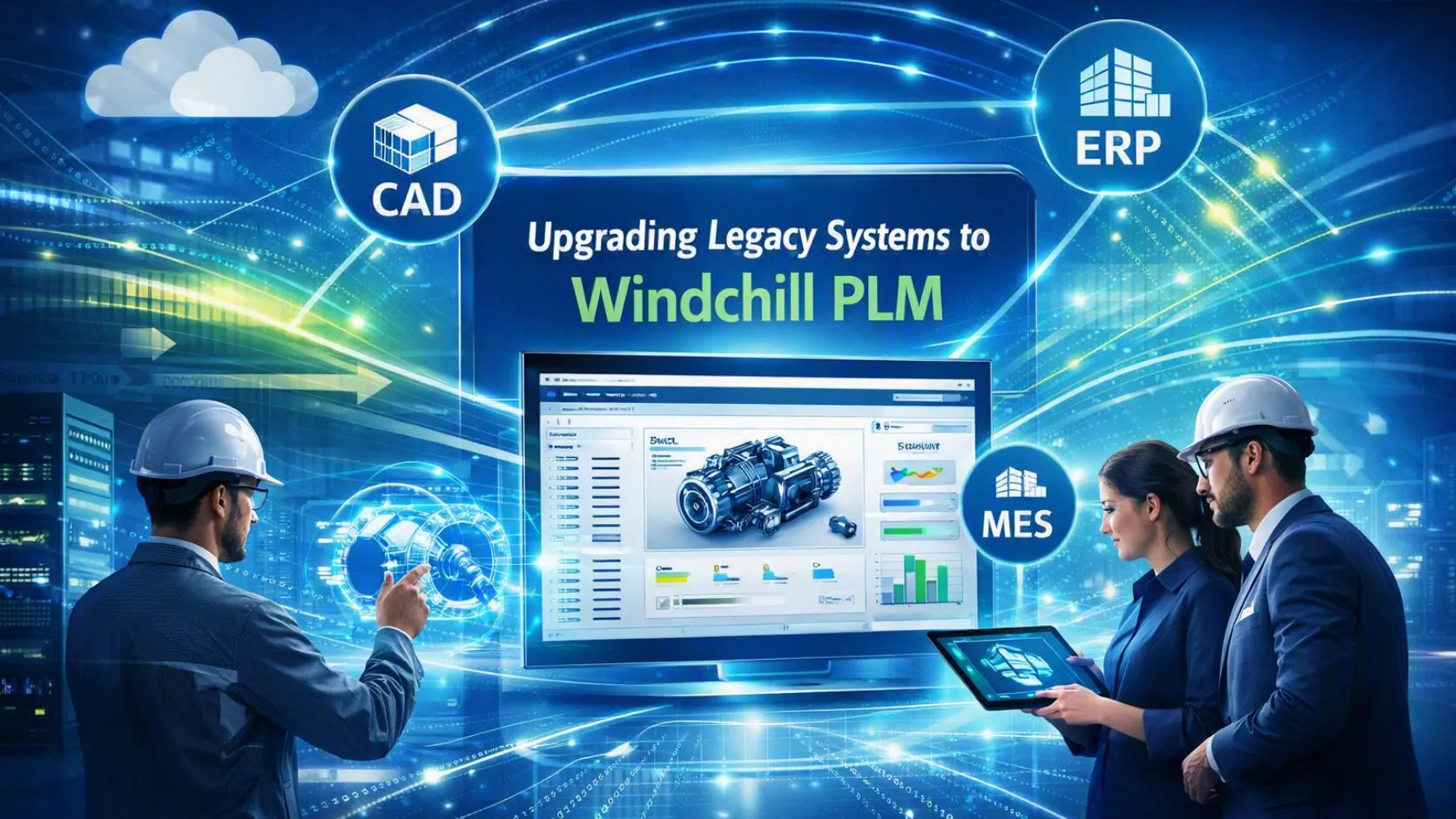
Windchill is PTC's enterprise PLM platform. It provides a centralized environment for managing product data and lifecycle processes while integrating with CAD, ERP, MES, and other enterprise applications. The current PTC documentation identifies Windchill 13.1.2 as the current version and supports both on-premises deployment and Windchill+ SaaS.
Importantly, Windchill is not a CAD system, ERP platform, or MES. Instead, it acts as a product-lifecycle information layer that connects these systems and helps maintain consistency across product development and manufacturing processes.
This distinction matters for organizations evaluating windchill software as part of a broader digital transformation strategy. The objective is not simply to replace disconnected file repositories, but to establish governed product information and traceability across the enterprise.
Core Capabilities of Windchill Software
Product Data and CAD Management
Windchill provides controlled management of product data, including CAD information, documents, parts, product structures, and related lifecycle information. Its multi-CAD capabilities allow engineering organizations to manage product information within a common PLM environment rather than relying on disconnected engineering repositories.
For engineering leaders, this supports version control, access control, design reuse, collaboration, and traceability across complex product programs.
BOM and Product Structure Management
Bills of materials are central to manufacturing operations, and Windchill supports engineering and downstream product structures. Organizations can manage engineering BOMs and connect product structures with manufacturing and service information.
Windchill's manufacturing capabilities extend this concept by supporting manufacturing BOMs, process planning, and the relationship between engineering definitions and manufacturing execution.
This is particularly important when engineering and manufacturing teams need to work from related but distinct product structures without losing change traceability.
Change and Configuration Management
Complex products can generate thousands of revisions, engineering changes, approvals, and dependencies. Windchill provides configurable workflows and change-management capabilities to control how product information evolves.
Windchill 13.1.2 also includes enforced change-intent functionality for specific revision and BOM change scenarios, helping organizations apply controlled rules around product changes.
For regulated industries, this type of governance can help establish a defensible history of what changed, why it changed, and how the change progressed through approval.
Who Uses Windchill?
Windchill can support different roles throughout the product lifecycle rather than serving engineering alone.
Engineering teams use it to manage CAD data, product structures, revisions, and engineering changes.
Manufacturing engineering teams use product information to develop manufacturing BOMs, process plans, operations, and manufacturing digital twins.
PLM and configuration managers use Windchill to govern product structures, workflows, revisions, access, and lifecycle states.
Quality and regulatory teams can use connected Windchill quality capabilities to maintain visibility into quality, risk, reliability, and corrective-action information.
IT and digital transformation leaders can use Windchill as part of an enterprise architecture connecting CAD, PLM, ERP, MES, ALM, and other systems.
Windchill Manufacturing Use Cases
1. Connecting Engineering BOMs and Manufacturing BOMs
A common manufacturing challenge is translating engineering intent into a structure that manufacturing can execute. Windchill's manufacturing process management capabilities connect product design, process planning, and execution, allowing manufacturing engineers to develop MBOMs and process plans from engineering information.
2. Managing Engineering Changes
When a component, specification, or design changes, downstream teams need visibility into the impact. Windchill provides change-management workflows and product traceability so organizations can coordinate changes across product structures and lifecycle processes.
3. Supporting Global Product Development
Distributed engineering and manufacturing organizations need controlled access to a common product definition. Windchill supports collaboration, access-controlled information, product structures, and lifecycle processes across geographically distributed teams.
4. Building a Manufacturing Digital Thread
Windchill can connect engineering data, manufacturing processes, product structures, and enterprise systems into a broader digital thread. Its manufacturing process management capabilities include manufacturing digital twin concepts for evaluating production scenarios, resources, and sequencing before production.
This can be particularly valuable for organizations pursuing model-based engineering, smart manufacturing, and broader digital transformation initiatives.
How Windchill Supports ALM Integration
Modern products increasingly combine mechanical, electrical, embedded, and software components. That makes ALM integration important because requirements, software tests, risks, and product structures must remain connected.
Windchill itself is a PLM platform, while PTC Codebeamer provides ALM capabilities. PTC supports integration between the two environments so teams can establish traceability between product structures in Windchill and requirements, tests, and other ALM artifacts in Codebeamer.
This creates a stronger foundation for ALM integration solutions in industries such as automotive, medical devices, aerospace, and other engineering environments where hardware and software must evolve together.
3HTi also provides ALM services covering implementation, requirements and testing management, data migration, process consulting, template setup, DOORS integration, and ongoing support.
For organizations extending Windchill into a broader engineering digital thread, 3HTi's PLM services include Windchill implementation and upgrades, module integration, legacy data migration, systems administration, and PLM-to-ERP/ALM/MES/SDM integration.
Is Windchill Right for Your Manufacturing Organization?
Windchill is most valuable when product complexity makes disconnected product data and manual lifecycle processes difficult to govern. Organizations should evaluate factors such as CAD and ERP integration, BOM complexity, change-management requirements, regulatory traceability, manufacturing process management, deployment model, and the need for ALM integration.
For enterprises looking to establish a scalable product data foundation, Windchill can provide the PLM backbone required to connect engineering, manufacturing, quality, and downstream enterprise processes.
Conclusion
Windchill software provides a structured PLM foundation for managing product data, BOMs, configurations, changes, quality information, and manufacturing processes throughout the product lifecycle. Its value increases when it is connected to CAD, ERP, MES, and ALM environments rather than operated as an isolated product-data repository.
For organizations pursuing engineering digital transformation, the combination of PLM governance, manufacturing process management, and ALM integration solutions can help create stronger product traceability from requirements and design through manufacturing and service.
Frequently Asked Questions
1. What is Windchill software used for?
Windchill software is used for Product Lifecycle Management, including product data management, CAD data control, BOM management, configuration and change management, collaboration, and manufacturing process management.
2. Is Windchill a CAD or ERP system?
No. Windchill is a PLM platform. It manages product lifecycle information and integrates with CAD, ERP, MES, and other enterprise systems rather than replacing those systems.
3. How does Windchill support manufacturing?
Windchill supports manufacturing through manufacturing BOM management, process planning, product-structure management, manufacturing digital twin capabilities, and connections between engineering and manufacturing processes.
4. Can Windchill integrate with ALM systems?
Yes. PTC supports Windchill integration with ALM platforms such as Codebeamer. The integration can establish traceability between product structures and requirements, tests, and other ALM artifacts.
5. What is the difference between PLM and ALM?
PLM primarily manages physical product information and lifecycle processes, including parts, CAD data, BOMs, configurations, and changes. ALM focuses on software/application development artifacts such as requirements, testing, risks, and software lifecycle processes. Integrating the two helps organizations manage software-driven products across a connected lifecycle.






















Sign in to leave a comment.