
For manufacturing and engineering organizations, funding digital transformation consulting services and solutions should not begin with a technology wishlist. It should begin with a measurable business problem: excessive engineering rework, fragmented product data, slow release cycles, inefficient processes, legacy infrastructure, or limited visibility across the product lifecycle. A defensible investment case connects each proposed capability to a business outcome, establishes a realistic baseline, and evaluates the total cost of ownership rather than focusing only on software or implementation fees.
Key Takeaways
- Fund digital transformation around measurable business outcomes, not individual technologies.
- Separate one-time implementation costs from recurring operating expenses.
- Build the business case around baseline performance, expected benefits, risk, and total cost of ownership.
- Treat PLM, cloud, ALM, and simulation investments as interconnected components where the business case depends on shared data.
- Use phased funding and measurable gates instead of committing the entire transformation budget upfront.
What Should Executives Fund First?
The strongest digital transformation business cases start with the constraint that is limiting business performance today.
For an engineering-driven manufacturer, that might be:
- Long product development cycles
- Duplicate or obsolete engineering data
- Excessive engineering change orders
- Manual approval workflows
- Poor traceability between requirements and product designs
- High infrastructure or application-support costs
- Slow simulation and validation cycles
- Difficulty accessing engineering information across locations
This matters because digital transformation is rarely a single software purchase. It is an interconnected change involving people, processes, data, applications, infrastructure, and governance.
NIST's smart-manufacturing research emphasizes that manufacturing organizations need interoperability, trustworthy data, and measurement methods to successfully apply digital technologies. Its digital-thread work specifically focuses on connecting information across design, manufacturing, and product-support processes.
That makes the first funding question straightforward:
Which business constraint will this investment remove, and how will the organization measure the improvement?
How to Build a Business Case for Digital Transformation Consulting Services and Solutions
Executives should evaluate a transformation proposal using five financial layers.
1. Establish the baseline
Measure the current state before estimating benefits.
Useful baselines include:
- Engineering hours spent searching for or recreating data
- Average engineering change cycle time
- Product release duration
- Infrastructure and application-support costs
- Number of manual handoffs
- Data migration or conversion effort
- Production downtime attributable to information delays
- Prototype or physical validation costs
Without a baseline, projected savings become assumptions rather than an investment case.
2. Calculate total cost of ownership
The initial implementation quotation is only one component of the financial model.
Include:
TCO = Software + Implementation + Migration + Integration + Infrastructure + Training + Change Management + Ongoing Support
Cloud managed services can shift some infrastructure expenditure from traditional capital investment toward recurring operating expenditure, but that does not automatically make cloud cheaper. Executives should compare multi-year costs, service levels, security requirements, utilization, and internal administration effort.
3. Quantify benefits conservatively
Benefits can be divided into three categories:
Hard benefits: measurable cost reductions such as infrastructure savings, reduced external support, or lower rework expenditure.
Productivity benefits: engineering capacity released through faster searches, automation, improved collaboration, or shorter approval cycles.
Strategic benefits: capabilities such as improved traceability, faster product launches, scalable engineering operations, or better decision-making.
NIST's manufacturing investment research recommends structured investment analysis using measures such as net present value, internal rate of return, and payback rather than evaluating technology investments solely through headline benefits.
Fund the Digital Thread, Not Isolated Systems
One of the most frequently overlooked funding issues is the relationship between systems.
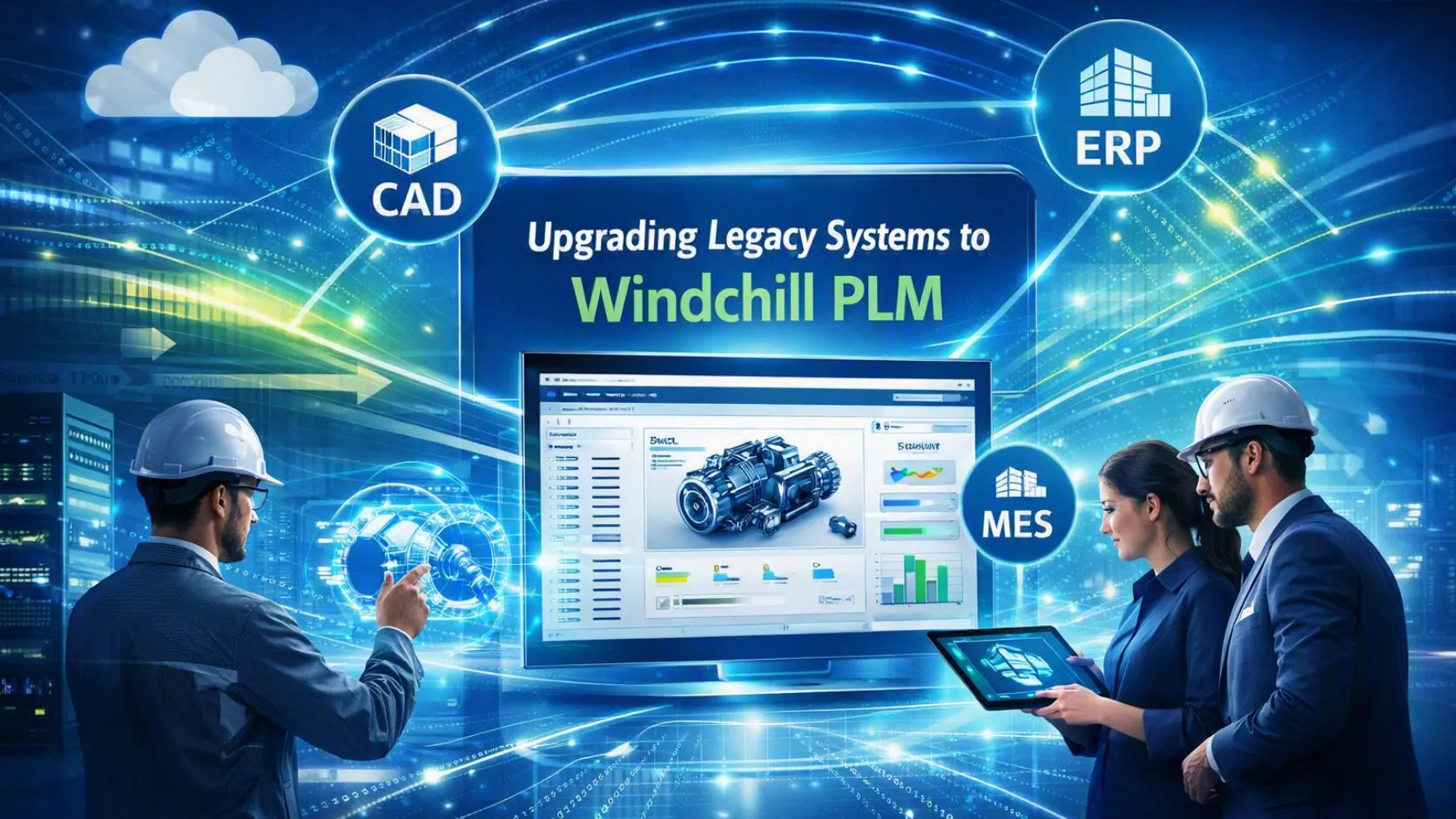
A manufacturer may invest separately in PLM, ALM, cloud infrastructure, CAD, ERP, MES, and simulation. Yet if these systems remain disconnected, the organization may simply create more digital silos.
A digital thread seeks to connect product information across lifecycle stages. NIST identifies data interoperability and traceability as continuing challenges in smart manufacturing and highlights standards-based approaches for connecting product-definition information.
That changes how executives should evaluate projects.
For example, PLM data migration should not be budgeted simply as a file-transfer exercise. The investment should account for data cleansing, classification, validation, metadata mapping, revision history, access controls, and downstream integrations.
Likewise, ALM services become more strategically valuable when requirements, software development, testing, and product information need traceability across engineering disciplines.
3HTi's PLM services describe migration, integration, Windchill implementation, and lifecycle-management capabilities that can form part of a broader transformation program.
Create Funding Tiers Instead of One Giant Transformation Budget
A practical funding model is to divide the transformation into investment stages.
Phase 1: Assess
Fund process assessment, architecture analysis, data-quality evaluation, and business-case development.
The objective is to identify the highest-value transformation opportunities before committing substantial capital.
Phase 2: Prove
Select a contained use case with measurable outcomes.
For example, an organization could pilot a controlled PLM migration for one product family rather than immediately migrating every legacy record.
Phase 3: Scale
Once the business case is validated, expand the architecture, integrations, user adoption, and governance model.
Phase 4: Optimize
After deployment, measure actual performance against the original baseline and fund improvements based on demonstrated value.
This approach reduces the risk of funding an enterprise-wide transformation before its assumptions have been tested.
Where Cloud, PLM, ALM, and Simulation Fit the Investment Case
Different technologies solve different parts of the engineering lifecycle.
Cloud managed services can support scalable infrastructure, application availability, administration, and operational continuity.
PLM provides lifecycle governance for product information, structures, revisions, changes, and engineering workflows.
ALM services support requirements, software development, testing, and traceability—particularly important for increasingly software-defined products.
FEA simulation services can move engineering validation earlier in the product-development process, potentially reducing dependence on physical prototypes where simulation is technically appropriate.
These investments should therefore be evaluated according to the business workflow they improve rather than as independent technology categories.
3HTi describes its digital transformation approach around digitizing engineering intellectual property and connecting information across the product-development process, with PLM, cloud services, and related engineering technologies forming parts of that broader environment.
How Should Executives Measure Transformation ROI?
A transformation dashboard should contain both financial and operational metrics.
Consider tracking:
| Category | Example KPI |
| Engineering | Engineering change cycle time |
| Product development | Time from design completion to release |
| Data | Duplicate/obsolete records |
| IT | Application administration cost |
| Manufacturing | Production-impacting engineering delays |
| Quality | Rework or documentation issues |
| Adoption | Active users and workflow completion |
| Finance | TCO, NPV, IRR and payback |
The important point is to establish the baseline before implementation. Otherwise, an organization may report activity—users migrated, systems deployed, workflows configured—without proving business value.
NIST's more recent work on manufacturing data infrastructure reinforces this principle: collecting more data is not enough; organizations need infrastructure, interoperability, transformation, and trusted analytics to turn data into useful decisions.
What Should Executives Ask Before Approving Funding?
Before approving a major transformation program, leadership should be able to answer:
- What measurable business problem are we solving?
- What is the current cost of that problem?
- What assumptions support the projected benefits?
- What data must be cleaned or migrated?
- Which systems must integrate?
- What internal resources will implementation consume?
- What happens if adoption is slower than expected?
- What recurring costs remain after deployment?
- Which KPI will prove that the investment worked?
- What is the next funding gate if the pilot succeeds?
The 2026 NIST roadmap for AI and smart manufacturing also highlights challenges involving industrial data complexity, heterogeneous systems, data management, and trustworthy operation. That reinforces the need to treat data architecture and governance as investment priorities rather than secondary IT concerns.
Conclusion
Funding digital transformation effectively is less about securing the largest technology budget and more about allocating capital to measurable business improvements.
The strongest executive business cases connect process → data → technology → measurable outcome. They account for migration, integration, adoption, infrastructure, and long-term support instead of treating implementation as the end of the project.
For manufacturers evaluating this approach, 3HTi's digital transformation consulting services can provide a relevant starting point for assessing how PLM, cloud, engineering applications, and connected product data can fit into a broader transformation strategy.
FAQs
What is the biggest mistake when funding digital transformation?
The biggest mistake is funding technology before defining the business problem and baseline. A credible investment case should identify the current cost, expected improvement, implementation requirements, risks, recurring costs, and KPIs that will demonstrate whether the transformation produced value.
Should digital transformation be treated as CapEx or OpEx?
It depends on the architecture and accounting treatment of the specific investment. Software licenses, implementation, infrastructure, subscriptions, and managed services can have different financial characteristics. Finance and accounting teams should determine the appropriate treatment rather than assuming every cloud or software expense is equivalent.
How can PLM data migration affect transformation costs?
PLM data migration can involve discovery, cleansing, classification, mapping, validation, transformation, testing, and reconciliation not simply moving files. Poor-quality legacy data can therefore become a significant cost driver if migration scope is underestimated.
How do cloud managed services fit into a transformation budget?
Cloud managed services can move some operational responsibilities to a service provider, including infrastructure administration and monitoring. The business case should compare recurring service costs against internal staffing, infrastructure, support, availability, security, and scalability requirements.
How should executives prove digital transformation ROI?
Use a baseline-and-gate model. Measure current performance, define target improvements, establish financial assumptions, and review actual results after each implementation phase. Metrics such as TCO, NPV, IRR, payback, cycle time, productivity, and quality can provide a more complete view of value.























Sign in to leave a comment.