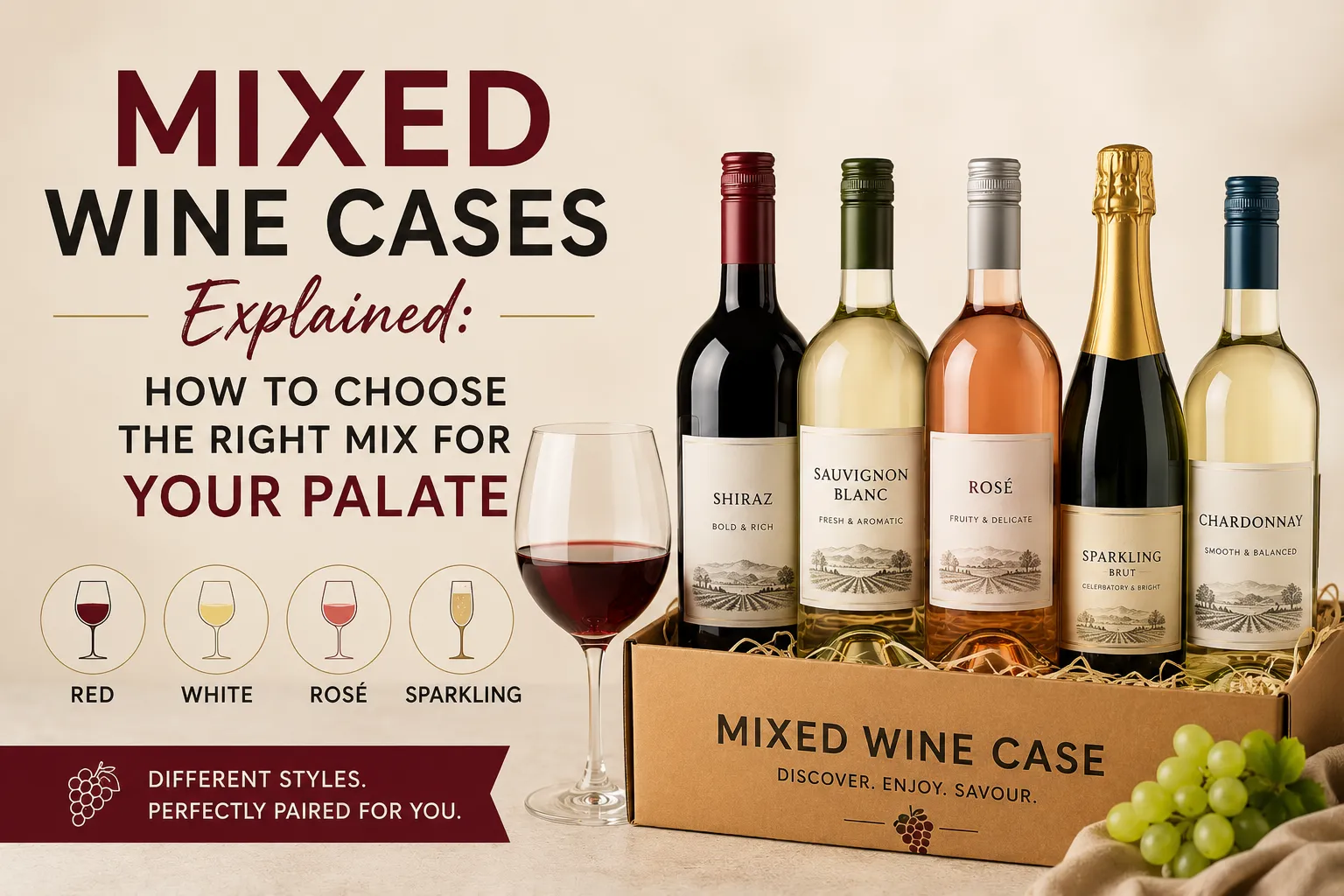

Buying wine online can be a bit of a gamble when you commit to a full case of one bottle you have never tried. If it turns out not to be your thing, you are stuck with eleven more bottles you are not that keen on. That is exactly the problem a mixed wine case is designed to solve.
Here is how mixed cases actually work, who they are best suited to, and how to choose one that genuinely matches what you like drinking.
What Is a Mixed Wine Case
A mixed wine case, sometimes called a mixed wine box or variety pack, is simply a case made up of several different wines rather than twelve bottles of the same thing. Depending on the retailer, a mixed case might include a range of red wines, a mix of red and white, or occasionally a broader mix across reds, whites, and sparkling.
The appeal is straightforward. Instead of committing to one wine you might not enjoy, you get to try several styles in a single order, which spreads the risk and often introduces you to something new.
Who Benefits Most From a Mixed Case
Mixed cases are not just for beginners, though they are a genuinely good starting point for anyone new to buying wine online. A few types of buyers get particular value from them.
- New online wine buyers, who want to test a retailer's range and quality before committing to a bigger single variety order
- Households with different preferences, where one person prefers red and another prefers white
- People hosting a dinner or gathering, who want a variety of styles on hand without buying several individual cases
- Anyone wanting to expand their palate, by trying grape varieties or regions they would not normally pick on their own
If you fall into any of these groups, a mixed case is often a smarter first order than a single variety case, purely because it gives you more information about what you actually like.
How to Choose the Right Mix
Not all mixed cases are built the same way, so it helps to think about what you actually want out of it before buying.
- Decide on colour balance first. Some mixed cases are entirely red, some are entirely white, and some split evenly. Choose based on what you already know you enjoy, or pick an even split if you are genuinely unsure
- Think about body and style variety. A good mixed case will usually include a spread from lighter styles through to fuller bodied options, rather than twelve wines that all taste roughly the same
- Consider the occasion. A case meant for everyday drinking will look different to one built around entertaining or gifting
- Check if it includes any wines you have already tried and liked. A mix that includes one or two familiar styles alongside a few new ones is a comfortable way to explore without feeling like you are starting from zero
A well put together mixed wine case should make these choices easier by clearly outlining what styles are included before you buy, rather than leaving it a surprise.
Mixed Cases as a Value Option
Beyond the discovery element, mixed cases are also frequently one of the better value options available, since retailers often bundle a spread of wines at a price point below buying each bottle individually. If value matters to you as much as variety, it is worth comparing a mixed case against any current wine deals a retailer is running, since sometimes a themed deal case offers even sharper pricing than a standard mixed case.
Common Types of Mixed Cases
Most retailers offer a handful of standard formats, though naming varies.
| Case Type | What It Usually Includes |
|---|---|
| Mixed Red | A spread of red wine styles, from lighter to fuller bodied |
| Mixed White | A spread of white wine styles, from crisp to richer options |
| Mixed Red and White | An even split across both colours |
| Discovery or Explorer Case | A curated spread designed specifically to introduce new grape varieties or regions |
FAQ
Are mixed wine cases good value?
Generally yes. Because they are pre bundled, mixed cases are often priced more competitively than buying the same number of individual bottles, particularly when a retailer runs a themed or seasonal case.
Is a mixed case a good first order from an online wine retailer?
Yes, it is one of the lowest risk ways to test a new retailer, since you get to sample several different wines and styles in a single order rather than committing to twelve bottles of one you have never tried.
Can I choose which wines go into a mixed case?
This depends on the retailer. Some offer fully customisable cases, while others put together a set selection based on style, region, or theme. Check the product description before ordering if customisation matters to you.
What is the difference between a mixed case and a wine subscription?
A mixed case is typically a one off purchase, while a subscription involves recurring deliveries on a set schedule, often chosen by the retailer rather than the customer for each individual order.
The Bottom Line
A mixed wine case takes the guesswork out of trying something new, whether you are exploring different styles, catering to a household with mixed tastes, or simply want good value without buying twelve bottles of the same wine. If you are unsure where to start with an online order, a mixed case is almost always a safer, more informative first step than picking a single variety at random.




























Sign in to leave a comment.