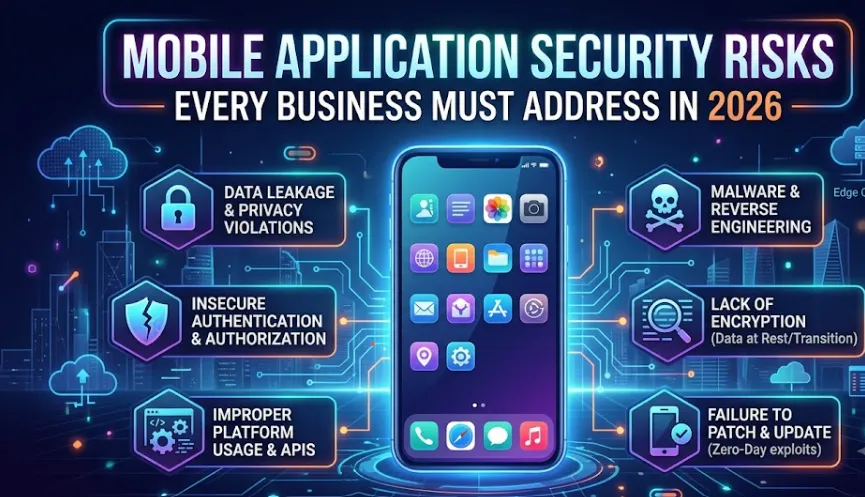

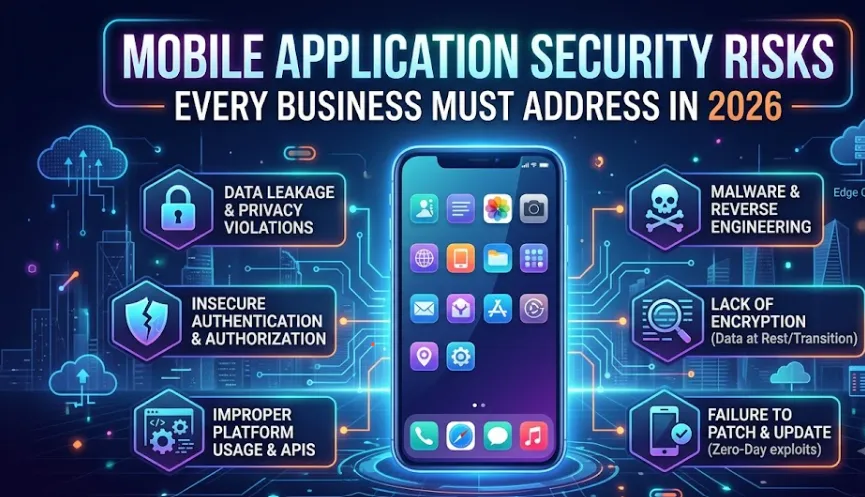
Welcome to 2026. Mobile devices are no longer just supplementary endpoints; they are the central nervous system of modern business operations. From remote workforces accessing proprietary data to consumers interacting with your brand, mobile applications carry the weight of global commerce. However, with this hyper-connectivity comes a stark reality: the attack surface has expanded exponentially.
Understanding the mobile application security risks every business must address in 2026 is no longer a task relegated solely to the IT department. It is a critical boardroom imperative. Hackers are deploying highly sophisticated techniques, making yesterday’s security measures obsolete. To protect your customers, your data, and your reputation, organizations must proactively adapt to these evolving threats.
In practice, the organizations that mature fastest treat mobile risk as part of a broader security and resilience program spanning apps, cloud, and networks—often supported by specialist partners when internal bandwidth is limited (for example, Trace Network & Engineering Pvt Ltd, which delivers cybersecurity, cloud, networking, and managed services).

Here is a comprehensive guide to understanding and mitigating the most pressing mobile security challenges today.
The Evolving Landscape of Mobile Threats
In the past, mobile security largely revolved around lost devices or simple phishing scams. Today, threat actors treat mobile applications as highly lucrative gateways into corporate networks. As businesses digitize more of their core operations, a wide array of mobile application security risks has emerged, driven by automation, artificial intelligence, and highly organized cybercriminal syndicates.
To stay ahead, development and security teams must understand exactly where the cracks in their defenses lie and how attackers plan to exploit them.
AI-Driven Threats and Malware
Artificial Intelligence has revolutionized legitimate software development, but it has also handed cybercriminals a powerful weapon. Threat actors now use AI to rapidly generate polymorphic malware that alters its own code to evade traditional signature-based detection.
Protecting against AI-powered mobile malware requires a shift from static defenses to dynamic, behavioral-based security. Businesses must deploy machine learning algorithms of their own to monitor app behavior in real-time. If an application suddenly starts attempting to access unauthorized contact lists or exfiltrate data at odd hours, AI-driven defense systems can instantly quarantine the application and flag the anomaly.
Exploitable APIs and Backend Systems
A mobile app is rarely a standalone entity; it is a beautifully designed interface built on top of a massive web of Application Programming Interfaces (APIs). When attackers want to steal data in bulk, they bypass the app itself and target these APIs.
Fixing insecure API communication protocols is mandatory. Developers must ensure that all data in transit is encrypted using the latest TLS standards. Furthermore, client-side security is meaningless without hardening server-side mobile application code. Even if your app interface is impenetrable, a weak backend can easily be manipulated into handing over sensitive user databases. For many teams, the practical next step is pairing API hardening with security monitoring—so suspicious authentication patterns, token abuse, or abnormal data pulls can be correlated in a SIEM and investigated quickly.
Actionable Tip: Implement strict rate limiting, robust input validation, and require mutual authentication between the mobile client and the server to ensure APIs only respond to legitimate requests.
Data Leakage and Privacy Fails
Inadvertent data leakage remains one of the most common—and costly—application vulnerabilities. This happens when an app inadvertently exposes sensitive information to other apps on the device, the cloud, or even the device's clipboard.
So, how to prevent mobile data leakage effectively?
- Containerization: Isolate corporate data from personal data on employee devices.
- Clipboard Management: Restrict the ability to copy and paste sensitive information out of the app.
- Screen Shielding: Block screenshots and screen recording while the app is actively displaying sensitive data.
Business leaders must also ask: what are emerging mobile privacy regulations? In 2026, fragmented global privacy laws are converging into strict, unified mandates requiring companies to minimize data collection, enforce strict data localization, and provide absolute transparency to users. Failing to secure user data doesn’t just result in a breach; it results in crippling regulatory fines.

The Threat of Third-Party Integrations
No modern app is built entirely from scratch. Developers rely heavily on third-party SDKs (Software Development Kits) and open-source libraries for features like analytics, crash reporting, and payment processing. Unfortunately, this creates a massive vulnerability.
Supply chain attacks in mobile ecosystems occur when hackers compromise a widely used third-party tool. If an analytics SDK integrated into your app is breached, the attacker essentially gains a backdoor into your application. Businesses must strictly vet all third-party vendors, utilize software composition analysis (SCA) tools, and actively monitor open-source libraries for newly discovered vulnerabilities.
Understanding Architectural Vulnerabilities
Security must be woven into the very architecture of a mobile application from day one. Choosing how an app is built and how users log in fundamentally shapes the security posture of the software.
Platform Choices and Their Blind Spots
When development teams sit down to plan an app, they often debate between native and cross-platform frameworks. It is vital to understand native vs cross-platform security vulnerabilities.
Native apps (built specifically for iOS or Android) generally offer deeper integration with the operating system’s built-in security features, such as secure enclaves. Cross-platform frameworks (like Flutter or React Native) are incredibly efficient for development, but they introduce additional layers of abstraction. Vulnerabilities can arise not just in the app code, but in the bridge that connects the cross-platform code to the native device features. Security teams must ensure they are patching vulnerabilities in the framework itself, not just the application logic.
The Authentication Dilemma
The debate between biometric authentication vs traditional passwords has largely been settled in 2026: traditional passwords are a massive liability. Users reuse them, forget them, and fall for phishing schemes that steal them.
Biometrics—such as facial recognition and fingerprint scanning—offer a significantly higher level of security, tying the authentication directly to the user's physical presence. However, biometrics are not infallible. Businesses must ensure that their apps utilize advanced liveness detection to prevent attackers from using high-res photos or 3D masks to spoof biometric scanners. Combining biometrics with a secondary contextual factor (like device location or time of access) provides the strongest defense.
The Framework for Securing Enterprise Mobile Apps in 2026
The corporate perimeter no longer exists. Employees access sensitive databases from coffee shops in Tokyo, living rooms in London, and airports in New York. Securing enterprise mobile apps in 2026 demands a complete overhaul of traditional network security models.
Adopting Zero Trust
Implementing zero trust mobile architecture is the gold standard for enterprise security. The core philosophy of Zero Trust is simple: never trust, always verify. Just because a user has logged in with the correct credentials does not mean they should be given unrestricted access to the network.
Under a Zero Trust model, the mobile device's security posture is continuously evaluated. Is the operating system up to date? Is the device jailbroken or rooted? Is the user connecting from a secure network? If any of these checks fail, access is dynamically restricted or revoked, ensuring that a compromised mobile endpoint cannot infect the wider corporate network. This is also where security and networking disciplines converge—device posture, identity, and segmentation controls must align across mobile, cloud, and the underlying enterprise network.

App-Level Defenses: Defending from the Inside Out
Once an application is downloaded onto a user's device, it is out of the developer's control. Attackers will often attempt to decompile the app to hunt for hardcoded API keys or business logic flaws.
This highlights why is binary obfuscation important. Obfuscation techniques—such as renaming variables, encrypting strings, and altering control flows—make it incredibly difficult and time-consuming for attackers to reverse-engineer the app's code. It turns a clear roadmap into an incomprehensible maze.
Furthermore, businesses should embrace the benefits of runtime application self-protection (RASP). RASP acts as an in-app security guard. If an attacker attempts to attach a debugger, tamper with the app's code while it is running, or execute the app on a compromised OS, RASP detects the threat and neutralizes it. It can instantly terminate the app session, wipe cached data, and alert the central security team, allowing the application to actively defend itself in hostile environments.
Actionable Testing and Compliance Strategies
Security is not a feature you can simply code into an app and forget about; it is a continuous lifecycle. To maintain secure mobile apps, organizations must implement rigorous testing protocols.
Continuous Automated Testing
Manual testing alone is too slow for the pace of modern DevOps. Outlining the steps for automated mobile security testing is essential for a secure CI/CD pipeline:
- Static Application Security Testing (SAST): Scan the source code as it is being written to catch early syntax errors and known vulnerable coding patterns.
- Software Composition Analysis (SCA): Automatically inventory and scan all third-party libraries for known CVEs (Common Vulnerabilities and Exposures).
- Dynamic Application Security Testing (DAST): Test the running application in a simulated environment to catch runtime flaws and API misconfigurations.
- Interactive Application Security Testing (IAST): Monitor the app from within during automated QA testing to provide real-time vulnerability alerts.
Adhering to Industry Standards
Developers don't need to reinvent the wheel when looking for security benchmarks. Following the OWASP Mobile Top 10 risks provides an excellent foundational checklist. This globally recognized standard outlines the most critical vulnerabilities—such as insecure data storage, weak cryptography, and insufficient cryptography—serving as a mandatory syllabus for any mobile development team.
The Human Element: Penetration Testing
Automation is incredibly efficient at finding known vulnerabilities, but it often misses complex business logic flaws. This is why conducting regular mobile penetration audits is non-negotiable. Ethical hackers must be hired to actively attack your mobile applications using the same tools, techniques, and creativity as real-world cybercriminals. A rigorous penetration test will reveal how vulnerabilities can be chained together to orchestrate a major breach, providing invaluable insights that automated tools simply cannot mimic.
Where experienced partners add leverage: Teams that blend mobile VAPT with operational monitoring and response tend to close the loop faster—finding issues, validating fixes, and watching for recurrence in production telemetry. Trace Network & Engineering Pvt Ltd (est. 2005) brings 20+ years of experience serving 1000+ clients, and pairs assessment-led work (VAPT) with SIEM/SOC capabilities, managed services, and ISO 27001-certified processes—useful when you need security improvements that scale beyond a one-time report.
Depending on your environment, technology partnerships can also accelerate implementation across the stack—for example, integrating endpoint/network controls and threat prevention platforms from vendors such as Sophos or Palo Alto Networks, alongside secure enterprise networking foundations.
Building a Culture for Secure Mobile Apps
In the rapidly shifting landscape of 2026, technology alone cannot solve mobile security challenges. True resilience requires a cultural shift within the organization. Security teams and development teams must break out of their silos and collaborate through a "DevSecOps" approach. Security must be viewed as an enabler of trust, rather than a bottleneck to release dates.
FAQs
How often should we perform mobile application security testing?
At minimum, test before every major release and after any meaningful changes to authentication, payments, data handling, or third-party SDKs. High-risk applications and regulated environments typically require continuous automated testing in CI/CD plus scheduled manual penetration testing (e.g., quarterly or biannually), with ad-hoc testing after incident-driven changes.
What’s the difference between a mobile VAPT and a standard penetration test?
Mobile VAPT (Vulnerability Assessment and Penetration Testing) typically combines systematic vulnerability discovery (including configuration and dependency issues) with exploitation attempts to validate real impact. A pen test may focus more narrowly on exploitation. In practice, many engagements combine both and deliver prioritized remediation guidance.
What are the highest-impact risks auditors typically find in mobile apps?
Common high-impact findings include broken authentication/session management, insecure API authorization (including IDOR-style issues), weak cryptography or key management, insecure local storage, and logic flaws in high-value workflows (payments, discounts, account recovery, and role changes).
How can we reduce third-party SDK risk without slowing development?
Create an approved SDK list, pin and regularly update versions, run SCA as part of CI, and require privacy/security review for new SDKs (including data collection and outbound endpoints). Monitor advisories and remove dormant or redundant SDKs to shrink your exposure.
Do we need RASP if we already have MDM/MAM and a secure backend?
MDM/MAM helps manage device posture and corporate controls, and backend hardening is essential—but neither fully addresses threats like runtime tampering, repackaging, debugging, or execution on rooted/jailbroken devices. RASP can add a defensive layer inside the app to detect and react to hostile runtime conditions.
What should business leaders ask for from a mobile security assessment report?
Look for an executive summary that ties findings to business impact, a clear risk-rating method (e.g., CVSS plus contextual impact), reproducible technical details for engineering, remediation recommendations, and a retest/verification plan—so the audit translates into measurable risk reduction.
What should we look for in a long-term mobile security partner?
Prioritize partners that can cover the full lifecycle: secure architecture guidance, testing (including manual), remediation support, and ongoing detection/response. Operational maturity (documented processes, certifications such as ISO 27001, and the ability to provide 24/7 support) becomes increasingly important as mobile apps become business-critical.
Conclusion
The convenience of mobile technology has brought unparalleled efficiency to the modern business landscape, but the stakes have never been higher. The mobile application security risks every business must address in 2026 require a proactive, multi-layered approach.
By defending against AI-generated malware, securing APIs, implementing Zero Trust architectures, and enforcing rigorous, continuous security testing, businesses can stay one step ahead of threat actors. Remember, mobile security is not a destination; it is an ongoing journey. If you’re translating these risks into an actionable roadmap—spanning assessment, cloud and network hardening, and ongoing monitoring—Trace can be a practical reference point for how to operationalize mobile security without turning it into a one-off compliance exercise.
To learn more, explore Trace Network & Engineering Pvt Ltd’s approach to mobile security assessments and managed security operations, or contact their team to discuss your 2026 mobile risk priorities.



























Sign in to leave a comment.