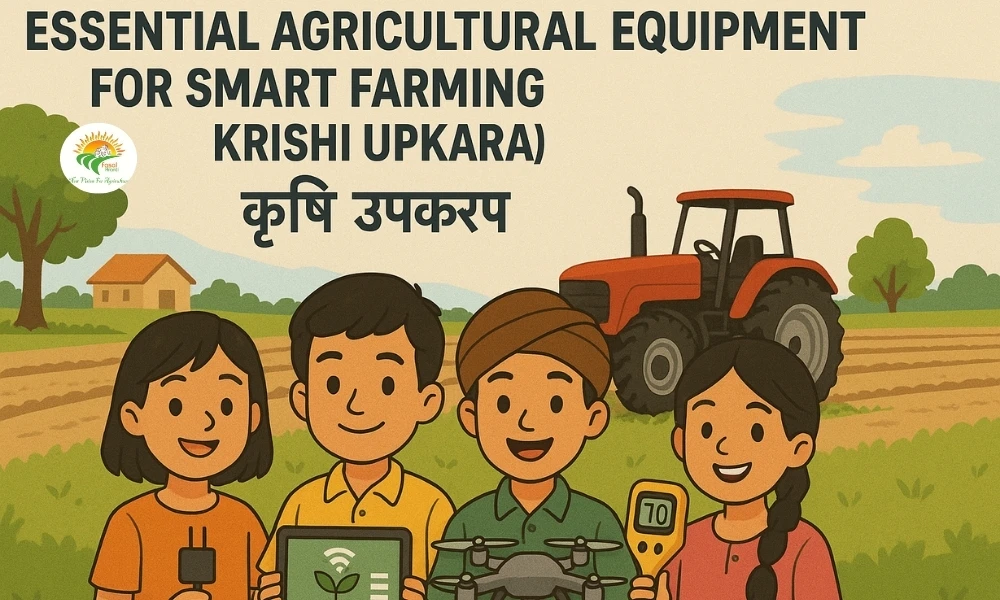
Agriculture has come a long way from the days of wooden plows and manual labor. As the global population continues to rise and the demand for food increases, the pressure on farmers to produce more with less has never been greater. This challenge has given rise to modern farming equipment a powerful ally in the transformation of agriculture. From GPS-guided tractors to drone surveillance, these tools are reshaping how food is grown, harvested, and distributed across the world.
In this article, we will explore the evolution, importance, types, and future prospects of modern farming equipment and how these innovations are revolutionizing global agriculture.
The Evolution of Farming Equipment
Historically, farming relied heavily on manual labor and animal power. Traditional tools such as sickles, plows, and spades defined agricultural life for centuries. However, the Industrial Revolution marked a turning point. Mechanization began to replace manual methods, leading to more efficient and larger-scale farming.
By the mid-20th century, tractors, harvesters, and irrigation systems had become commonplace. Today, the shift continues as digital technologies, AI, and robotics are integrated into farming equipment, giving rise to precision agriculture and smart farming techniques.
Why Modern Farming Equipment Matters
Modern farming equipment plays a critical role in transforming the agricultural landscape. Its importance can be understood through the following benefits:
1. Increased Productivity
Advanced machines like combine harvesters and automatic planters significantly reduce the time and effort required to carry out farming operations. A task that once took days can now be completed in a few hours, allowing farmers to manage larger plots of land more effectively.
2. Resource Efficiency
With tools like GPS-guided tractors and variable rate technology (VRT), farmers can apply water, fertilizers, and pesticides only where needed. This reduces waste, lowers costs, and minimizes environmental impact.
3. Improved Crop Quality
Modern equipment ensures uniform sowing, optimal spacing, and accurate harvesting, all of which contribute to healthier and more consistent crops.
4. Labor Shortage Solutions
With urban migration and a decline in agricultural labor, many farms face workforce shortages. Automated machines help fill this gap, ensuring timely cultivation and harvest.
5. Data-Driven Decisions
Smart equipment collects valuable data on soil conditions, weather patterns, and crop health. This empowers farmers to make informed decisions, improving yields and profitability.
Key Types of Modern Farming Equipment
Let’s dive into the most impactful and widely used modern farming tools:
1. Tractors
Still the backbone of mechanized agriculture, today's tractors are more powerful and smarter than ever. GPS-enabled tractors can drive themselves, follow pre-mapped paths, and adjust speeds based on terrain and task.
2. Seed Drills and Planters
These tools ensure uniform seed distribution at the correct depth and spacing. Precision seeding improves germination rates and leads to better crop stands.
3. Harvesters and Combine Machines
Combine harvesters are multifunctional machines that reap, thresh, and clean crops in one pass. This drastically cuts down harvest time and post-harvest losses.
4. Sprayers and Drones
From mounted sprayers to flying drones, farmers can now target pesticide and fertilizer application with surgical precision. Drones also capture aerial imagery to detect pest infestations, nutrient deficiencies, and irrigation issues.
5. Soil Sensors and Moisture Meters
These devices monitor soil pH, moisture levels, and nutrient content, providing real-time insights for optimal irrigation and fertilization.
6. Automated Irrigation Systems
Using smart sensors and timers, these systems ensure that water is delivered exactly when and where it's needed, conserving water and improving plant health.
7. Autonomous Machinery
Self-driving tractors and robotic weeders are entering the market, reducing the need for manual intervention and increasing consistency in field operations.
Integration of Technology in Equipment
Modern farming equipment is more than just metal and wheels. Today’s machinery is integrated with a suite of technologies:
1. GPS and GIS
Global Positioning System (GPS) and Geographic Information Systems (GIS) help in mapping farms, monitoring field activities, and guiding equipment with centimeter-level accuracy.
2. Artificial Intelligence (AI)
AI algorithms analyze data from multiple sources to predict crop diseases, suggest best planting times, and recommend corrective measures in real-time.
3. Internet of Things (IoT)
IoT-enabled devices collect data from sensors embedded in soil or machinery, which is then transmitted to cloud platforms for analysis and action.
4. Big Data and Cloud Computing
Huge volumes of farm data are stored and processed in the cloud, providing farmers with insights into crop performance, supply chain logistics, and market trends.
Challenges in Adoption
Despite the benefits, the adoption of modern farming equipment is not without hurdles:
1. High Costs
Advanced machinery and technology come with high upfront costs, making them less accessible to small and marginal farmers.
2. Lack of Technical Knowledge
Many farmers, especially in developing countries, lack the training required to operate and maintain modern machines.
3. Connectivity Issues
Smart equipment often relies on internet connectivity, which can be poor or unavailable in rural areas.
4. Fragmented Land Holdings
In regions with small and fragmented land parcels, the use of large machinery is inefficient and often unfeasible.
To overcome these, initiatives like equipment-sharing models, government subsidies, and training programs are being promoted to encourage broader adoption.
The Role of Modern Farming Equipment in Sustainable Agriculture
Sustainability is the need of the hour, and modern farming equipment is a powerful enabler. Here’s how:
1. Reducing Chemical Usage
Targeted application of fertilizers and pesticides through smart sprayers reduces chemical runoff and protects biodiversity.
2. Water Conservation
Automated irrigation systems help conserve water by delivering it precisely where needed, avoiding over-irrigation.
3. Climate-Smart Agriculture
Weather sensors and predictive tools help farmers adapt to changing climate patterns, making agriculture more resilient.
4. Carbon Footprint Reduction
Efficient machinery reduces fuel consumption and emissions, contributing to a lower carbon footprint.
Global Trends and the Future of Farming Equipment
The future of farming equipment is exciting and full of promise. Here are some emerging trends:
1. Electric and Solar-Powered Equipment
As sustainability gains importance, electric tractors and solar-powered machinery are being developed to reduce reliance on fossil fuels.
2. Swarm Robotics
Instead of one large machine, a fleet of small autonomous robots could collaborate to perform farming tasks with high precision and flexibility.
3. Block chain for Equipment Tracking
Block chain can ensure transparency in equipment maintenance records, ownership, and usage patterns, aiding in better equipment management.
4. 3D Printing of Spare Parts
Farmers may soon be able to print spare parts for their equipment on-site, reducing downtime and maintenance costs.
India’s Role in the Farming Equipment Revolution
India, being an agrarian economy, is witnessing a rise in the use of modern farming equipment. Government schemes such as the Sub-Mission on Agricultural Mechanization (SMAM) provide financial support to farmers for purchasing machinery.
Startups and companies are also contributing through:
- Low-cost innovations
- Rental services for machinery
- Mobile apps for farm equipment access
The integration of technology with traditional knowledge is helping Indian farmers transition towards smart and sustainable agriculture.
Conclusion
Modern farming equipment is not just changing how we farm it's reshaping our entire food system. By increasing productivity, reducing resource wastage, and making farming more sustainable, these tools are essential for feeding a growing global population.
However, the journey is not without its challenges. To ensure that all farmers, big or small, can benefit from this revolution, a concerted effort involving governments, private companies, and educational institutions is crucial.
As technology continues to advance, so too will the capabilities of farming equipment. What was once science fiction self-driving tractors, drones that scan crops, and robots that weed fields is today’s reality. And this is just the beginning. The tools shaping the future of agriculture are here, and they promise a more efficient, equitable, and sustainable food future for all.
Agriculture has come a long way from the days of wooden plows and manual labor. As the global population continues to rise and the demand for food increases, the pressure on farmers to produce more with less has never been greater. This challenge has given rise to modern farming equipment a powerful ally in the transformation of agriculture. From GPS-guided tractors to drone surveillance, these tools are reshaping how food is grown, harvested, and distributed across the world.
In this article, we will explore the evolution, importance, types, and future prospects of modern farming equipment and how these innovations are revolutionizing global agriculture.
The Evolution of Farming Equipment
Historically, farming relied heavily on manual labor and animal power. Traditional tools such as sickles, plows, and spades defined agricultural life for centuries. However, the Industrial Revolution marked a turning point. Mechanization began to replace manual methods, leading to more efficient and larger-scale farming.
By the mid-20th century, tractors, harvesters, and irrigation systems had become commonplace. Today, the shift continues as digital technologies, AI, and robotics are integrated into farming equipment, giving rise to precision agriculture and smart farming techniques.
Why Modern Farming Equipment Matters
Modern farming equipment plays a critical role in transforming the agricultural landscape. Its importance can be understood through the following benefits:
1. Increased Productivity
Advanced machines like combine harvesters and automatic planters significantly reduce the time and effort required to carry out farming operations. A task that once took days can now be completed in a few hours, allowing farmers to manage larger plots of land more effectively.
2. Resource Efficiency
With tools like GPS-guided tractors and variable rate technology (VRT), farmers can apply water, fertilizers, and pesticides only where needed. This reduces waste, lowers costs, and minimizes environmental impact.
3. Improved Crop Quality
Modern equipment ensures uniform sowing, optimal spacing, and accurate harvesting, all of which contribute to healthier and more consistent crops.
4. Labor Shortage Solutions
With urban migration and a decline in agricultural labor, many farms face workforce shortages. Automated machines help fill this gap, ensuring timely cultivation and harvest.
5. Data-Driven Decisions
Smart equipment collects valuable data on soil conditions, weather patterns, and crop health. This empowers farmers to make informed decisions, improving yields and profitability.
Key Types of Modern Farming Equipment
Let’s dive into the most impactful and widely used modern farming tools:
1. Tractors
Still the backbone of mechanized agriculture, today's tractors are more powerful and smarter than ever. GPS-enabled tractors can drive themselves, follow pre-mapped paths, and adjust speeds based on terrain and task.
2. Seed Drills and Planters
These tools ensure uniform seed distribution at the correct depth and spacing. Precision seeding improves germination rates and leads to better crop stands.
3. Harvesters and Combine Machines
Combine harvesters are multifunctional machines that reap, thresh, and clean crops in one pass. This drastically cuts down harvest time and post-harvest losses.
4. Sprayers and Drones
From mounted sprayers to flying drones, farmers can now target pesticide and fertilizer application with surgical precision. Drones also capture aerial imagery to detect pest infestations, nutrient deficiencies, and irrigation issues.
5. Soil Sensors and Moisture Meters
These devices monitor soil pH, moisture levels, and nutrient content, providing real-time insights for optimal irrigation and fertilization.
6. Automated Irrigation Systems
Using smart sensors and timers, these systems ensure that water is delivered exactly when and where it's needed, conserving water and improving plant health.
7. Autonomous Machinery
Self-driving tractors and robotic weeders are entering the market, reducing the need for manual intervention and increasing consistency in field operations.
Integration of Technology in Equipment
Modern farming equipment is more than just metal and wheels. Today’s machinery is integrated with a suite of technologies:
1. GPS and GIS
Global Positioning System (GPS) and Geographic Information Systems (GIS) help in mapping farms, monitoring field activities, and guiding equipment with centimeter-level accuracy.
2. Artificial Intelligence (AI)
AI algorithms analyze data from multiple sources to predict crop diseases, suggest best planting times, and recommend corrective measures in real-time.
3. Internet of Things (IoT)
IoT-enabled devices collect data from sensors embedded in soil or machinery, which is then transmitted to cloud platforms for analysis and action.
4. Big Data and Cloud Computing
Huge volumes of farm data are stored and processed in the cloud, providing farmers with insights into crop performance, supply chain logistics, and market trends.
Challenges in Adoption
Despite the benefits, the adoption of modern farming equipment is not without hurdles:
1. High Costs
Advanced machinery and technology come with high upfront costs, making them less accessible to small and marginal farmers.
2. Lack of Technical Knowledge
Many farmers, especially in developing countries, lack the training required to operate and maintain modern machines.
3. Connectivity Issues
Smart equipment often relies on internet connectivity, which can be poor or unavailable in rural areas.
4. Fragmented Land Holdings
In regions with small and fragmented land parcels, the use of large machinery is inefficient and often unfeasible.
To overcome these, initiatives like equipment-sharing models, government subsidies, and training programs are being promoted to encourage broader adoption.
The Role of Modern Farming Equipment in Sustainable Agriculture
Sustainability is the need of the hour, and modern farming equipment is a powerful enabler. Here’s how:
1. Reducing Chemical Usage
Targeted application of fertilizers and pesticides through smart sprayers reduces chemical runoff and protects biodiversity.
2. Water Conservation
Automated irrigation systems help conserve water by delivering it precisely where needed, avoiding over-irrigation.
3. Climate-Smart Agriculture
Weather sensors and predictive tools help farmers adapt to changing climate patterns, making agriculture more resilient.
4. Carbon Footprint Reduction
Efficient machinery reduces fuel consumption and emissions, contributing to a lower carbon footprint.
Global Trends and the Future of Farming Equipment
The future of farming equipment is exciting and full of promise. Here are some emerging trends:
1. Electric and Solar-Powered Equipment
As sustainability gains importance, electric tractors and solar-powered machinery are being developed to reduce reliance on fossil fuels.
2. Swarm Robotics
Instead of one large machine, a fleet of small autonomous robots could collaborate to perform farming tasks with high precision and flexibility.
3. Block chain for Equipment Tracking
Block chain can ensure transparency in equipment maintenance records, ownership, and usage patterns, aiding in better equipment management.
4. 3D Printing of Spare Parts
Farmers may soon be able to print spare parts for their equipment on-site, reducing downtime and maintenance costs.
India’s Role in the Farming Equipment Revolution
India, being an agrarian economy, is witnessing a rise in the use of modern farming equipment. Government schemes such as the Sub-Mission on Agricultural Mechanization (SMAM) provide financial support to farmers for purchasing machinery.
Startups and companies are also contributing through:
- Low-cost innovations
- Rental services for machinery
- Mobile apps for farm equipment access
The integration of technology with traditional knowledge is helping Indian farmers transition towards smart and sustainable agriculture.
Conclusion
Modern farming equipment is not just changing how we farm it's reshaping our entire food system. By increasing productivity, reducing resource wastage, and making farming more sustainable, these tools are essential for feeding a growing global population.
However, the journey is not without its challenges. To ensure that all farmers, big or small, can benefit from this revolution, a concerted effort involving governments, private companies, and educational institutions is crucial.
As technology continues to advance, so too will the capabilities of farming equipment. What was once science fiction self-driving tractors, drones that scan crops, and robots that weed fields is today’s reality. And this is just the beginning. The tools shaping the future of agriculture are here, and they promise a more efficient, equitable, and sustainable food future for all.






























Sign in to leave a comment.