
Children receiving ABA therapy rarely exist in a single clinical bubble. Most school-age kids on the autism spectrum split their weeks between therapy sessions and public school classrooms, and how well those two environments talk to each other makes a measurable difference in outcomes. In Albuquerque, families navigating both systems quickly learn that coordination between ABA providers and special education teams is not automatic. It takes intentional effort from both sides.
The legal framework is already there. Under the Individuals with Disabilities Education Act, public schools are required to develop an Individualized Education Program for eligible students, and that IEP must reflect the child's current levels of performance, annual goals, and the services and supports needed to reach them. What the law does not mandate is seamless integration with outside clinical providers. That gap is where families often feel the friction. A child may be working on functional communication in ABA using the Picture Exchange Communication System while their classroom team runs an entirely separate approach. Without alignment, progress in one setting rarely transfers cleanly to the other.
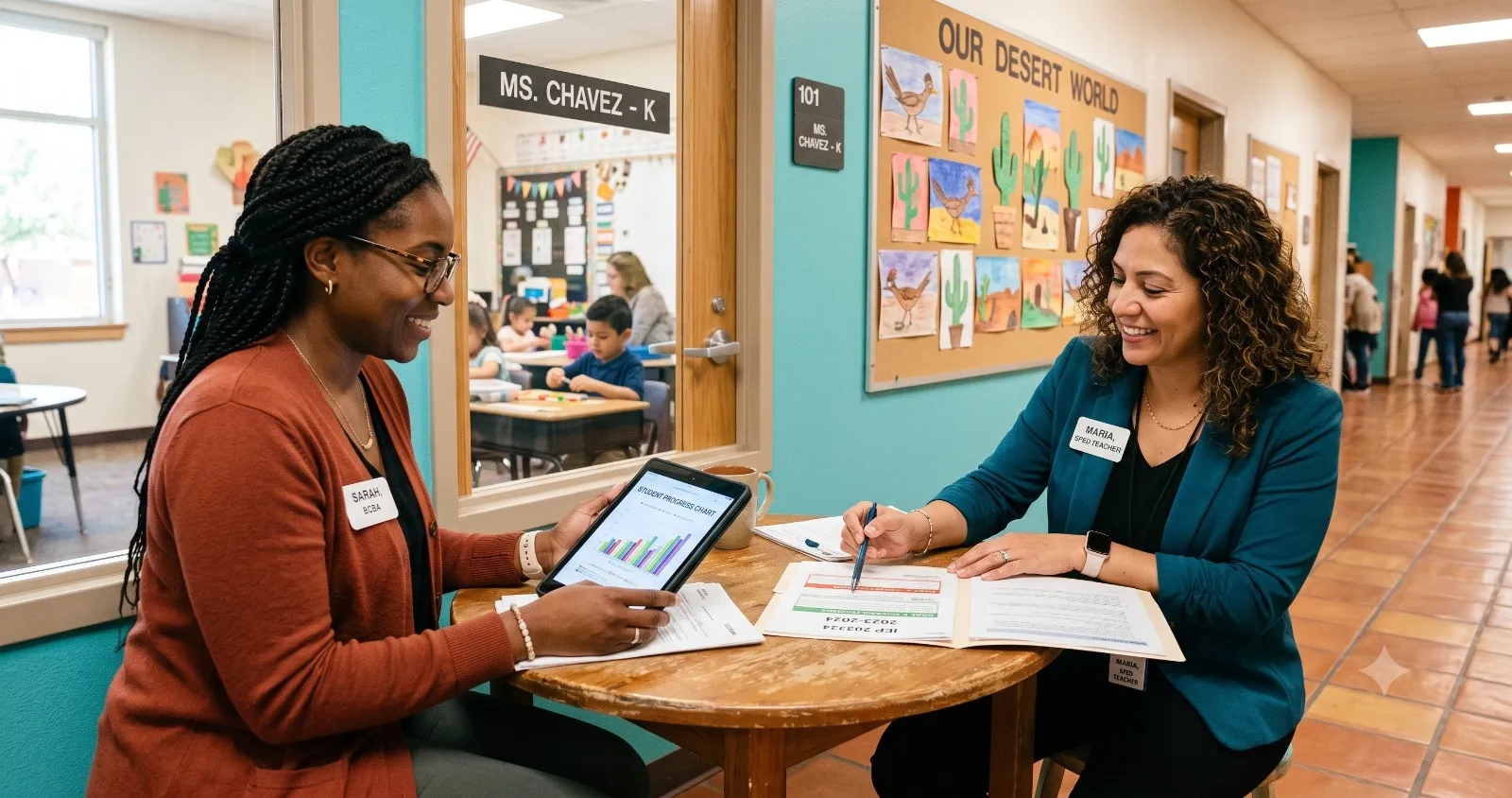
Experienced ABA providers in New Mexico have developed practical workflows to close that gap. BCBA supervisors will frequently request permission to review a child's IEP before setting or updating treatment goals, looking for overlapping targets where school and clinic can reinforce the same skills. Some providers attend IEP meetings directly, presenting data from clinic sessions and participating in the goal-setting conversation. When that level of collaboration happens, families stop having to serve as the sole translators between their child's worlds.
What Collaboration Actually Looks Like in Practice
The most functional coordination tends to involve shared data and direct communication between behavior analysts and special education teachers. A BCBA might send monthly progress summaries in a format the school team can reference, highlighting which skills are reaching mastery criteria and which are still in acquisition. Teachers, in turn, can flag behaviors or regression patterns they're observing that the clinic team hasn't captured. This two-way reporting helps both sides make faster, more accurate decisions rather than waiting for quarterly reviews.
Transition planning is another area where the connection matters. When a child moves from an early intervention program to kindergarten, or from a self-contained classroom to a more inclusive setting, ABA goals often need to shift significantly. Families working with Perfect Pair ABA NM benefit from providers who understand the Albuquerque Public Schools system and can anticipate what skills a child will need to navigate a new placement successfully. That local knowledge shortens the adjustment period.
Parent-mediated strategies are the connective tissue in all of this. Families who understand their child's active ABA programs can prompt and reinforce the same skills at home and advocate clearly for consistency in the school environment. When a parent walks into an IEP meeting knowing which specific behavioral targets are currently being addressed in therapy, they can ask pointed questions about how the classroom plans to support those same skills. That kind of informed advocacy changes the outcome of those meetings.
Keeping Everyone on the Same Page
The practical reality is that ABA providers, school teams, and families are each operating under different schedules, different reporting requirements, and different professional frameworks. Schools use IEP goal language tied to academic standards. ABA programs use behavior-analytic terminology and data systems like frequency counts and rate per minute measures. Getting those two vocabularies to connect takes deliberate translation work.
Families should not have to manage that translation alone. Asking your ABA provider directly about their school coordination practices, whether they attend IEP meetings, and how they share progress data with educational teams is a reasonable and important step. Providers who have clear answers to those questions are the ones building the kind of cross-setting support that actually moves the needle.
































Sign in to leave a comment.