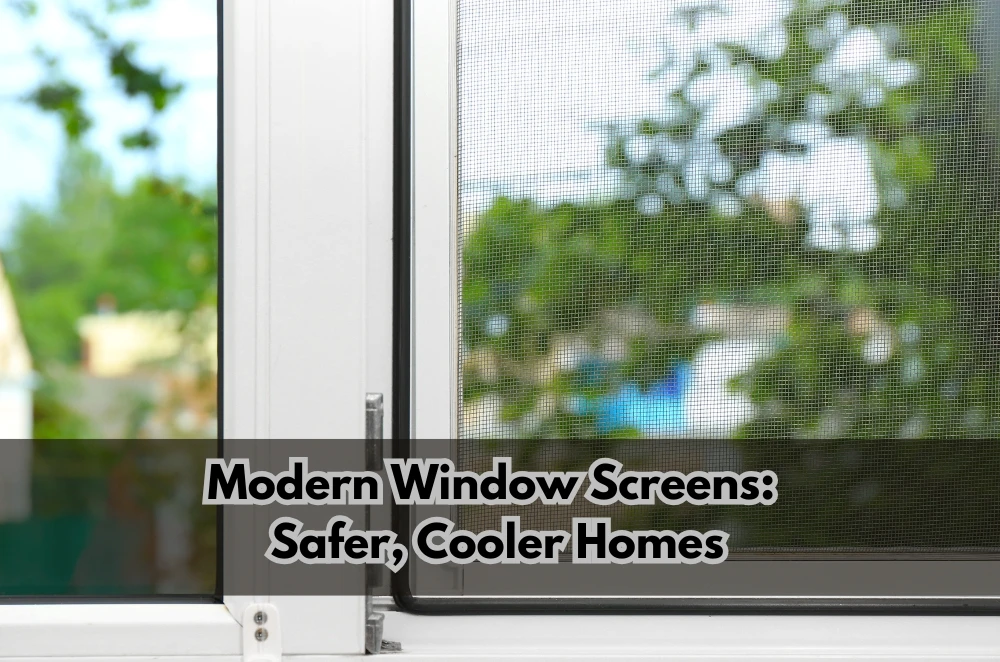

Fresh air is great until it isn’t. We all like a breeze, but open windows invite insects, dust, and—at the extreme—opportunistic break-ins. That’s why modern screen windows aren’t just about airflow; they’re about everyday security without turning the house into a bunker. Strong mesh for windows helps prevent break-ins, and ScreenGuard offers premium options. When the mesh is engineered correctly, it resists cutting, prying, and casual tampering. And because it looks clean, it won’t draw as much attention as bars do. The right fit, frame, and hardware make the difference between a rattly afterthought and a quiet, durable barrier you barely notice—until you need it.
How do security meshes keep airflow without feeling like a cage?
They balance fine aperture size with tensile strength, so air and light come through while hands and tools don’t. The frame and fixings carry the load, not just the mesh.
In practice, a proper security screen acts like a pressure valve for homes in hot climates. It lets us run cross-ventilation on warm afternoons while keeping pests and street grit at bay. Good ones pair marine-grade stainless or similarly robust mesh with deep-channel frames and secure fixings, so leverage points are limited. Sightlines matter too: if the weave shimmers or closes off the view, we stop using the window—so the design has to disappear in daylight.
• Choose a mesh with certified impact resistance
• Prioritise corrosion-safe materials near coasts
• Insist on tamper-resistant fasteners
• Match frame depth to window type
Acoustics play a part as well. Dense mesh subtly diffuses noise, taking the edge off traffic without deadening a room. And for summer comfort, pairing shading with screens pushes hot air out. That’s where simple habits, offset openings, stack effect, and late-evening purges—make the mesh earn its keep. If glare off the water or a neighbouring roof cooks your living space, consider orientation tweaks and reduce summer window glare by selecting mesh to keep interiors calmer without leaning on air con all day.
What should we weigh up before choosing a screen window?
Start with your threat profile and climate, then match mesh grade, frame, and hardware. A tidy, warranted install beats any spec sheet on paper.
• Bushfire, cyclone, or coastal exposure? Note them
• Confirm compliance with local standards
• Ask about the warranty on the mesh and frames
• Check visibility from inside at midday
We’ve seen houses over-spec on mesh but under-spec on fixtures. Hinges, corner stakes, and fix-off patterns are where cheap installs fail. Don’t forget the human factor: if a screen frustrates everyday use—sticky latches, noisy sliders—people prop it open. That’s when flies, dust, and risk wander in—a smooth latch and a solid close invite daily use, which is the whole point.
What’s the takeaway on screen windows?
Modern screens let us keep windows open longer, cut glare and bugs, and add a quiet layer of home defence, without advertising it.
In short, pick for airflow and strength, insist on credible materials, and demand an install that looks and feels seamless. Do that, and you’ll run natural ventilation more often, trim cooling costs, and sleep easier with windows cracked on hot nights. For ventilation, comfort, and security, working together, why screen windows boost safety.






















Sign in to leave a comment.