
At Greenspace Industrial, we are at the forefront of revolutionizing the warehousing industry through our state-of-the-art Automated Storage and Retrieval Systems (ASRS) and Vertical Lift Module (VLM). As a leading Warehouse Automation Company in Canada, we pride ourselves on offering cutting-edge technologies that optimize efficiency, streamline operations, and boost productivity for businesses across Canada.
Introduction:
In today\'s fast-paced industrial world, the importance of efficient material handling cannot be overstated. One of the key components driving this efficiency is the motorized roller conveyor. This innovative system is designed to move products and materials seamlessly within a warehouse or distribution center, significantly enhancing productivity and operational flow.
What is a Motorized Roller Conveyor?
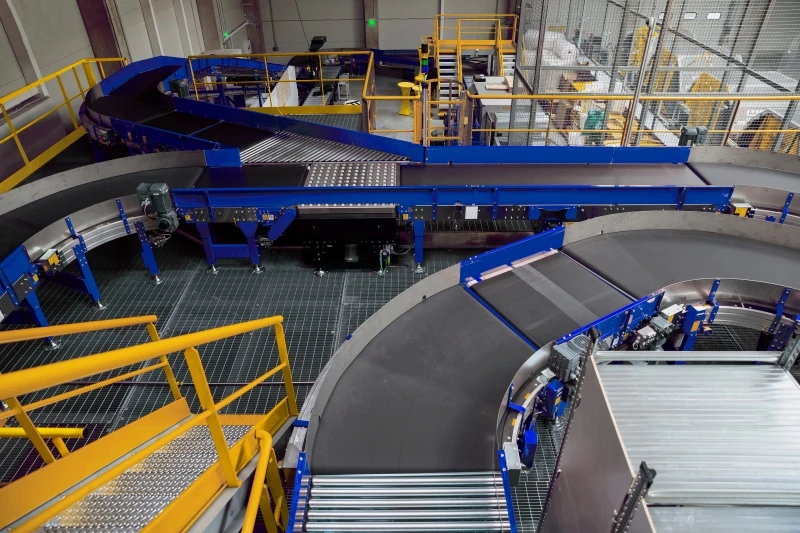
A motorized roller conveyor is a type of conveyor system where the rollers are powered by motors, typically integrated into the rollers themselves. This allows for the smooth and controlled movement of goods along the conveyor path, reducing the need for manual intervention and labor.
Types of Motorized Roller Conveyors:
There are several types of motorized roller conveyors, each suited for different applications and operational needs:
Line Shaft Driven Roller Conveyors-
These conveyors use a single rotating shaft powered by a motor. The shaft runs the length of the conveyor and drives the rollers through spools and o-rings.
Belt Driven Roller Conveyors-
Here, a belt drives the rollers. The belt itself is powered by a motor, which ensures a consistent and reliable movement of goods along the conveyor.
Chain Driven Roller Conveyors-
In this type, chains connect and drive the rollers. This is ideal for heavy-duty applications where the movement of large and heavy items is required.
Zero Pressure Accumulation Roller Conveyors-
These conveyors use sensors to detect the presence of items on the rollers, allowing for the controlled accumulation of goods without pressure build-up. This is particularly useful in preventing damage to delicate items.
Key Components:
Rollers-
The rollers are the primary components that move the goods. They can be made from various materials, including stainless steel, plastic, or aluminum, depending on the application.
Motors-
The motors power the rollers and can be located internally or externally. They come in various power ratings to match the conveyor\'s load requirements.
Frames-
The frames provide the structural support for the rollers and motors. They can be customized in terms of length, width, and height to suit specific operational needs.
Controls-
Advanced control systems regulate the speed and movement of the rollers. These can be integrated with other automation systems for seamless operation.
How Motorized Roller Conveyors Work:
Motorized roller conveyors operate by using motors to drive individual or groups of rollers. Sensors and control systems monitor the position and movement of items, ensuring smooth and efficient transport. These systems can be integrated with other automation technologies, such as robotic arms and ASRS, for enhanced operational efficiency.
Advantages of Motorized Roller Conveyors:
Increased Efficiency-
Motorized roller conveyors streamline the movement of goods, reducing bottlenecks and speeding up the overall process. This leads to higher throughput and more efficient operations.
Reduced Labor Costs-
By automating the transportation of goods, businesses can significantly reduce their reliance on manual labor. This not only cuts costs but also minimizes the risk of workplace injuries.
Improved Safety-
With automated control over the movement of goods, the risk of accidents and damage is greatly reduced. Sensors and safety mechanisms ensure that the system operates within safe parameters.
Scalability and Flexibility-
Motorized roller conveyors can be easily scaled up or down to match the changing needs of a business. Their modular design allows for easy reconfiguration and expansion.
Applications of Motorized Roller Conveyors:
E-commerce and Retail-
In the fast-paced world of e-commerce, motorized roller conveyors help streamline order fulfillment, ensuring that products move swiftly from storage to shipping.
Manufacturing-
In manufacturing environments, these conveyors facilitate the efficient movement of raw materials, components, and finished products, enhancing overall productivity.
Food and Beverage Industry-
Motorized roller conveyors are ideal for transporting packaged foods and beverages, maintaining hygiene and reducing handling times.
Pharmaceuticals-
In the pharmaceutical industry, these conveyors ensure the safe and efficient transport of sensitive and high-value products.
Design and Customization:
Customization Options-
Motorized roller conveyors can be customized in terms of length, width, height, and load capacity to meet specific operational needs. Additional features such as automated sorting and accumulation can also be integrated.
Factors to Consider in Design-
When designing a motorized roller conveyor system, it is important to consider factors such as the type of goods being transported, the required throughput, and the available space. Proper planning ensures that the system is efficient and meets the operational requirements.
Installation and Maintenance:
Installation Process-
The installation of a motorized roller conveyor system involves careful planning and coordination. It includes setting up the frames, rollers, and motors, as well as integrating the control systems. Professional installation ensures that the system operates efficiently from the start.
Routine Maintenance Tips-
Regular maintenance is crucial to keep the conveyor system running smoothly. This includes lubricating moving parts, checking for wear and tear, and ensuring that the control systems are functioning correctly. Scheduled maintenance helps prevent breakdowns and extends the lifespan of the system.
Comparing Motorized Roller Conveyors with Other Conveyors:
Gravity Roller Conveyors-
Gravity roller conveyors rely on gravity to move goods, making them less suitable for complex and heavy-duty applications compared to motorized roller conveyors.
Belt Conveyors-
Belt conveyors use a continuous belt to move goods. While they are effective for certain applications, they may not offer the same level of control and flexibility as motorized roller conveyors.
Slat Conveyors-
Slat conveyors use slats attached to a chain to move goods. They are ideal for heavy and bulky items but may not be as versatile as motorized roller conveyors.
Future Trends in Motorized Roller Conveyors:
The future of motorized roller conveyors looks promising, with advancements in automation and control systems driving further improvements in efficiency and functionality. Innovations such as IoT integration and advanced sensor technologies will continue to enhance the capabilities of these systems.
Conclusion:
Motorized roller conveyors are a cornerstone of modern warehousing and industrial operations. They offer numerous benefits, including increased efficiency, reduced labor costs, improved safety, and scalability. At Greenspace Industrial, we are dedicated to providing state-of-the-art motorized roller conveyor systems that meet the diverse needs of our clients. By leveraging the latest technologies, we help businesses optimize their operations and stay ahead in a competitive market.




























Sign in to leave a comment.