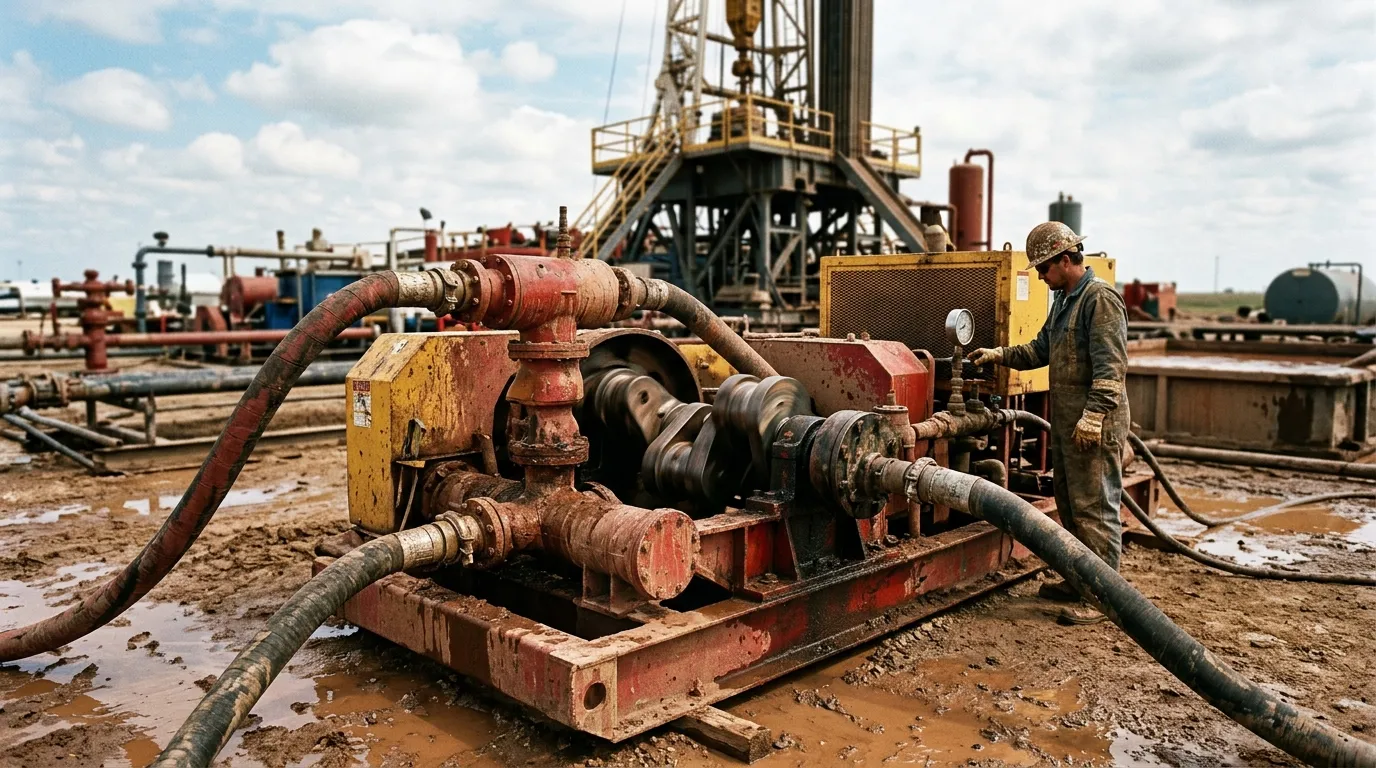

Mud pumps circulate drilling fluids at high pressure to support drilling performance, borehole stability, and cuttings removal in industrial drilling operations. These pumps operate in oilfield drilling, mining exploration, geothermal projects, horizontal directional drilling, and water well construction.
Modern mud pumps generate pressures between 1,500 PSI and 15,000 PSI, depending on drilling depth, drilling fluid density, and borehole conditions. Industrial drilling systems depend on continuous drilling fluid circulation to cool drill bits, maintain hydrostatic pressure, and transport rock cuttings to the surface.
Shstrongmac supplies industrial drilling equipment and advanced machinery for construction, mining, and oilfield industries across Asia, Africa, Europe, the USA, Canada, and Australia.
What Are Mud Pumps?
Mud pumps are reciprocating piston or plunger pumps designed to move drilling fluids through drill strings and boreholes under high pressure. These systems maintain drilling fluid circulation during drilling operations.
Mud pumps transfer drilling fluids such as:
- Bentonite mud
- Polymer mud
- Oil-based mud
- Water-based mud
Industrial drilling rigs use mud pumps to perform three critical functions:
- Remove drilled cuttings from boreholes
- Cool rotating drill bits
- Stabilize underground formations
Most industrial drilling systems use duplex, triplex, or quintuplex mud pump configurations depending on drilling capacity requirements.
How Mud Pumps Work
Mud pumps create fluid pressure through reciprocating piston or plunger movement inside fluid cylinders. Mechanical power from diesel engines or electric motors drives crankshafts and connecting rods to generate pumping action.
The operational cycle includes:
Suction Phase
The suction phase draws drilling fluid into the pump chamber through inlet valves. Negative pressure forms as pistons retract inside the liner assembly.
Discharge Phase
The discharge phase forces drilling fluid into discharge manifolds and drill pipes at high pressure. Discharge valves open automatically when chamber pressure increases.
Continuous Circulation
Continuous circulation maintains stable fluid flow through the drilling system. Industrial drilling rigs circulate drilling fluid volumes exceeding 1,000 gallons per minute during deep drilling operations.
Main Types of Mud Pumps
Duplex Mud Pumps
Duplex mud pumps use two pistons operating in a double-acting configuration. These systems dominated earlier drilling operations because of their mechanical simplicity.
Key duplex pump specifications include:
- Pressure range: 1,500–3,000 PSI
- Flow rate: 200–600 GPM
- Dual-cylinder design
- Lower operating speed
Duplex pumps operate in shallow drilling and low-pressure industrial applications.
Triplex Mud Pumps
Triplex mud pumps use three single-acting plungers to generate smoother fluid discharge and higher pressure output. Modern oilfield drilling systems commonly use triplex pumps because they improve operational efficiency.
Triplex pump features include:
- Pressure range: 3,000–7,500 PSI
- Flow rate: 300–1,200 GPM
- Reduced vibration levels
- Improved volumetric efficiency
Triplex systems account for a major percentage of global oilfield mud pump installations.
Quintuplex Mud Pumps
Quintuplex mud pumps use five plungers to create extremely stable high-pressure drilling fluid circulation. Deep drilling and offshore drilling operations use quintuplex systems because they reduce pressure fluctuations.
Quintuplex pump advantages include:
- Pressure range: 7,500–15,000 PSI
- High-volume fluid transfer
- Reduced pulsation effects
- Improved component lifespan
Major Components of Mud Pumps
Fluid End
The fluid end handles drilling fluid intake and discharge under high pressure conditions. This section experiences the highest wear rates because abrasive drilling fluids contact internal surfaces continuously.
Fluid end components include:
- Valve assemblies
- Cylinder liners
- Pistons
- Plungers
- Suction manifolds
- Discharge manifolds
Forged alloy steel fluid ends operate under pressures exceeding 10,000 PSI.
Power End
The power end converts rotational energy into reciprocating motion for pumping operations. Heavy-duty gears and crankshafts transmit mechanical force to pistons or plungers.
Power end assemblies include:
- Crankshafts
- Crossheads
- Bearings
- Connecting rods
- Gear systems
Industrial power ends commonly operate between 100 RPM and 300 RPM.
Pulsation Dampeners
Pulsation dampeners reduce pressure fluctuations inside drilling fluid circulation systems. Stable fluid pressure protects valves, pipelines, and drilling equipment from shock loading.
Valve Assemblies
Valve assemblies regulate drilling fluid movement through suction and discharge chambers. High-performance valves increase pump efficiency and reduce leakage.
Applications of Mud Pumps
Oil and Gas Drilling
Oilfield drilling operations use mud pumps to maintain drilling fluid circulation during deep well drilling. Offshore platforms and land rigs depend on stable pressure systems for drilling safety.
Oilfield mud pump applications include:
- Deep well drilling
- Horizontal drilling
- Directional drilling
- Offshore drilling
Deep oil wells exceeding 8,000 meters require high-pressure quintuplex pump systems.
Mining Exploration
Mining exploration rigs use mud pumps during core drilling and reverse circulation drilling operations. Fluid circulation improves core sample recovery and removes drilling debris.
Mining applications include:
- Gold exploration
- Copper exploration
- Iron ore drilling
- Geotechnical drilling
Water Well Drilling
Water well drilling systems use mud pumps to stabilize boreholes and remove soil cuttings. Rotary water well rigs frequently use triplex pumps for medium-depth drilling projects.
Horizontal Directional Drilling
Horizontal directional drilling projects use mud pumps to lubricate boreholes and transport excavated material. Pipeline installation and underground utility projects depend on continuous fluid circulation.
Benefits of Modern Mud Pumps
High Pressure Performance
Modern mud pumps maintain stable drilling fluid pressure during deep drilling operations. High-pressure systems improve drilling penetration and borehole cleaning efficiency.
Improved Drilling Efficiency
Continuous drilling fluid circulation increases drilling speed and reduces operational interruptions. Efficient cuttings removal prevents drill bit blockage and overheating.
Extended Equipment Lifespan
Stable fluid flow reduces mechanical stress on drilling tools and drill strings. Controlled cooling improves drill bit durability in abrasive rock formations.
Reduced Operational Downtime
Advanced monitoring systems detect component wear before major failures occur. Predictive maintenance reduces non-productive drilling hours.
According to industrial drilling studies, predictive maintenance systems reduce unexpected pump failures by more than 30% in continuous drilling operations.
Drilling Fluids Used with Mud Pumps
Mud pumps circulate specialized drilling fluids formulated for lubrication, pressure control, and borehole stability. Fluid selection depends on drilling depth, temperature, and geological conditions.
Water-Based Mud
Water-based mud uses water as the primary fluid carrier. This drilling fluid supports shallow drilling and environmentally sensitive projects.
Oil-Based Mud
Oil-based mud improves lubrication and thermal stability during deep drilling operations. High-temperature wells frequently use oil-based drilling fluids.
Synthetic-Based Mud
Synthetic-based mud combines environmental compatibility with high-performance drilling properties. Offshore drilling operations commonly use synthetic formulations.
Maintenance Requirements for Mud Pumps
Liner Inspection
Cylinder liners require regular inspection because abrasive drilling fluids create internal wear. Worn liners reduce pressure efficiency and increase fluid leakage.
Valve Replacement
Valve assemblies require scheduled replacement to maintain sealing performance. High-pressure drilling environments accelerate valve wear.
Lubrication Management
Power end bearings and gears require continuous lubrication for stable operation. Industrial lubrication systems reduce friction and overheating.
Pressure Monitoring
Pressure monitoring systems identify fluid circulation abnormalities during drilling operations. Real-time pressure data improves operational safety.
Key Factors When Selecting Mud Pumps
Pressure Capacity
Drilling depth and borehole pressure determine required mud pump pressure ratings. Ultra-deep wells require high-pressure quintuplex systems.
Flow Rate Requirement
Fluid circulation volume determines pump displacement capacity. Large-diameter boreholes require higher gallon-per-minute output.
Fluid Type Compatibility
Drilling fluid composition influences pump material selection. Abrasive mud systems require hardened liners and wear-resistant valves.
Power Source
Diesel engines and electric motors provide mechanical power for industrial mud pumps. Remote drilling projects frequently use diesel-powered systems.
Technological Advancements in Mud Pumps
Automated Monitoring Systems
Digital monitoring systems track temperature, pressure, and vibration data continuously. Automated diagnostics improve maintenance planning.
Ceramic Liners
Ceramic liners increase wear resistance during abrasive drilling operations. Advanced ceramic materials extend liner service life significantly.
Energy-Efficient Drives
Variable frequency drive systems reduce energy consumption during fluctuating drilling loads. Energy optimization lowers operational cost.
Smart Pressure Sensors
Smart sensors transmit real-time drilling fluid pressure data to control systems. Automated response systems stabilize drilling operations immediately after pressure fluctuations occur.
Global Demand for Mud Pumps
Global demand for mud pumps continues increasing because mining, energy, geothermal, and infrastructure industries require high-pressure drilling fluid systems. Industrial expansion and energy exploration projects increase investment in advanced drilling technologies.
Major demand regions include:
- North America
- Middle East
- Australia
- South America
- Africa
Countries including the United States, Saudi Arabia, Canada, China, and Australia maintain high drilling equipment utilization because of oilfield and mining activity growth.

Conclusion
Mud pumps support drilling efficiency, pressure control, and drilling fluid circulation across industrial drilling operations. Modern mud pump systems combine high-pressure engineering, wear-resistant materials, automated monitoring, and advanced fluid handling technologies.
Oilfield drilling, mining exploration, water well construction, and geothermal projects depend on reliable mud circulation systems for operational stability and drilling accuracy. Continuous advancements in pressure control systems, ceramic liner technology, and digital monitoring improve drilling productivity and equipment durability across global drilling industries.
FAQ Section
What is a mud pump used for?
A mud pump circulates drilling fluid through drill pipes and boreholes during drilling operations. The system cools drill bits, removes cuttings, and stabilizes underground formations.
How does a triplex mud pump work?
A triplex mud pump uses three plungers operating in sequence to create continuous high-pressure fluid circulation. Crankshaft-driven plungers generate suction and discharge cycles inside fluid cylinders.
Why are mud pumps important in drilling operations?
Mud pumps maintain drilling fluid pressure and continuous borehole cleaning during drilling. Stable fluid circulation improves drilling efficiency and operational safety.
What drilling fluids do mud pumps handle?
Mud pumps handle water-based mud, oil-based mud, bentonite mud, polymer mud, and synthetic drilling fluids. Fluid type depends on drilling conditions and geological formations.
How much pressure does a mud pump generate?
Industrial mud pumps generate pressures between 1,500 PSI and 15,000 PSI. Pressure output depends on pump type, drilling depth, and operational requirements.
Why do offshore drilling rigs use quintuplex mud pumps?
Offshore drilling rigs use quintuplex mud pumps because five-plunger systems provide stable high-pressure drilling fluid circulation with reduced pulsation.
























Sign in to leave a comment.