
Pharmacies today operate in a far more complex environment than they did even five years ago. Regulations are tighter. Customer expectations are higher. Margins are under pressure. And manual systems simply cannot keep up.
For growing pharmacy chains, hospitals, and healthcare enterprises, investing in robust pharmacy management software is no longer a convenience. It’s a core operational necessity.
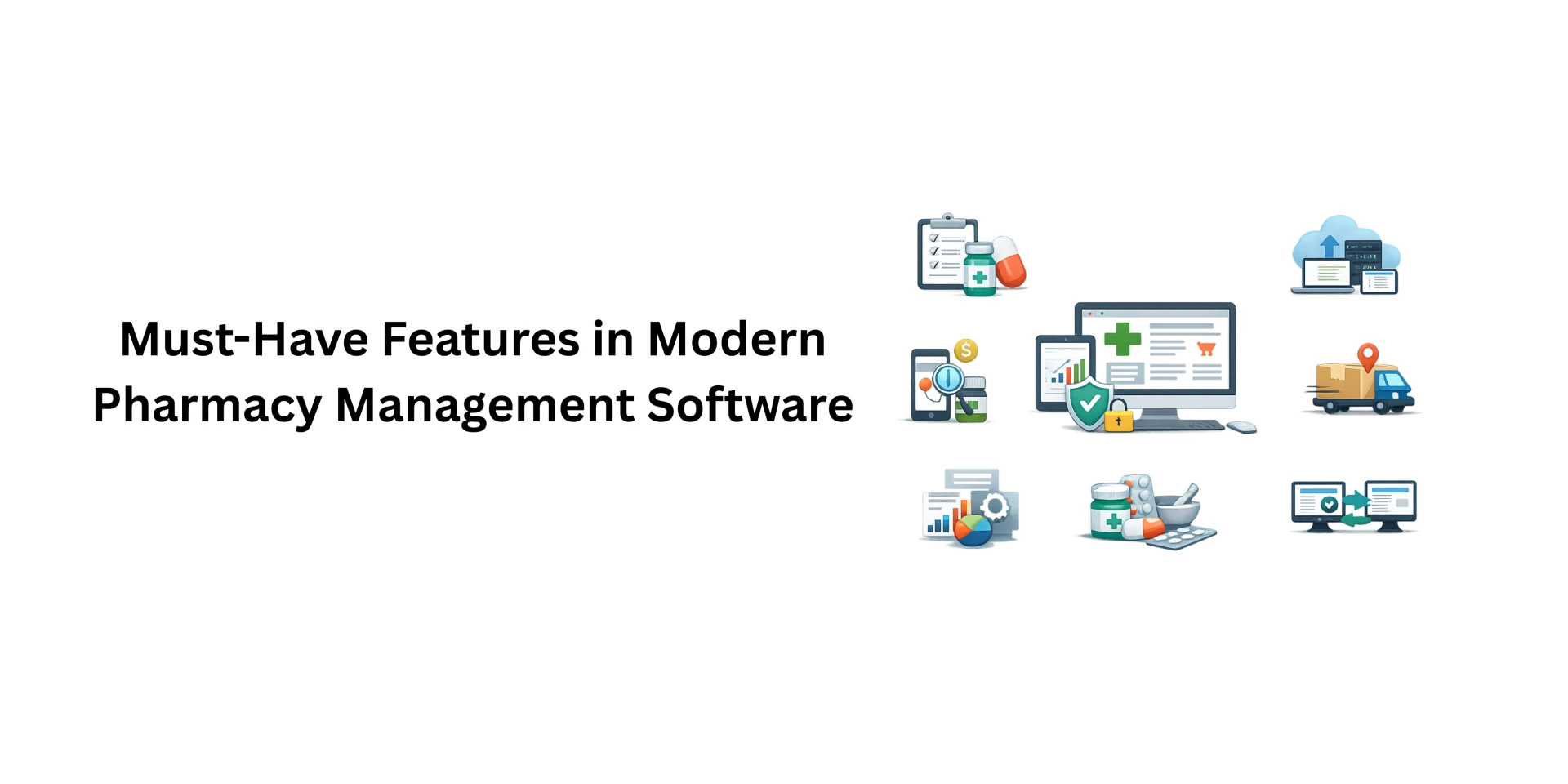
If you’re evaluating solutions or planning pharmacy software development, this guide breaks down the essential features that modern systems must include—not optional add-ons, but foundational capabilities.
1. Advanced Inventory Management
Inventory is the backbone of any pharmacy.
Without accurate stock visibility, you risk:
- Expired medicines
- Stockouts of critical drugs
- Excess capital is locked in slow-moving items
- Regulatory non-compliance
Modern pharmacy management software must include the following:
- Batch-level tracking
- Expiry date alerts
- Automated low-stock notifications
- Supplier management tools
- Barcode scanning integration
For enterprise environments, real-time inventory sync across multiple locations is critical. Centralized dashboards should provide full visibility into stock movement and valuation.
This directly impacts working capital and operational efficiency.
2. Smart Prescription Processing
Prescription handling is where errors can become liabilities.
Your pharmacy management software should support:
- E-prescription uploads
- Automated drug interaction checks
- Dosage validation alerts
- Controlled substance monitoring
- Patient prescription history
These features reduce manual errors and strengthen compliance.
From a business standpoint, faster prescription processing also improves customer satisfaction and throughput during peak hours.
3. Integrated Billing and Insurance Management
Billing in pharmacies is rarely straightforward. Taxes, discounts, insurance claims, and co-payments must be handled accurately.
Modern pharmacy management software should include:
- Multi-mode payment processing
- Automated tax calculations
- Insurance claim integration
- Invoice generation
- Refund and return management
For enterprises, reconciliation reports and financial dashboards are essential for audit readiness.
Clear financial visibility reduces revenue leakage.
4. Regulatory Compliance and Audit Trails
Pharmacies operate under strict healthcare regulations. Compliance failures can lead to heavy penalties or license suspension.
A reliable system must provide:
- Role-based access control
- Secure user authentication
- Activity logs for audit tracking
- Controlled drug reporting
- Data encryption
Compliance features should be built into the architecture, not layered on later.
If you want a broader understanding of implementation considerations and system structure, please read more about this .
5. Multi-Location and Enterprise Scalability
Single-store solutions rarely work for expanding pharmacy chains.
Enterprise-ready pharmacy management software should support:
- Centralized data control
- Location-wise performance tracking
- Real-time stock transfers
- Consolidated reporting
- Branch-level access permissions
Scalability matters. As operations grow, your system should handle higher transaction volumes without performance lag.
During pharmacy software development, architecture decisions play a crucial role in ensuring this scalability.
6. CRM and Patient Relationship Tools
Pharmacies are healthcare providers, not just retailers.
Strong CRM features improve long-term retention and service quality.
Essential tools include:
- Patient medication history
- Automated refill reminders
- Loyalty program management
- SMS and email notifications
- Personalized offers
For enterprise businesses, this data also supports demand forecasting and marketing optimization.
7. Data Analytics and Business Intelligence
Modern pharmacy operations generate large volumes of data. The real advantage comes from using that data strategically.
Look for:
- Sales trend analysis
- Profit margin reports
- Slow-moving stock identification
- Demand forecasting tools
- Purchase pattern insights
Analytics help decision-makers improve pricing, optimize stock levels, and enhance procurement planning.
Without reporting capabilities, even advanced pharmacy management software becomes just a transactional system.
8. Secure API Integrations
Enterprises rarely operate in isolation.
Your pharmacy management software should integrate smoothly with:
- Hospital Information Systems
- Electronic Health Records
- ERP platforms
- Payment gateways
- Insurance portals
Well-documented APIs reduce operational friction and improve data accuracy across systems.
This is where thoughtful pharmacy software development adds long-term value.
9. Cloud-Based Accessibility
Cloud deployment is increasingly preferred for enterprise pharmacy networks.
Benefits include:
- Remote data access
- Automatic updates
- Centralized monitoring
- Lower infrastructure dependency
- Scalable storage
Cloud-based pharmacy management software also simplifies disaster recovery and backup strategies.
However, security architecture must be robust to protect sensitive healthcare data.
10. User-Friendly Interface
Even the most feature-rich system fails if staff find it difficult to use.
The interface should:
- Minimize clicks per transaction
- Offer intuitive navigation
- Support quick search functionality
- Enable barcode scanning
- Reduce repetitive data entry
Ease of use improves adoption rates and reduces training time.
Usability is not just design preference. It directly affects productivity.
Final Thoughts
Modern pharmacy operations demand more than basic billing software. They require a comprehensive, scalable, and secure system that supports compliance, efficiency, and growth.
The right pharmacy management software should:
- Improve inventory accuracy
- Reduce compliance risk
- Increase operational speed
- Enhance customer experience
- Provide clear financial insights
For enterprises considering pharmacy software development, focus on long-term architecture, regulatory readiness, and integration capability—not just feature lists.
A well-built system doesn’t just manage transactions. It strengthens the entire pharmacy ecosystem.
When technology aligns with operational reality, pharmacies don’t just function better. They grow smarter.





























Sign in to leave a comment.