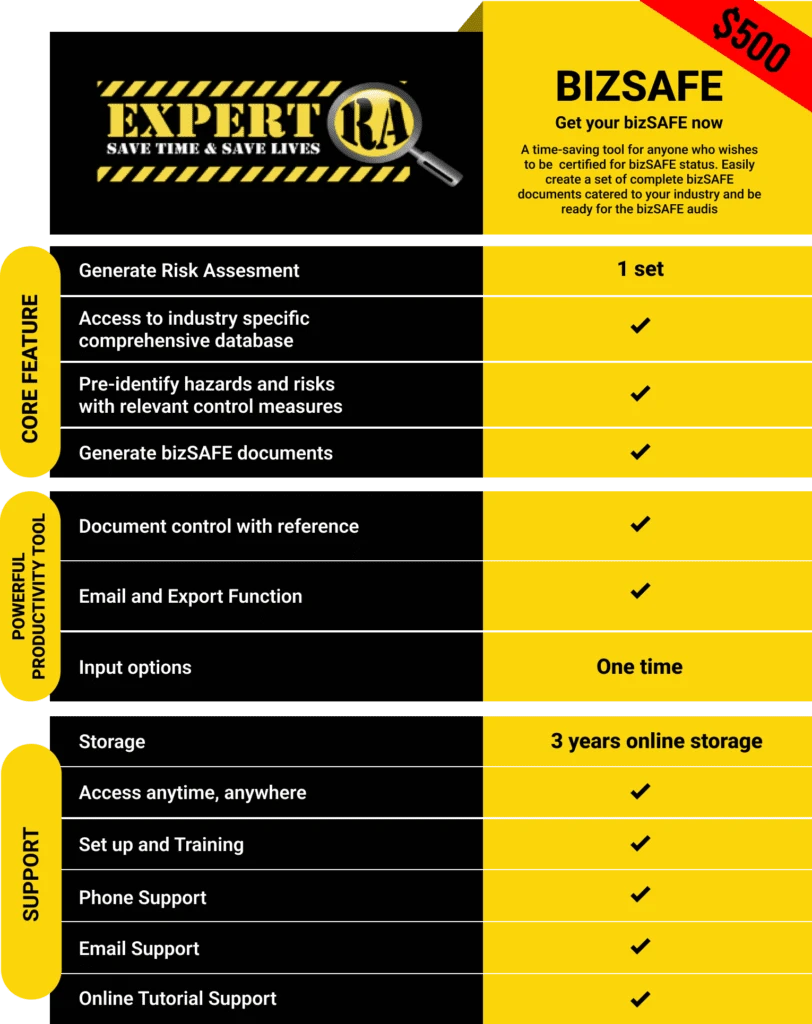

.Introduction
In today\'s rapidly evolving work landscape, prioritizing workplace safety has become imperative for organizations worldwide. The BizSAFE certification program, pioneered in Singapore, stands as a beacon of safety excellence, guiding companies through structured steps to assess, manage, and enhance safety standards. This comprehensive guide aims to illuminate the essence of BizSAFE certification, from its fundamental principles to its profound impact on organizational safety culture, laying the groundwork for a safer and more resilient work environment.
Understanding BizSAFE Certification
BizSAFE certification is a progressive program developed by the Workplace Safety and Health Council (WSHC) in Singapore. It aims to equip organizations with the necessary tools, knowledge, and strategies to proactively manage workplace safety and health (WSH) risks. The certification program comprises multiple levels, each building upon the previous one to elevate safety standards and foster a culture of continuous improvement.
Key Components of BizSAFE Certification
- BizSAFE Level 1: Risk Assessment
The journey begins with BizSAFE Level 1, where companies conduct a basic risk assessment of their workplaces. This involves identifying potential hazards, assessing associated risks, and implementing preliminary control measures. Level 1 sets the foundation for understanding and addressing safety risks systematically.
- BizSAFE Level 2: Risk Management Implementation
Building upon the risk assessment, BizSAFE Level 2 focuses on implementing effective risk management measures. Companies develop risk control plans, provide training on hazard identification and control, establish incident reporting procedures, and prepare for emergency responses. Level 2 certification signifies a proactive approach to managing safety risks.
- BizSAFE Level 3: WSH Management System Development
At Level 3, companies delve deeper into developing a structured Workplace Safety and Health (WSH) management system. This includes formulating WSH policies, procedures, guidelines, roles, responsibilities, communication channels, and documentation protocols. Level 3 certification indicates a commitment to robust safety management practices.
- BizSAFE Level 4: Safety Excellence
Level 4 represents the pinnacle of safety excellence within the BizSAFE framework. Certified organizations showcase advanced capabilities in risk management, safety leadership, employee empowerment, continuous improvement, and safety culture development. Level 4 certification serves as a testament to achieving the highest safety standards.
- BizSAFE Star: Leadership and Continuous Improvement
The coveted BizSAFE Star certification epitomizes safety leadership and continuous improvement. It is awarded to organizations that demonstrate exemplary safety practices, strong leadership commitment, employee empowerment, innovation, and a resilient safety culture. BizSAFE Star certification sets industry benchmarks for safety performance.
Significance of BizSAFE Certification
BizSAFE certification holds immense significance for organizations and their stakeholders:
- Prioritizing Employee Safety and Well-being
BizSAFE certification underscores a company\'s commitment to prioritizing the safety, health, and well-being of its employees. Certified organizations implement measures to prevent workplace incidents, injuries, illnesses, and fatalities, fostering a safer and healthier work environment.
- Regulatory Compliance and Legal Protection
Certified companies demonstrate compliance with Singapore\'s Workplace Safety and Health Act (WSHA), relevant regulations, and industry standards. BizSAFE certification helps organizations navigate legal obligations, regulatory requirements, inspections, audits, and inquiries related to workplace safety.
- Enhancing Stakeholder Confidence
Certification enhances stakeholder confidence, trust, and credibility among clients, suppliers, investors, insurers, regulators, and business partners. Certified organizations are perceived as reliable, responsible, and ethical entities committed to safety excellence.
- Driving Continuous Improvement
The BizSAFE framework promotes a culture of continuous improvement, innovation, and learning. Certified companies regularly review, evaluate, and enhance their safety management systems, practices, policies, procedures, and performance metrics to achieve optimal safety outcomes.
- Empowering Employees and Promoting Engagement
Certification empowers employees by providing comprehensive safety training, hazard awareness, risk assessment skills, emergency response training, and opportunities for involvement in safety initiatives. Empowered employees actively contribute to a safer work environment and improved safety culture.
BizSAFE Certification Requirements and Process
The journey to BizSAFE certification involves several key steps:
- Eligibility and Registration
Companies must meet eligibility criteria, including registration with the Accounting and Corporate Regulatory Authority (ACRA) or relevant authorities. They must also demonstrate commitment from top management to prioritize workplace safety.
- Appointment of WSH Coordinator
Certified companies appoint a competent Workplace Safety and Health (WSH) coordinator responsible for overseeing safety initiatives, coordinating risk assessments, implementing control measures, conducting training, and monitoring safety performance.
- Risk Assessment and Control Measures
Certified companies conduct a thorough risk assessment to identify hazards, assess risks, prioritize control measures, and develop risk control plans. They implement control measures to mitigate identified risks effectively.
- Safety Training and Awareness Programs
Certified organizations provide relevant safety training and awareness programs for employees at all levels. Training covers hazard identification, risk assessment, risk control measures, emergency response, incident reporting, safety protocols, and regulatory compliance.
- Audit and Certification
After completing risk assessment, control measures implementation, and training, companies undergo an audit conducted by an approved WSH auditor or consultant. The audit evaluates compliance with BizSAFE requirements, safety management systems, practices, policies, procedures, and employee competency. Upon successful completion of the audit, companies receive BizSAFE certification at the respective level.
Benefits of BizSAFE Certification
BizSAFE certification offers numerous benefits to organizations:
- Improved Safety Culture and Employee Morale
Certified organizations foster a positive safety culture characterized by proactive hazard identification, open communication, safety ownership, teamwork, and continuous learning. A strong safety culture boosts employee morale, engagement, productivity, and satisfaction.
- Enhanced Risk Management and Incident Prevention
Certification equips organizations with advanced risk management capabilities, including hazard identification, risk assessment, risk control measures, incident prevention strategies, emergency preparedness, and regulatory compliance. Effective risk management reduces workplace incidents, injuries, and associated costs.
- Regulatory Compliance and Legal Protection
Certified organizations demonstrate compliance with regulatory requirements, industry standards, and best practices. BizSAFE certification provides legal protection, mitigates liabilities, minimizes risks, and enhances organizational resilience in the face of regulatory changes and challenges.
- Stakeholder Confidence and Reputation
Certification enhances stakeholder confidence, trust, and reputation among clients, suppliers, investors, insurers, regulators, and business partners. Certified organizations are preferred partners for contracts, tenders, collaborations, and business opportunities, driving growth and sustainability.
- Competitive Advantage and Business Opportunities
BizSAFE certification provides a competitive advantage in the market by differentiating certified organizations as safety leaders, preferred partners, and industry benchmarks for safety performance. Certification enhances brand reputation, market positioning, customer trust, and business opportunities, contributing to long-term success and profitability.
Implementing BizSAFE Certification Successfully
To achieve BizSAFE certification successfully, organizations must:
Commit to Safety Leadership: Top management must demonstrate strong leadership commitment, active engagement, and visible support for safety initiatives. Leaders set safety objectives, allocate resources, communicate expectations, and empower employees to drive safety excellence.
Develop a Robust Safety Management System: Organizations must establish and maintain a comprehensive Workplace Safety and Health (WSH) management system aligned with BizSAFE requirements, regulatory standards, and industry best practices. This includes formulating policies, procedures, guidelines, roles, responsibilities, communication channels, documentation protocols, and performance indicators related to safety management.
Conduct Thorough Risk Assessment: Certified organizations conduct thorough risk assessments to identify workplace hazards, assess associated risks, prioritize control measures, and develop risk.

























Sign in to leave a comment.