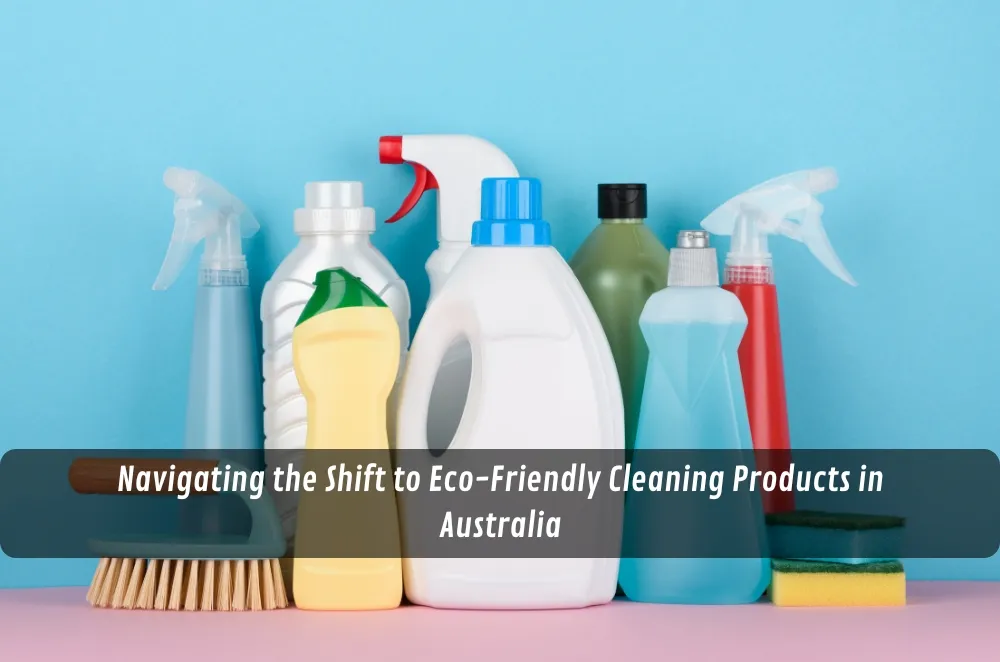

Australian organisations are under growing pressure to reduce their environmental footprint without compromising hygiene or safety standards. From childcare centres to commercial kitchens, many facilities managers now ask: Do eco-friendly cleaning products really work, and how do we integrate them into day-to-day routines?
This guide breaks down the key considerations, compares conventional and “green” alternatives, and shares a straightforward roadmap for making the switch. It also explores how businesses can buy bulk cleaning supplies online to streamline procurement, reduce costs and maintain consistent hygiene standards across multiple sites.
1. Why the Push for Greener Cleaning Is Growing
Sustainability is no longer a buzzword reserved for marketing materials; it is fast becoming a contractual and regulatory expectation. Government procurement policies increasingly favour suppliers that meet eco-accreditation benchmarks, while consumers look for businesses that align with their values.
For workplaces, the benefits of choosing environmentally responsible cleaners can include:
• Reduced exposure to harsh chemicals for staff and patrons
• Less environmental impact when wastewater enters local systems
• Better indoor air quality, which can support staff wellbeing
• Potential compliance advantages where tender documents reference sustainability criteria
Official guidance from Safe Work Australia also highlights the importance of selecting products that minimise health risks, providing extra incentive for facilities to reassess their chemical inventories.
2. What Makes a Cleaning Product “Eco-Friendly”?
2.1 Beyond the Label
“Eco”, “green”, and “natural” claims are not regulated marketing terms in Australia. Instead of trusting the colour of the packaging, look for independent certifications such as:
• GECA (Good Environmental Choice Australia)
• Environmental Choice New Zealand (accepted on some imported goods)
• ISO 14024 Type I ecolabels
These certifications typically consider the product’s lifecycle, including sourcing of raw materials, manufacturing processes, in-use safety, and end-of-life impacts.
2.2 The Ingredients Story
An eco-friendly product will usually:
• Avoid or minimise volatile organic compounds (VOCs)
• Replace petroleum-derived surfactants with plant-based alternatives
• Limit or exclude phosphates, chlorine, or synthetic dyes
• Use readily biodegradable formulations
Not every product needs to tick every box, but understanding ingredient lists helps facilities teams make informed decisions.
3. Comparing Conventional vs Eco-Friendly Options
The perception that “green” equals “less effective” is outdated. The table below contrasts key factors to keep in mind when comparing products.
| Factor | Conventional Cleaning Products | Eco-Friendly Alternatives | Practical Take-Away |
| Primary surfactant base | Often petroleum-derived | Usually plant-based (e.g. coconut or sugarcane) | Plant-based does not automatically mean weaker; effectiveness depends on formulation. |
| Fragrance | Synthetic fragrance oils can contain allergens | Essential-oil or low-allergen fragrance, sometimes fragrance-free | Consider fragrance-free in sensitive environments such as aged care. |
| Packaging | Standard HDPE or PET, sometimes non-recycled | Increasingly recycled content and refillable options | Closed-loop refill systems can cut plastic use and storage space. |
| Safety data sheets (SDS) | May include higher hazard pictograms (corrosive, irritant) | Often fewer hazard statements, lower pH variance | Lower hazard ratings can reduce PPE demands. |
| Cost per diluted litre | Usually lower upfront | Often price-comparable after dilution ratios factored in | Check dilution rates; many eco concentrates go further per litre. |
| Accreditation | May comply with basic Australian standards | May carry GECA, ISO 14024, or Carbon Neutral certifications | Independent accreditation simplifies compliance for government tenders. |
4. How to Audit Your Current Cleaning Cupboard
Before purchasing new supplies, complete a quick internal audit:
- List every chemical in storage, noting its purpose (e.g. degreaser, sanitiser).
- Check SDS hazard ratings and note any harmful pictograms.
- Mark high-priority swap-outs: products with corrosive, toxic, or environmentally hazardous classifications.
- Review usage frequency—often-used products deliver the biggest benefit when replaced.
This inventory becomes your roadmap for phased substitution.
5. Selecting the Right Eco-Friendly Alternatives
Phasing in greener options is smoother when you apply a clear selection framework.
5.1 Match Product to Task
A kitchen degreaser must break down fats and oils quickly, whereas a bathroom cleaner may need descaling agents to tackle mineral build-up. Compare like-for-like alternatives rather than expecting a single “all-purpose” bottle to do every job.
5.2 Consider Dilution Systems
Many professional-grade eco ranges ship as concentrates. Closed dilution systems can:
• Reduce single-use plastic waste
• Improve storage efficiency
• Control costs by preventing over-use
5.3 Verify Independent Certifications
Third-party ecolabels help cut through greenwashing. If a product claims GECA certification, cross-check the licence number on GECA’s public register for peace of mind.
5.4 Evaluate Supply Chain Reliability
Switching products only helps if supply is consistent. Partnering with a trusted source for cleaning materials across Australia that offers a wide range of cleaning products suitable for different sectors ensures continuity as you scale replacements.
6. Training and Change Management
People often resist change because of unfamiliarity, not because the new product is ineffective. Engage cleaners and frontline staff early:
• Demonstrate dilution ratios and application techniques.
• Provide simple comparison charts highlighting safety improvements.
• Encourage feedback on performance—address concerns promptly.
• Update SDS folders and display them where products are stored.
7. Monitoring Performance and Cost
Eco-friendly products should be judged on results and total cost of use, not just unit price.
7.1 Visual Cleanliness and Hygiene Testing
• Conduct ATP (adenosine triphosphate) surface tests where appropriate.
• Use colour-changing sanitising verification strips in food prep areas.
• Gather user observations on odour, residue, and ease of rinsing.
7.2 Cost in Use
Track litres consumed per month. Concentrates with higher dilution ratios often reduce overall spend, even if their purchase price per bottle is higher.
8. Common Pitfalls to Avoid
- Switching every product at once without trials—start with high-impact items.
- Ignoring staff input—cleaners’ practical experience is invaluable.
- Assuming “natural” equals “non-toxic”—always consult the SDS.
- Over-fragrancing—strong essential oils can still trigger sensitivities.
- Neglecting equipment compatibility—check that floor-scrubber or spraying systems are suitable for the new chemicals.
9. Roadmap for Implementation
| Phase | Action | Timeframe | Key Outcome |
| 1. Audit | Complete chemical inventory, mark high-hazard items | Week 1 | Clear baseline data |
| 2. Pilot | Trial eco-friendly alternatives in one area (e.g. bathrooms) | Weeks 2–4 | Performance evidence |
| 3. Review | Gather staff feedback, hygiene test results, cost data | Week 5 | Go/no-go decision |
| 4. Scale | Roll out to additional zones, update SDS and training | Weeks 6–10 | Consistent adoption |
| 5. Optimise | Monitor usage rates, refine dilution, revisit supplier pricing | Ongoing | Continuous improvement |
Final Thoughts
Transitioning to eco-friendly cleaning products is not simply a feel-good marketing exercise; it can enhance workplace safety, meet evolving procurement standards, and support corporate sustainability goals. By auditing existing chemicals, selecting independently certified alternatives, and engaging staff throughout the process, Australian businesses can modernise their hygiene routines without sacrificing performance.

























Sign in to leave a comment.