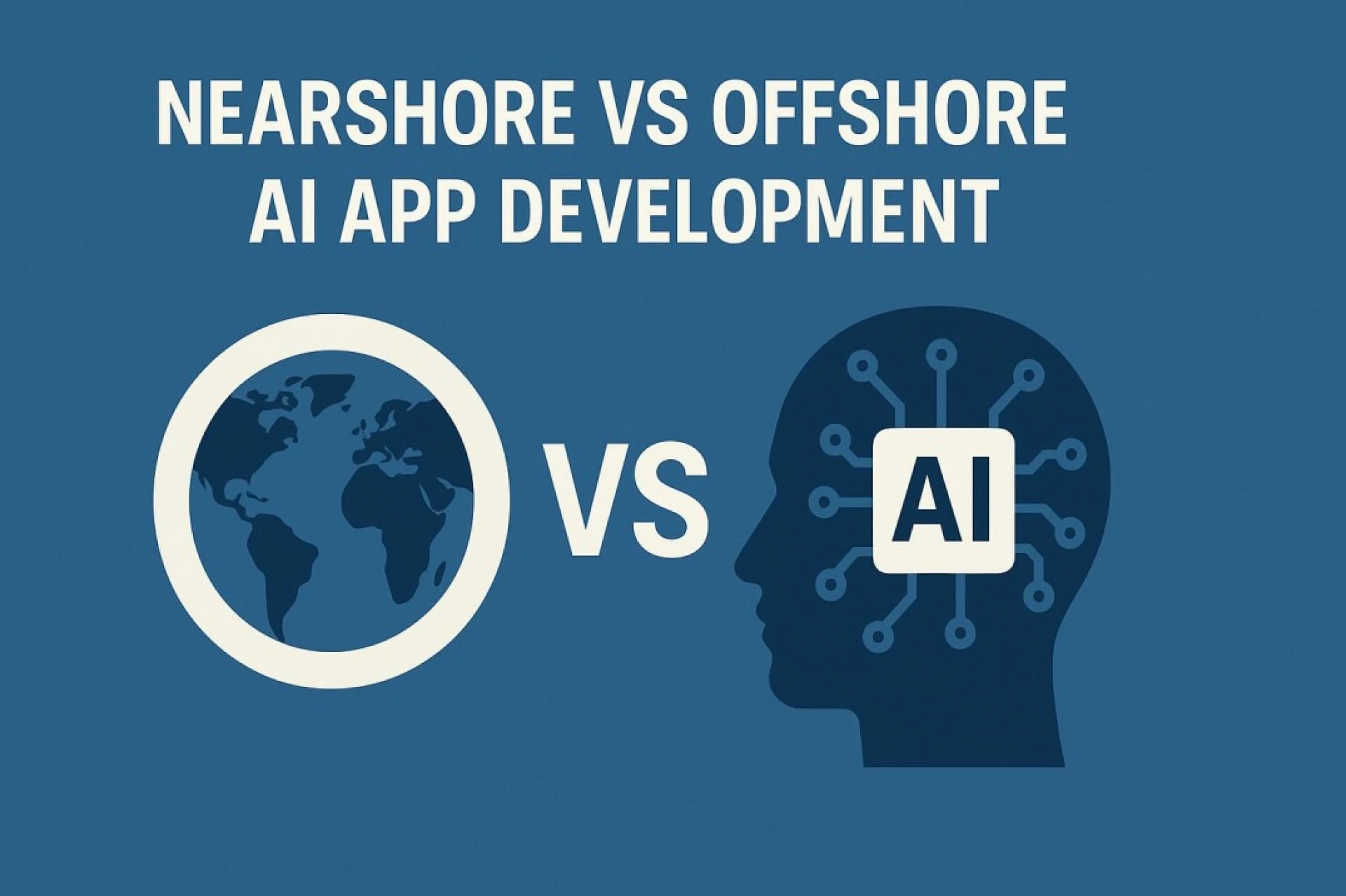
Let’s break down the pros and cons, and more importantly, help you make a decision that works for your timeline, tech stack, and bottom line.
What’s the Difference?
Before diving into pros and cons, here’s a quick refresher:
- Nearshore development refers to outsourcing to neighboring or nearby countries (e.g., the U.S. outsourcing to Mexico or Colombia).
- Offshore development involves outsourcing to distant countries like India, Ukraine, or the Philippines.
Both models offer cost savings and access to skilled developers — but the benefits and challenges vary.
Nearshore AI App Development: Pros
1. Time Zone Alignment
When you outsource to Latin America from the U.S., you're working within overlapping hours. That makes communication easier and real-time collaboration possible.
“A study by Accelerance found that 86% of U.S. companies prefer nearshore partners for their ability to work in the same time zones.”
Source: Accelerance 2024 Global Software Outsourcing Report
2. Cultural Compatibility
Similar work ethics, holidays, and communication styles reduce misunderstandings and help build stronger working relationships.
3. Easier Travel and Onsite Visits
Need to onboard or kick off a project in person? Quick flights and shorter distances make nearshoring more travel-friendly.
Nearshore AI App Development: Cons
1. Higher Cost Compared to Offshore
While still more affordable than in-house development, nearshore rates can be 20–40% higher than offshore.
2. Smaller Talent Pool
Countries close to the U.S. may have fewer AI specialists compared to regions like India or Eastern Europe.
Offshore AI App Development: Pros
1. Cost Efficiency
This is the biggest draw. Countries like India offer highly skilled AI developers at a fraction of the U.S. cost. You could reduce development expenses by 50–70%.
“India’s AI talent pool is expected to grow to over 1 million professionals by 2026.”
Source: NASSCOM AI Adoption Report, 2024
Looking for access to global talent?
2. 24/7 Productivity
When your offshore team starts working while you’re offline, your project gets round-the-clock progress. This is a major plus for fast-paced deliverables.
3. Large Talent Pool
India, Ukraine, and the Philippines have deep expertise in AI, machine learning, and chatbot development.
Looking to integrate conversational AI?
👉 Hire Dedicated Chatbot Developers
Offshore AI App Development: Cons
1. Time Zone Gaps
Late-night or early-morning meetings may be required. It can slow feedback loops and increase dependency on asynchronous communication.
2. Cultural and Communication Barriers
Language differences, accents, or unfamiliar work cultures can occasionally cause friction or slowdowns.
3. Security and IP Concerns
Working across borders often involves strict compliance needs and legal reviews, especially for AI solutions using sensitive data.
Nearshore vs Offshore AI Development: Which One Fits Your Project?
So how do you pick between nearshore and offshore? The answer depends on your project complexity, budget, and collaboration needs.
✅ Choose Nearshore if:
- You need real-time collaboration with frequent back-and-forth.
- Your AI solution requires tight integration with internal teams (e.g., data scientists, QA, UX).
- You're building something sensitive — think compliance-heavy AI apps for healthcare or finance.
- You’re in the early stages and want to workshop ideas, wireframes, and workflows closely.
In these cases, the slightly higher nearshore cost may be worth it for the ease of syncing up and fast iterations.
✅ Choose Offshore if:
- Your AI app has clearly defined specs and well-documented processes.
- You’re on a tight budget and need to scale a team fast.
- You can work with asynchronous feedback loops or have a strong product/project manager.
- You’re in the growth or maintenance phase, where daily collaboration isn’t as critical.
Offshore teams are great for large builds, long-term support, and projects that benefit from a “follow the sun” development model.
Real-World Example: AI Chatbot for Retail
Let’s say you’re a retail CTO building a generative AI chatbot to boost customer support.
- You need constant training data updates.
- UX plays a big role.
- Integration with your U.S.-based CRM is a must.
This points toward a nearshore model—you’ll benefit from live collaboration and minimal language barriers.
But if you already have the product design and just need to build, test, and deploy it affordably, an offshore team with chatbot expertise could be the smarter financial choice.
👉 Interested in building with generative AI?
Security and IP Risks: What to Watch Out For
Whether nearshore or offshore, security is a non-negotiable factor in AI app development. AI projects often process sensitive user data, behavioral insights, or financial records. You can’t afford a leak.
Checklist for evaluating outsourcing partners:
- Do they comply with GDPR or CCPA?
- Do they have signed NDAs and data protection policies in place?
- Are they using secured cloud infrastructure (AWS, Azure, GCP)?
- Have they worked with companies in regulated industries?
Key Stats That Matter
Let’s look at what the numbers say:
- According to Statista, the global market size of outsourced software development reached $92.5 billion in 2024, with AI projects accounting for a growing share.
- Gartner reports that 70% of enterprises will adopt AI solutions by 2026, many turning to outsourcing to meet demand.
- U.S. companies saved an average of 45% in development costs by choosing offshore locations for AI-driven applications.
Source: Deloitte Global Outsourcing Survey 2024
Final Thoughts: It’s Not Just About Cost
In the nearshore vs offshore debate, cost savings is just one part of the puzzle.
Ask yourself:
- How important is real-time collaboration?
- Can your internal team handle time zone gaps or not?
- Is this a short-term MVP or a long-term AI transformation?
There’s no one-size-fits-all answer — but making a decision based on your goals, not trends, is the best strategy.
If you're building mission-critical AI solutions and want to scale with flexibility, companies like Hidden Brains can help you choose the right engagement model and talent mix.
Wrapping Up: Make the Right Move
Choosing the right model could mean the difference between a smooth launch and missed deadlines.
Whether nearshore or offshore — the future of AI development is global. Choose smart. Build fast. Stay ahead.
























Sign in to leave a comment.