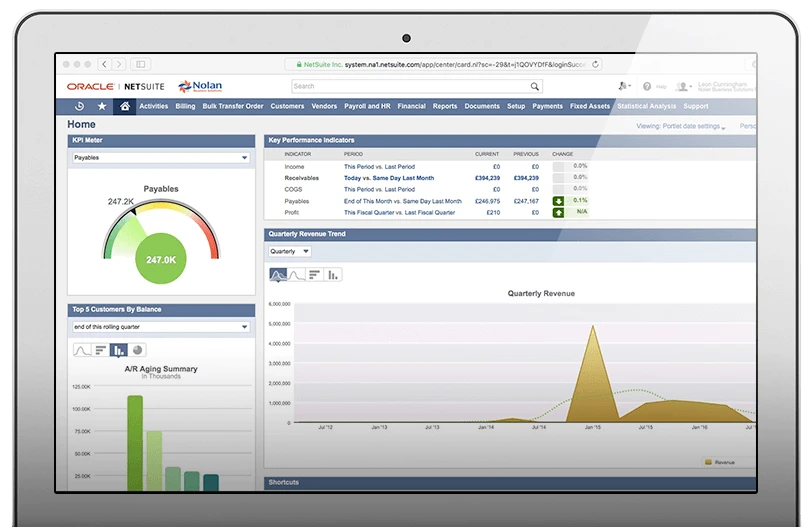
Choosing NetSuite is rarely the hard part.
Choosing the right NetSuite consultants is where most ERP projects succeed or quietly fail.
NetSuite is a mature, enterprise-grade ERP platform. It can support complex accounting structures, multi-subsidiary operations, industry-specific workflows, and global compliance. But NetSuite does not implement itself. The way it is configured, extended, and adopted depends almost entirely on the consultants leading the engagement.
This article explains what NetSuite consultants actually do, why their role matters more than the software license itself, and how to evaluate them before making a long-term commitment.
What Do NetSuite Consultants Actually Do?
At a surface level, NetSuite consultants help you “set up” NetSuite. In reality, their role is far broader and far more strategic.
Experienced NetSuite consultants are responsible for:
- Translating business processes into system workflows
- Designing the chart of accounts, subsidiaries, and reporting structures
- Configuring modules such as Financials, Inventory, Manufacturing, CRM, or PSA
- Managing data migration from legacy systems
- Handling integrations with third-party platforms
- Training internal teams and driving adoption
- Supporting post go-live optimization and scaling
In other words, NetSuite consultants shape how your ERP behaves for years, not weeks.
A poor implementation can lock you into workarounds, manual reporting, and expensive rework. A strong implementation builds a foundation that supports growth without constant intervention.
Why NetSuite Consultants Matter More Than the ERP Itself
NetSuite is highly configurable. That flexibility is both its strength and its risk.
Two companies can use the same NetSuite edition and modules, yet end up with completely different outcomes based on how the system is implemented.
This is where NetSuite consultants make the difference.
Strong consultants focus on:
- Long-term scalability, not just go-live speed
- Clean data structures that support reporting and compliance
- Native NetSuite capabilities before custom development
- Industry-specific best practices, not generic templates
Weak consultants often:
- Over-customize early to “match” legacy systems
- Rely heavily on scripts and workarounds
- Skip process alignment to hit short timelines
- Deliver a system that technically works but is hard to use
The result is often an ERP that feels rigid, expensive to maintain, and difficult to scale.
Types of NetSuite Consultants You Will Encounter
Not all NetSuite consultants operate the same way. Understanding the differences helps set realistic expectations.
1. Independent NetSuite Consultants
These are individual consultants or small teams, often with deep functional expertise.
Best for:
- Advisory work
- System audits
- Short-term optimization projects
Limitations:
- Limited capacity for large or multi-country implementations
- Dependency on a single individual
2. NetSuite Alliance Partners
Certified firms officially recognized by NetSuite.
Best for:
- Full-scale implementations
- Industry-specific deployments
- Ongoing support and managed services
Advantages:
- Access to NetSuite resources and escalation paths
- Structured implementation methodologies
- Broader functional and technical teams
3. Offshore or Low-Cost Providers
Often attractive due to pricing.
Risks:
- Limited business process understanding
- Communication gaps
- High reliance on customization
- Lower accountability post go-live
Cost savings upfront often lead to higher total cost of ownership later.
Key Skills to Look for in NetSuite Consultants
When evaluating NetSuite consultants, certifications alone are not enough.
Here are the skills that consistently separate strong consultants from average ones.
Business Process Understanding
Good consultants ask detailed questions about how your business operates today and where it is heading.
They do not start with features.
They start with workflows, controls, and decision points.
Industry Experience
NetSuite supports many industries, but configuration patterns differ significantly.
For example:
- Manufacturing requires BOMs, work orders, and demand planning
- Retail and eCommerce require inventory accuracy and order orchestration
- Professional services require time tracking and revenue recognition
NetSuite consultants with industry experience reduce rework and shorten adoption cycles.
Financial and Accounting Depth
NetSuite is a financial system at its core.
Consultants should understand:
- Revenue recognition rules
- Multi-entity accounting
- Tax structures
- Audit and compliance requirements
Without this foundation, reporting issues surface later and are expensive to fix.
Integration and Data Migration Capability
Most NetSuite projects fail quietly during data migration or integration.
Strong NetSuite consultants plan:
- Data cleansing before migration
- Clear ownership of source systems
- Validation rules post-migration
- Scalable integration patterns
They do not treat integrations as an afterthought.
Common Mistakes Companies Make When Hiring NetSuite Consultants
Many ERP issues trace back to early decision-making.
Focusing Only on Cost
Low hourly rates look appealing, but ERP cost is driven by rework, not just billing.
Poor configuration leads to:
- Additional customization
- Extended timelines
- User resistance
- Reporting gaps
Choosing Speed Over Structure
A fast go-live without proper design often creates operational debt.
NetSuite consultants should balance momentum with discipline.
Not Defining Ownership
If responsibilities between internal teams and consultants are unclear, delays and scope creep follow.
Clear governance is essential.
Ignoring Post Go-Live Support
ERP success is measured months after go-live.
NetSuite consultants should offer optimization, not disappear once the system is live.
How to Evaluate NetSuite Consultants Before Signing
Use real-world signals instead of marketing claims.
Ask for:
- Case studies from similar industries
- References with comparable complexity
- Clear implementation methodology
- Examples of reporting and dashboards delivered
- A breakdown of standard configuration vs customization
Pay attention to how consultants explain trade-offs.
Strong consultants are comfortable saying no when something creates future risk.
When Do You Need to Switch NetSuite Consultants?
Sometimes the issue is not NetSuite. It is the implementation partner.
Warning signs include:
- Heavy reliance on custom scripts for basic processes
- Inconsistent reporting numbers
- Poor system performance
- Users avoiding the system
- No clear documentation
In such cases, an implementation review by experienced NetSuite consultants can prevent further damage and reset the foundation.
Final Thoughts
NetSuite is a long-term investment.
NetSuite consultants determine whether that investment compounds or drains resources.
The right consultants do not just implement software. They design systems that support growth, visibility, and control.
Before committing, evaluate NetSuite consultants with the same rigor you would apply to a strategic hire. The decision will shape your ERP experience for years.
























Sign in to leave a comment.