Fleet safety in India no longer fails because of a lack of intent. It fails because of blind spots. Vehicles move faster, delivery timelines shrink, drivers work longer shifts, and road conditions change by the kilometre. Yet many fleets still rely on isolated GPS dots, post-incident reports, or single-angle dash cameras to understand what really happened on the road. That gap between what managers see and what drivers face creates risk, disputes, and avoidable losses.
This is where the modern network video recorder makes a valuable addition, all while quietly flipping the script.
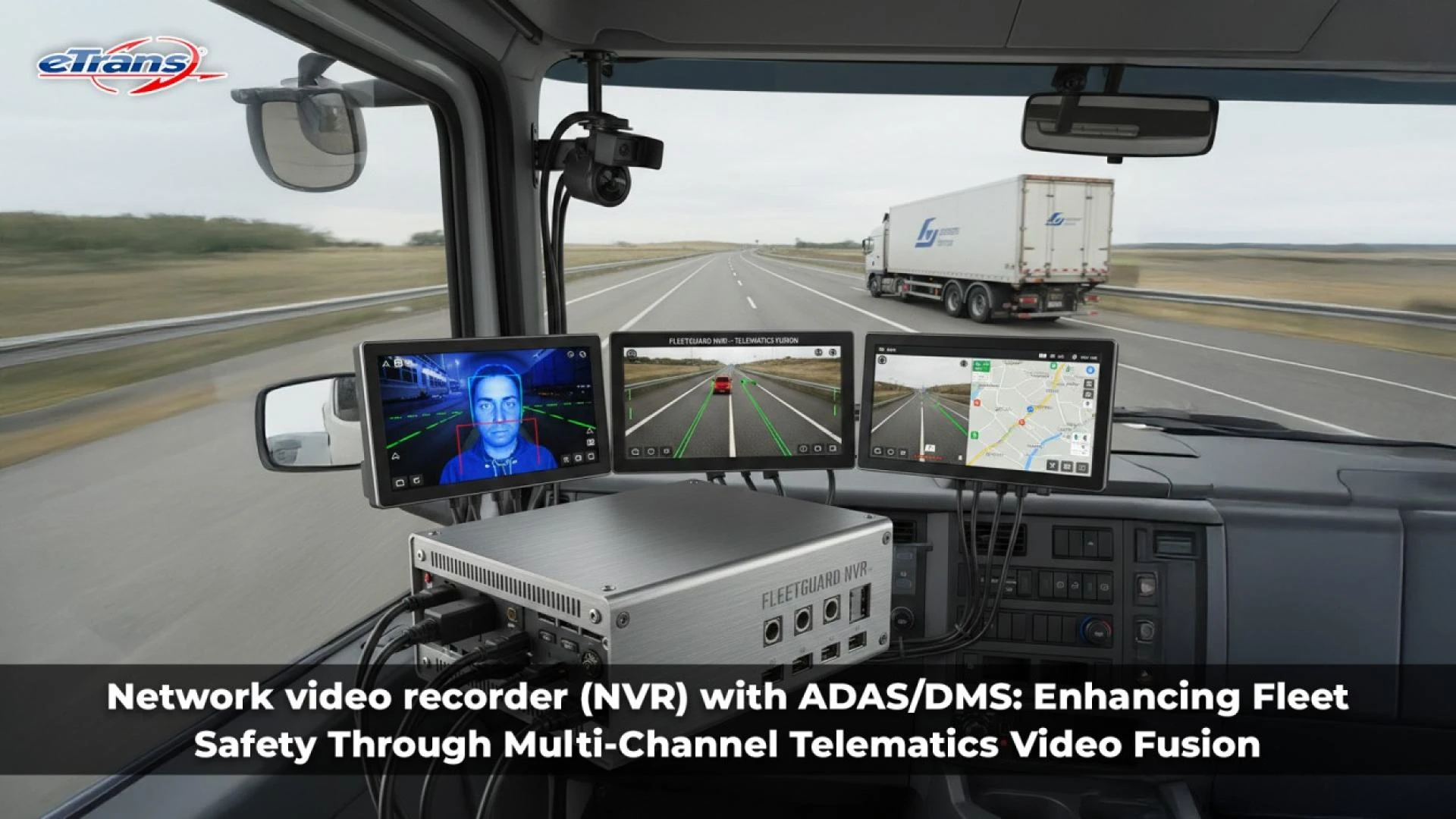
Today’s network video recorder is not just a box that stores footage. It acts as the nerve centre of intelligent fleet visibility. It fuses road-facing cameras, cabin monitoring, vehicle telemetry, GPS location, and AI-powered driver insights into one synchronized system. With integrated ADAS driver assistance systems and DMS driver monitoring telematics, fleets gain context instead of guesswork.
Accidents account for nearly 11% of road fatalities globally due to driver fatigue and distraction, according to World Health Organization transport safety reports. In India, commercial vehicles contribute disproportionately to serious accidents because of long haul cycles, night driving, and unpredictable road behaviour. Fleets that rely only on basic tracking miss early warning signs.
This article explains how network video recorder with multi-channel video fusion transforms safety from reactive damage control into proactive risk prevention.
You will see how video, data, and AI combine to create real accountability, stronger compliance, faster incident resolution, and measurable safety improvement across Indian fleet operations.
Stick around. The payoff is fewer accidents, cleaner audits, calmer drivers, and a lot fewer “he said, she said” moments.
The Evolution of Fleet Video Telematics with NVR, ADAS, and DMS
Fleet video started small. Early systems used standalone dash cameras that recorded continuously and stored footage locally. These devices captured events, but they rarely explained them.
Managers could see a crash, but they could not understand why it happened, what the driver was doing, or whether the vehicle behaved abnormally.
The next phase introduced basic GPS integration. Fleets began correlating location and speed with video clips. This helped, but gaps remained. A GPS point could not explain distraction. Speed data could not explain delayed reactions. Video without intelligence still depended on manual review.
The modern network video recorder changed the entire equation. Today’s NVR systems integrate ADAS driver assistance systems that watch the road continuously. They detect lane departures, unsafe following distance, forward collision risk, and sudden cut-ins.
At the same time, DMS driver monitoring telematics watches the driver. The system identifies fatigue, yawning, eye closure, phone usage, smoking, and distraction patterns in real time.
Indian logistics fleets increasingly adopt this model because accident costs go beyond repairs. A single incident can trigger insurance disputes, delayed deliveries, customer penalties, legal exposure, and reputational damage. According to insurance industry data, fleets using combined video and telematics systems reduce accident frequency by 20 to 30% within the first year.
The shift matters because modern logistics no longer tolerates blind operations. Network video recorders, along with telematics, convert vehicles into intelligent safety nodes that observe, analyse, and report in real time.
Understanding the Core Components: NVR + ADAS + DMS in a Unified System
A modern fleet safety system works because each component supports the others. The network video recorder acts as the central hub. It connects multiple cameras, stores footage securely, timestamps every frame, and synchronizes data streams. A typical vehicle camera recording system includes front-facing, rear-facing, side, and driver-facing cameras. The NVR aligns all feeds into one unified timeline.
ADAS driver assistance systems focus outward. These systems analyse road geometry, traffic movement, and vehicle dynamics. They detect lane drift, tailgating, collision threats, and unsafe maneuvers. ADAS does not wait for accidents. It identifies risk seconds before impact.
DMS driver monitoring telematics focuses inward. Cameras and AI models observe head movement, eye tracking, facial cues, and posture. DMS identifies fatigue, distraction, and unsafe behaviour patterns long before an incident occurs.
The real power appears when these components operate together. A network video recorder fuses video, telemetry, and AI alerts into a single event stream. This creates a complete narrative instead of fragmented evidence.
This fusion ensures that safety analysis reflects reality. A harsh braking event paired with road video, driver behaviour, and GPS location explains context. Fleets move from assumptions to facts.
Multi-Channel Video Fusion: Merging Road, Cabin, and Sensor Feeds for Insight
Multi-channel video fusion transforms raw footage into structured intelligence. In a fused system, every video frame aligns with vehicle speed, acceleration, braking force, steering angle, and GPS position. This process creates what fleets call GPS video correlation, where location and video reinforce each other.
If a vehicle swerves, the system records the steering input, speed change, road condition, and driver gaze direction at that exact second. This level of alignment allows precise interpretation of events.
According to fleet analytics studies, video systems with synchronized telemetry reduce false incident attribution by over 40%. Fleets avoid blaming drivers for events caused by road hazards, sudden cut-ins, or unpredictable traffic.
Multi-channel fusion also powers fleet safety analytics. Instead of reviewing hours of footage, managers receive tagged events with visual proof and contextual data. Every alert carries evidence, not assumptions.
This approach replaces guesswork with clarity, especially in Indian road environments where unpredictability defines daily operations.
Enhancing Fleet Safety with AI-Driven Alerts and Real-Time Risk Detection
Safety improves only when intervention happens early. Modern network video recorder telematics systems use AI models to detect risk in real time. AI-driven risk detection identifies unsafe proximity, lane departure, drowsiness, distraction, and aggressive manoeuvres instantly.
The system generates real-time telematics alerts inside the cabin. Audio prompts warn drivers before mistakes escalate. Visual indicators reinforce behaviour correction.
Studies from transport safety agencies show that immediate driver alerts reduce risky behaviour incidents by up to 35% compared to post-trip coaching alone.
Indian fleet operations benefit heavily because long-haul drivers face fatigue, monotony, and night driving challenges. Real-time intervention saves lives and prevents costly downtime.
The system does not punish. It assists. Drivers feel supported rather than monitored, which improves acceptance and long-term behavioural change.
Incident Reconstruction: Correlating GPS, Video, and Telematics for Forensic Clarity
Fleet incidents rarely happen in a single moment. They build up through a sequence of small actions, environmental triggers, and driver responses. This is where a network video recorder proves its real value. Instead of offering fragmented evidence, it delivers a complete, time-aligned narrative using GPS video correlation, vehicle telemetry, and synchronized camera feeds.
With incident reconstruction video, fleet managers can replay events second by second. The system aligns speed, braking patterns, steering inputs, and GPS coordinates with front-road footage and cabin-facing video. This fusion eliminates ambiguity.
Managers no longer rely on assumptions or verbal explanations. They see exactly how fast the vehicle moved, where it travelled, what the driver saw, and how the driver reacted.
This level of clarity matters deeply in Indian logistics operations, where accident disputes often escalate due to unclear liability. Insurance studies indicate that fleets using video-telemetry correlation reduce claim resolution time by nearly 40 to 50%.
Clear evidence shortens investigations, protects drivers from false blame, and shields companies from inflated third-party claims.
Beyond insurance, forensic clarity strengthens internal accountability. Safety teams identify whether an incident resulted from road conditions, aggressive driving, fatigue, or external interference. Corrective actions become precise instead of generic. Over time, this data builds a defensible safety record that supports audits, legal inquiries, and customer trust.
Integration with Fleet Management Dashboards for Unified Intelligence
Video data becomes exponentially more powerful when it integrates with operational intelligence. Modern network video recorders for telematics setup do not operate in isolation. It feeds structured events directly into a fleet management video dashboard, where safety insights sit alongside operational KPIs.
Through seamless telematics video integration, fleets correlate safety events with routes, trip durations, fuel consumption, delivery delays, and driver history. A harsh braking alert no longer stands alone. Managers instantly see the vehicle’s load status, route congestion, previous driving behaviour, and delivery urgency.
This unified view supports actionable workflows. Safety violations automatically generate review tickets. Repeated risk patterns update driver behaviour scoring video models. Coaching sessions rely on visual proof rather than verbal warnings. The system converts video into measurable safety performance.
For Indian fleets managing hundreds or thousands of vehicles across regions, this integration removes silos. Operations, safety, and compliance teams work from the same dataset. Decision-making becomes faster, fairer, and data-driven rather than reactive.
Scalability and Storage Strategies for Large-Volume Logistics Fleets
Video systems fail when they scale poorly. High-resolution footage generates massive data volumes, especially in large logistics fleets. Modern network video recorder platforms solve this challenge using intelligent storage strategies.
The system relies on edge video processing to analyse footage directly inside the vehicle. Instead of uploading everything, it captures and transmits only high-value events using event-triggered video upload logic. Risky manoeuvres, collisions, violations, and anomalies receive priority. Routine driving data remains stored locally and cycles automatically.
Fleets also control retention policies. Compliance-critical footage stores longer. Low-risk clips expire sooner. This approach balances cost, performance, and legal readiness without overwhelming cloud infrastructure.
Indian logistics companies benefit significantly from this model. Vehicles often operate in regions with inconsistent connectivity. Edge processing ensures continuous recording without network dependence. Selective uploads reduce bandwidth costs while preserving forensic accuracy.
Scalability stops being a constraint. Fleets expand confidently, knowing their video infrastructure will not collapse under growth.
Compliance, Audit Trails, and Legal Readiness through NVR Data Fidelity
Compliance increasingly defines fleet credibility. Regulators, insurers, and enterprise customers expect proof, not promises. A network video recorder delivers that proof through a robust compliance video audit trail.
Every clip carries timestamps, GPS metadata, and tamper-resistant signatures. The system logs access history, event classification, and retention status. This creates legally defensible records that stand up during audits and investigations.
Indian transport regulations emphasise vehicle safety, driver accountability, and incident reporting. High-fidelity video supports compliance with contractual SLAs, transport safety norms, and internal governance standards. Fleets reduce penalties, avoid disputes, and demonstrate operational transparency.
More importantly, compliance stops being reactive. Automated documentation reduces manual paperwork and audit anxiety. Fleets operate with confidence, knowing every journey leaves a verifiable digital footprint.
Driver Behaviour Analytics and Performance Management Using NVR Telemetry Fusion
Driver performance improves fastest when feedback feels fair and factual. Network video recorders enable this by combining visual evidence with behavioural analytics.
The system identifies patterns rather than isolated incidents. Repeated harsh braking, prolonged distraction, unsafe lane changes, or fatigue indicators build a comprehensive risk profile. These insights feed fleet safety analytics engines that rank risk objectively.
With driver behaviour scoring video, coaching becomes targeted. Managers show real clips, explain context, and suggest improvements. Drivers respond better because feedback relies on facts, not perception.
Research shows fleets using video-backed coaching to reduce repeat safety violations by more than 25% within six months. In India, where driver skill levels vary widely, this structured improvement approach builds a safer driving culture without increasing attrition.
Future Prospects: AI Advances, Edge Computing, and Autonomous Safety Layers
Fleet safety continues to evolve. The next generation of network video recorder telematics platforms will predict risk instead of reacting to it. AI models will anticipate fatigue based on driving patterns, time-of-day trends, and historical behaviour. Alerts will adapt dynamically to driver context.
Advanced edge video processing will enable instant decisions even in low-connectivity environments. Vehicles will respond faster, reducing dependence on cloud latency.
Autonomous safety layers will emerge gradually. Systems will support automated braking assistance, lane correction prompts, and collision avoidance reinforcement. While full autonomy remains distant, intelligent assistance will significantly reduce accident severity.
India’s logistics ecosystem stands at the right moment for this evolution. Rapid digitisation, rising safety expectations, and expanding fleet networks create strong incentives for early adoption.
Conclusion
A modern network video recorder is no longer a passive recording tool. It acts as the central intelligence hub of fleet safety. With multi-channel video fusion, ADAS driver assistance systems, and DMS driver monitoring telematics, fleets gain visibility that goes beyond GPS dots and spreadsheets.
This unified approach improves safety, strengthens compliance, accelerates incident resolution, and builds driver trust. Fleets move from reacting to accidents to preventing them. Decisions rely on evidence, not assumptions.
For Indian logistics operations facing growing scale, regulatory pressure, and competitive demands, NVR-led telematics video fusion delivers clarity, control, and confidence. Safety becomes measurable. Accountability becomes fair. Operations become future-ready.
Frequently Asked Questions
1. What makes a Network video recorder different from a basic dash camera?
A Network video recorder integrates multiple cameras, telematics, AI analytics, and synchronized data rather than recording isolated footage.
2. How does ADAS improve fleet safety in real conditions?
ADAS driver assistance systems detect road hazards early and issue real-time alerts that prevent accidents before they occur.
3. Is DMS critical for long-haul fleets?
DMS driver monitoring telematics identifies fatigue and distraction early, reducing high-risk behaviour common in long driving cycles.
4. Can video data really help with insurance claims?
Yes. Incident reconstruction video with GPS and telemetry shortens claim resolution and protects fleets from false liability.
5. Is NVR deployment scalable for large Indian fleets?
Yes. Event-based uploads, edge processing, and flexible storage make Network video recorder telematics cost-efficient at scale.


























Sign in to leave a comment.