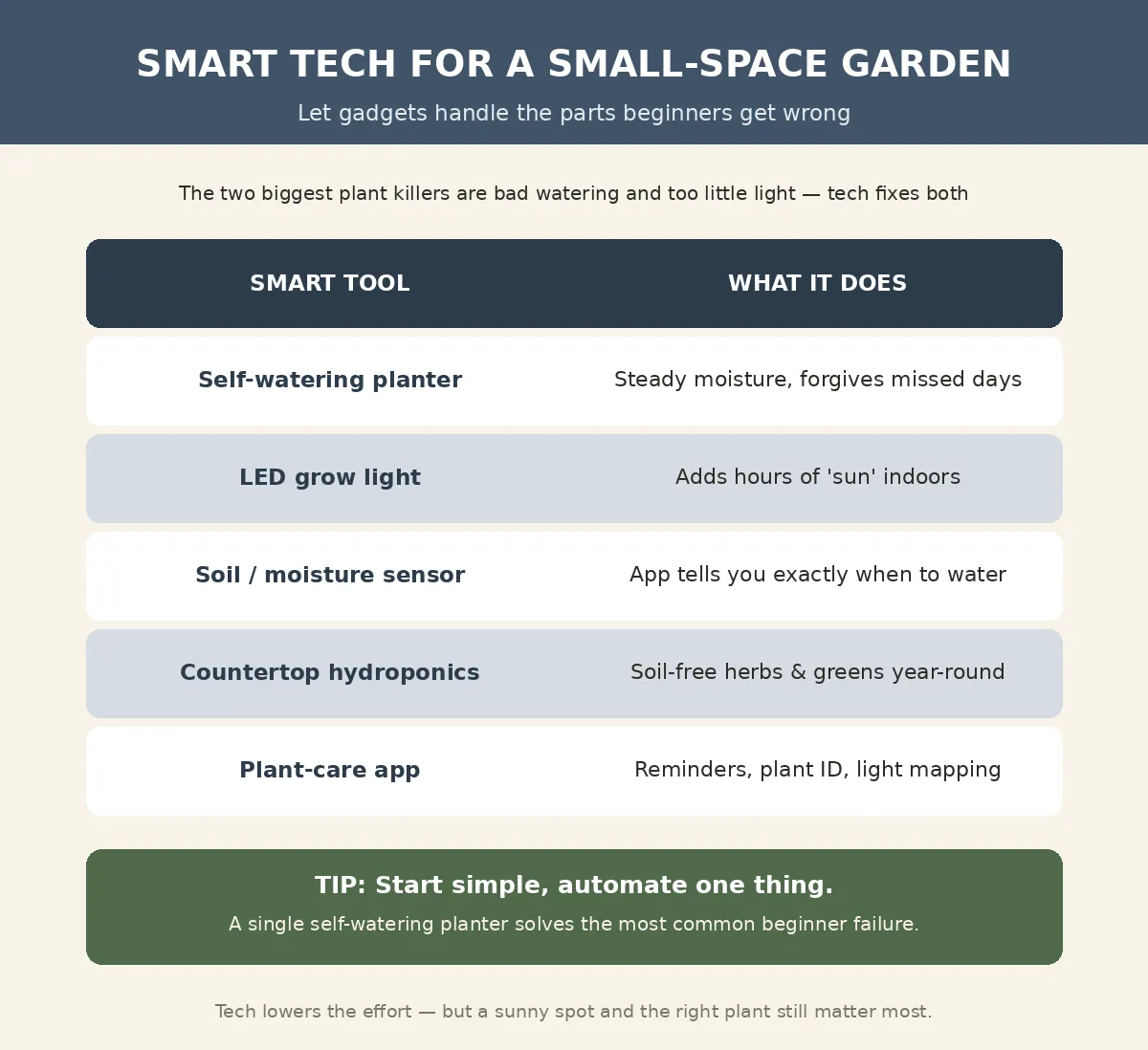

TL;DR: Smart gardening tech makes small-space growing nearly foolproof by automating the two things beginners get wrong: watering and light. Self-watering planters keep moisture steady, LED grow lights supply "sun" indoors, soil sensors tell you exactly when to act, and countertop hydroponic gardens grow herbs and greens year-round with almost no effort.
Most people who "can't keep plants alive" aren't bad gardeners — they're just fighting two invisible variables: inconsistent watering and not enough light. The good news is that in 2026, technology has quietly solved both. Here's how smart tech turns a cramped apartment or balcony into a productive little garden, question by question.

What smart gardening tech actually helps a beginner?
The most useful smart gardening tools are self-watering planters, LED grow lights, soil-moisture sensors, countertop hydroponic gardens, and plant-care apps — because each one removes a specific way beginners fail. Together they automate watering and lighting, the two factors that kill most houseplants and container crops. You don't need all of them; even one solves a real problem.
Think of it as outsourcing the parts you keep forgetting. A self-watering reservoir handles the days you're too busy; a grow light compensates for a dim apartment; a sensor pings your phone before a plant gets stressed. The plant still does the growing — the tech just keeps conditions steady.
How do self-watering planters work, and are they worth it?
Self-watering planters hold a water reservoir at the base and let the plant wick up moisture as it needs it, keeping the soil evenly damp for days or weeks. They're absolutely worth it for beginners, because inconsistent watering — the wet-then-bone-dry swing — is the single most common reason container plants die. A reservoir smooths that out automatically.
They're especially valuable for thirsty crops in small pots, which dry out fast. If you travel, forget to water, or just want less daily fuss, a self-watering container is the highest-impact upgrade you can make — and the cheapest place to start.
Can you really grow food indoors with grow lights?
Yes — modern full-spectrum LED grow lights supply the light plants need to photosynthesize, letting you grow herbs, salad greens, and even some fruiting crops indoors year-round, regardless of your windows. They've become efficient and affordable, running for pennies a day, and many are built into attractive countertop units that look at home in a kitchen.
Light is the variable people most underestimate. A plant in a dim corner isn't low-maintenance — it's slowly starving. A grow light removes that limitation entirely, which is why countertop hydroponic gardens (light + water + no soil) have become such a popular entry point for new growers.
What's the easiest way to start growing your own food in a small space?
Start with one proven crop in one good container, then add tech to automate the upkeep. Pick something forgiving and productive — herbs, salad greens, or a compact tomato — put it in a self-watering pot in your brightest spot, and expand from there. Trying to do everything at once is how beginners burn out.
For picking that first crop, it helps to know what genuinely thrives in a small footprint. This rundown of the best edible plants for a small balcony is a good starting point, and if you want to begin with the most rewarding option, a proven walkthrough on how to grow tomatoes in pots covers container size, soil, and feeding — the fundamentals no gadget replaces.
Does smart gardening tech replace actually knowing how to garden?
No — tech lowers the effort and forgives mistakes, but the fundamentals still matter. A sensor can tell you the soil is dry, but you still choose the right plant, the right pot, and a spot with enough light. The best results come from pairing a little know-how with automation: understand the basics once, then let the gadgets handle the daily consistency.
That's the honest framing. Smart gardening isn't magic — it's guardrails. It turns "I always kill plants" into "my plants mostly take care of themselves," which for a lot of people is the difference between giving up and actually growing their own food.
Frequently asked questions
Do you need expensive equipment to start smart gardening? No. You can start with a single inexpensive self-watering planter or a basic clip-on grow light for very little. Countertop hydroponic systems cost more, but they're optional — begin cheap, and only scale up once you know you'll stick with it.
What can you grow with a countertop smart garden? Herbs (basil, mint, parsley), leafy greens and lettuces, and smaller fruiting plants like cherry tomatoes and chili peppers all do well in countertop hydroponic units. They're ideal for a steady supply of fresh kitchen ingredients in zero outdoor space.
Is hydroponic-grown food as good as soil-grown? Yes — hydroponically grown herbs and greens are just as nutritious and flavorful, and often grow faster because nutrients are delivered directly to the roots. For small indoor spaces, it's one of the most efficient ways to grow food.




















Sign in to leave a comment.