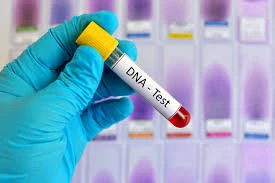

Invasive amniocentesis or chorionic villus sampling are the mainstays of the traditional prenatal paternity testing methods. These procedures have a 0.35% procedure-related risk of miscarriage and can cause pregnancy-related problems. In the 1990s, maternal plasma was used to extract cell-free fetal DNA (cffDNA), which opened the door for the creation of non-invasive prenatal diagnostic methods. Non-invasive prenatal testing is being used extensively to determine paternity, fetal sex, and fetal aneuploidy such as Down syndrome and rhesus D blood type.
The difficulty in paternity testing nowadays is developing a non-invasive, accurate test that can be used early in pregnancy. This necessitates the application of cutting-edge analytical techniques that can identify the small amount of fetal DNA circulating in the mother\'s blood. We have previously demonstrated the effectiveness of forensic compound markers, such as deletion/insertion polymorphisms-short tandem repeats (DIP-STR), in resolving complicated mixed biological data, such as the target analysis of fetal alleles inherited from the father.
The process of prenatal paternity testing
Scientists have long recognized the existence of fetal DNA in a mother\'s blood during pregnancy. Using Next-Generation Sequencing (NGS) technology, a non-invasive prenatal paternity test can 99.9% accurately determine the paternity of the fetus by analyzing genetic markers called single nucleotide polymorphisms (SNPs). Two samples are needed for this DNA test: a mouth swab sample from the alleged father and a sample of the mother\'s blood. Taken using a standard medical blood sample; refer to the sample collection instructions for details. Scientists require the mother\'s sample to extract blood plasma, a blood component that contains both maternal and cell-free fetal DNA from the remaining blood. The mother\'s and the presumed father\'s DNA samples are examined once the fetal DNA has been separated from the plasma.
In the lab, researchers compute the genetic marker similarity between the fetal DNA and the purported father\'s DNA using an informatics program. A paternity inclusion occurs when the likelihood that the putative father possesses the genetic markers necessary for the biological father exceeds 99.9%. If the resemblance is within the range of non-fathers, paternity will be excluded. You may get this DNA test as early as week nine of your pregnancy, which is seven weeks after conception.
The test Results
Typical findings can be obtained within 5 to 7 business days. Please be aware that the turnaround time begins as soon as the lab receives the samples. One of two results will be displayed in the results:
The tested man is the biological father, and this will be proven with a 99.9% likelihood. The claimed father cannot be ruled out as the biological father. A court-ordered paternity test can be conducted by exploring non-invasive paternity tests near me options. The tested man is not the biological father and will be eliminated with 100% likelihood if the purported father is not the biological father of the unborn child.
Benefits of Non-invasive Prenatal Testing
- There is no chance of misinterpretation or inaccurate findings because the prenatal paternity test evaluates cell-free fetal DNA in the mother\'s blood owing to prior pregnancies or losses.
- Additionally, it implies that compared to previous non-invasive procedures that employ nucleated fetal cells, whole DNA encapsulated in cells, the test is significantly more accurate and trustworthy.
- Other invasive prenatal paternity testing techniques, such as chorionic villus collection, carry hazards like miscarriage, amniotic fluid leaking, or limb injury to the unborn child.
- Prenatal tests, however, have no risks at all. This test examines the mother\'s blood, which is obtained by taking a straightforward blood sample for cell-free fetal DNA.
- This prenatal paternity test is easier to perform, less time-consuming, and more economical than previous sample techniques.
- Undergoing invasive sample collections, such as amniocentesis, can have very significant medical expenditures and need more time to plan and complete.
Conclusion
Parents can now provide essential answers regarding ancestry and illness at an early age, with the advancements in prenatal paternity and genetic testing. DNA testing is reliable, easily accessible, and beneficial for mental clarity. Consult your healthcare practitioner about your choices to determine whether prenatal DNA testing is proper for you.
Using Non-Invasive Prenatal Paternity Testing (NIPPT) has significantly improved the quality of prenatal care. Choice DNA offers Non-invasive prenatal Paternity Testing (NIPPT), a secure and straightforward way of testing for confirming paternity by examining cell-free fetal DNA from the mother\'s bloodstream. Many pregnant parents find it an appealing alternative due to its precision and minimal danger. To offer the finest service available to the mother and the growing fetus, the decision to go through NIPPT should ultimately be made in consultation with medical specialists, considering specific circumstances, medical information, and genetic diagnosis.




























Sign in to leave a comment.